
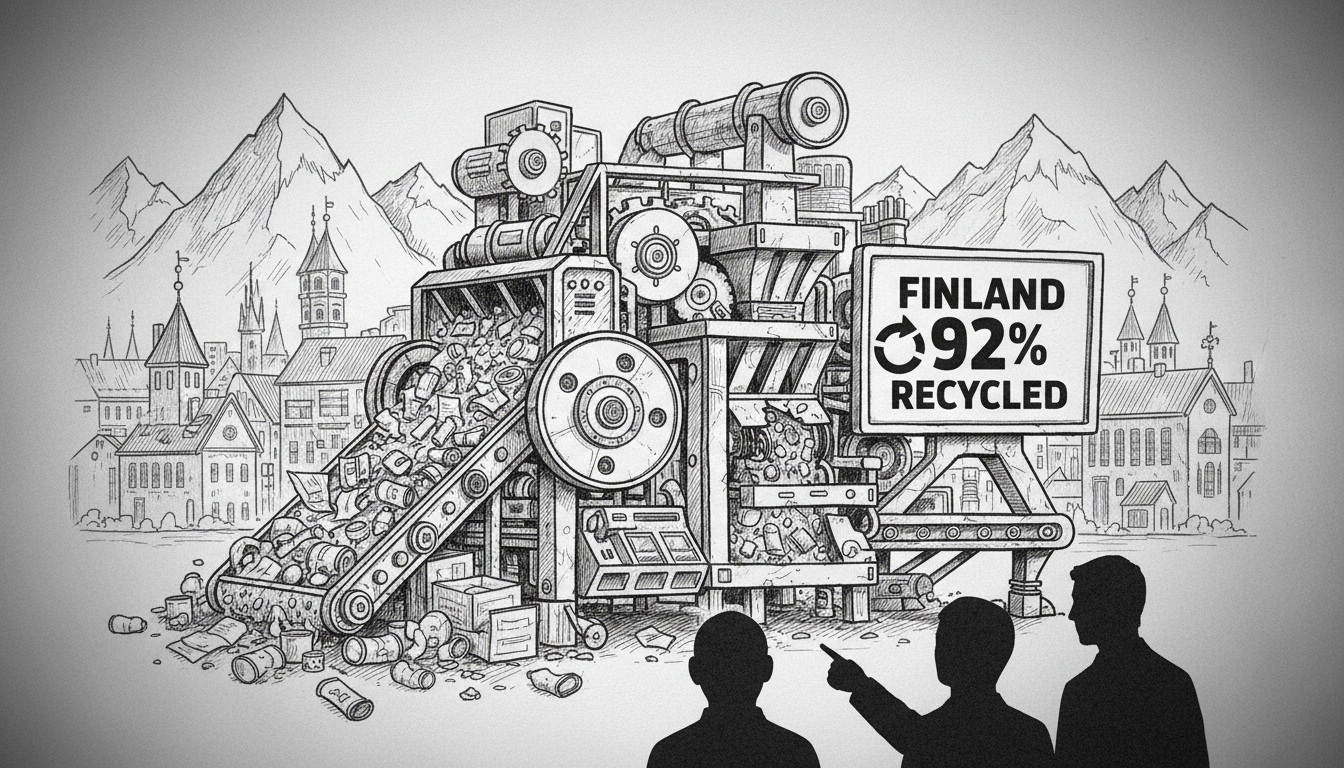
Finland's 92% return rate for bottles and cans now has a powerful new tool in the Kanta-Häme region. The Riihimäki Prisma supermarket has installed the area's highest-capacity bottle return machines, each capable of processing 200 containers in a single load. This investment by retailer Osuuskauppa Hämeenmaa marks a significant upgrade in recycling infrastructure, turning a routine grocery trip into a major recycling event.
A New Benchmark for Bottle Returns
The two new machines in Riihimäki represent the cutting edge of Finland's renowned deposit-refund system. Operated by the non-profit Palpa, this system sees consumers pay a small deposit on beverage containers—typically 0.10 to 0.40 euros—refunded upon return. The Prisma's new 'kaatokonepari' (return machine pair) can handle a combined 400 containers in minutes, a substantial leap from standard machines. While the store director declined to disclose the investment cost, the scale suggests a commitment to leading in consumer recycling convenience.
This upgrade is not merely about speed. It is a logistical enhancement for a system that collected over 1.5 billion bottles and cans in 2022 alone. High-capacity machines reduce queue times, especially during peak shopping hours, and minimize the need for frequent service interruptions to empty full bins. For families returning a week's or a month's worth of containers, the difference is tangible.
The Engine of a Circular Economy
Finland's panttijärjestelmä (deposit system) is a cornerstone of its national circular economy strategy. The near-universal 92% return rate for deposit-bearing containers is a global benchmark. This high performance is no accident. It results from deliberate policy design, widespread access to return points, and consistent public engagement. The system directly reduces litter and saves raw materials, with returned PET plastic, glass, and aluminum continuously fed back into manufacturing cycles.
“The efficiency of the return system is critical for its environmental and economic success,” explains Dr. Elina Saarinen, a circular economy researcher at the Finnish Environment Institute. “Investments in high-capacity infrastructure, like these new machines, lower the operational friction for consumers. When returning containers is easy and fast, participation stays high. This maintains the clean material stream that Finnish industries rely on.”
From a policy perspective, the system aligns with broader European Union directives on packaging waste and single-use plastics. Finland often exceeds EU targets, using its deposit system as a primary tool. The Riihimäki investment reflects a continuous improvement mindset, where retailers and the Palpa cooperative work to refine a already successful model.
Retail Competition Meets Green Goals
The move by Osuuskauppa Hämeenmaa also highlights the competitive landscape of Finnish retail. Large supermarket chains, including S-Group's Prisma and K-Group's K-Citymarket, routinely leverage sustainability services to attract customers. A modern, efficient bottle return hall is a tangible customer service feature. It signals a store's commitment to convenience and environmental responsibility, potentially drawing shoppers from a wider area.
For the consumer, the benefits are straightforward. They recover their deposits quickly and contribute to a system with a proven track record. The alternative—placing containers in mixed household recycling—means forfeiting the deposit and providing a lower-quality material stream for processors. The economic incentive, paired with civic pride in a clean environment, creates a powerful social norm.
Local Impact and National Patterns
Located in the city of Riihimäki, this Prisma's upgrade gives it the largest return capacity in the entire Kanta-Häme region. This local one-upmanship drives incremental improvements across the country. As one retailer installs newer technology, others in neighboring municipalities often follow, creating a positive ripple effect. The machines themselves are typically supplied by a handful of specialized manufacturers competing on speed, accuracy, and user interface.
The process is familiar to most Finns: the machine scans the barcode, identifies the material, crushes the container, and issues a receipt for the total deposit refund. This receipt can be used as a discount voucher for shopping in the store. This last step is crucial—it keeps the refund value within the retail ecosystem, supporting store loyalty while completing the circular transaction.
The Road Ahead for Finnish Recycling
Finland's system is not without challenges. Discussions continue about expanding the deposit system to include new types of containers, such as those for dairy products and juices, which currently fall outside the scheme. Each expansion requires careful logistical planning and retailer cooperation. Investments in high-throughput machines make future expansions more feasible by providing the necessary capacity.
Furthermore, the technology behind the machines is evolving. Future iterations may incorporate better sorting capabilities, data collection on return patterns, and even more streamlined designs. The success in Riihimäki provides a real-world test case for how much capacity consumers actually use and what peak demand looks like.
The ultimate question for policymakers is whether a 92% return rate can be improved upon, or if resources are better spent on other waste streams. Some experts argue that focus should shift to textiles, plastics not covered by deposits, and commercial packaging. Yet, maintaining the stellar performance of the bottle and can system remains a political and environmental priority.
As Finns in Riihimäki now feed 200 containers at a time into their new machines, they participate in a quiet but profound national success story. It is a story built on policy foresight, consumer cooperation, and ongoing private investment in public environmental goals. This latest upgrade in a Prisma backroom is a small but telling chapter in Finland's broader narrative of pragmatic sustainability.