
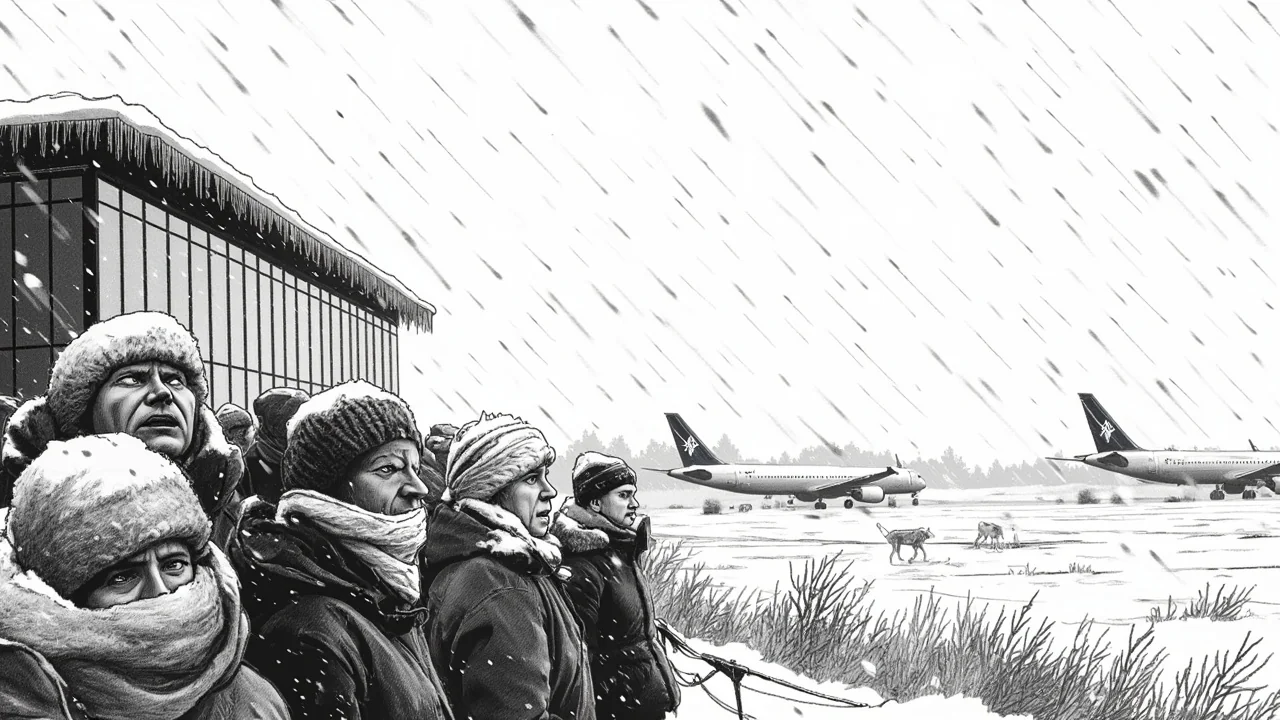
Finland's Kittilä Airport cancelled all arriving and departing flights on Sunday as extreme cold of nearly -37 degrees Celsius crippled ground operations in Lapland. The airport operator Finavia had warned of potential disruptions since Friday, citing severe challenges with aircraft de-icing and other safety-critical processes in the intense Arctic conditions. This systemic shutdown highlights the vulnerability of critical northern infrastructure to increasingly volatile winter weather patterns, even in a nation renowned for its cold climate expertise.
A flight from Amsterdam operated by tour operator TUI was diverted to Ivalo Airport, approximately 150 kilometers northeast, as Kittilä became unreachable. Most Sunday flights were cancelled proactively before departure, following significant cancellations already on Saturday. Finavia emphasized that airports themselves do not close due to cold, but airlines must cancel flights when pre-flight procedures cannot meet strict safety criteria. "If operations preceding flights cannot be performed according to criteria, airlines may have to cancel their flights to ensure safety," Finavia stated in its Friday bulletin.
The Mechanics of a Deep Freeze Grounding
The core challenge at -37°C extends beyond simple discomfort. Finavia specifically identified aircraft de-icing as the primary operational hurdle. De-icing fluids, essential for removing ice and snow and preventing new accumulation, have strict effective temperature ranges. In extreme cold, these fluids can lose efficacy or fail to flow properly, making a safe takeoff impossible. Furthermore, hydraulic systems in ground service equipment, fuel handling processes, and even the physical functionality of seals and materials on aircraft and vehicles are pushed beyond normal design limits.
"In Finnish Lapland, there is currently extremely severe cold, which may affect some processes taking place in the outdoor areas of the airport," Finavia's statement explained. This technical language underscores a critical point: the issue isn't flying in cold air—modern aircraft routinely cruise at altitudes where temperatures are below -50°C—but conducting complex, safety-sensitive ground operations in such an environment. Every step, from baggage loading to catering service, becomes slower, riskier, and more prone to equipment failure.
Passenger Rights and Airline Responsibilities in Arctic Disruptions
When flights are cancelled under these extraordinary circumstances, the responsibility for passenger care falls squarely on the airlines. Finavia reminded travelers that airlines hold a duty of care. "Airlines have a duty of care, which includes, among other things, that in situations where a flight is cancelled or it is delayed significantly, the airline is responsible for arranging accommodation for passengers," the operator noted. "The airline is also responsible for rerouting the passenger to a replacement flight."
This legal framework operates under EU passenger rights regulations (EC 261/2004), which apply even during extreme weather events. However, the classification of the disruption is key. If the cancellation is deemed due to "extraordinary circumstances"—which such severe, operation-halting cold likely qualifies as—the airline is not obligated to pay monetary compensation but must still provide care (meals, accommodation) and rebooking. For international tourists headed to Lapland's ski resorts, this meant unexpected stays in Helsinki or other transit points, with airlines managing alternative travel arrangements, often via road transport from other airports like Rovaniemi or Ivalo.
Climate Paradox: Preparedness Tested by Extremes
Finland is a global leader in cold climate adaptation. Its construction standards, transportation networks, and societal routines are built around long, harsh winters. Yet, the Kittilä grounding reveals a paradox: even hyper-prepared systems have thresholds. Climate change is increasing the frequency and intensity of weather variability, including spells of extreme cold in sub-Arctic regions. This incident tests the resilience model of Nordic infrastructure, which is designed for sustained cold rather than short-duration temperature extremes that push beyond historical operational envelopes.
Kittilä Airport is a vital economic artery for Lapland's tourism industry, especially during the peak winter season. It connects the popular resort of Levi directly to major European cities. A multi-day closure represents significant economic losses for hotels, activity providers, and the regional economy. It forces a conversation about infrastructure investment: whether even more robust, cold-rated equipment is needed, or if operational protocols require adaptation for a new era of weather extremes. Is the current model, which accepts periodic full stoppages as the safest option, sustainable for a region increasingly dependent on seasonal air traffic?
Looking Beyond the Immediate Thaw
The disruption at Kittilä serves as a case study for other cold-climate airports in Scandinavia, Canada, and Alaska. It highlights the need for continuous research into ultra-low-temperature materials and fluids. It also underscores the importance of integrated contingency planning that involves airlines, airports, local municipalities, and ground handlers. Diversion plans, like the use of Ivalo Airport, are part of this, but ground transportation across hundreds of kilometers of Arctic road in the same extreme cold presents its own set of challenges.
As temperatures eventually moderate and operations resume, the analysis will begin. Airport authorities and airlines will review response times, communication with passengers, and the performance of equipment. For Finland, a nation that takes pride in functioning seamlessly through winter, this event is a reminder that nature ultimately sets the boundaries for human activity. The question for policymakers and industry leaders is whether to push those boundaries with new technology or to accept them and build greater flexibility and resilience into the entire travel ecosystem. The silence over Kittilä this weekend was more than just a pause in flights; it was a loud message about the limits of infrastructure in the face of a still-formidable Arctic winter.