
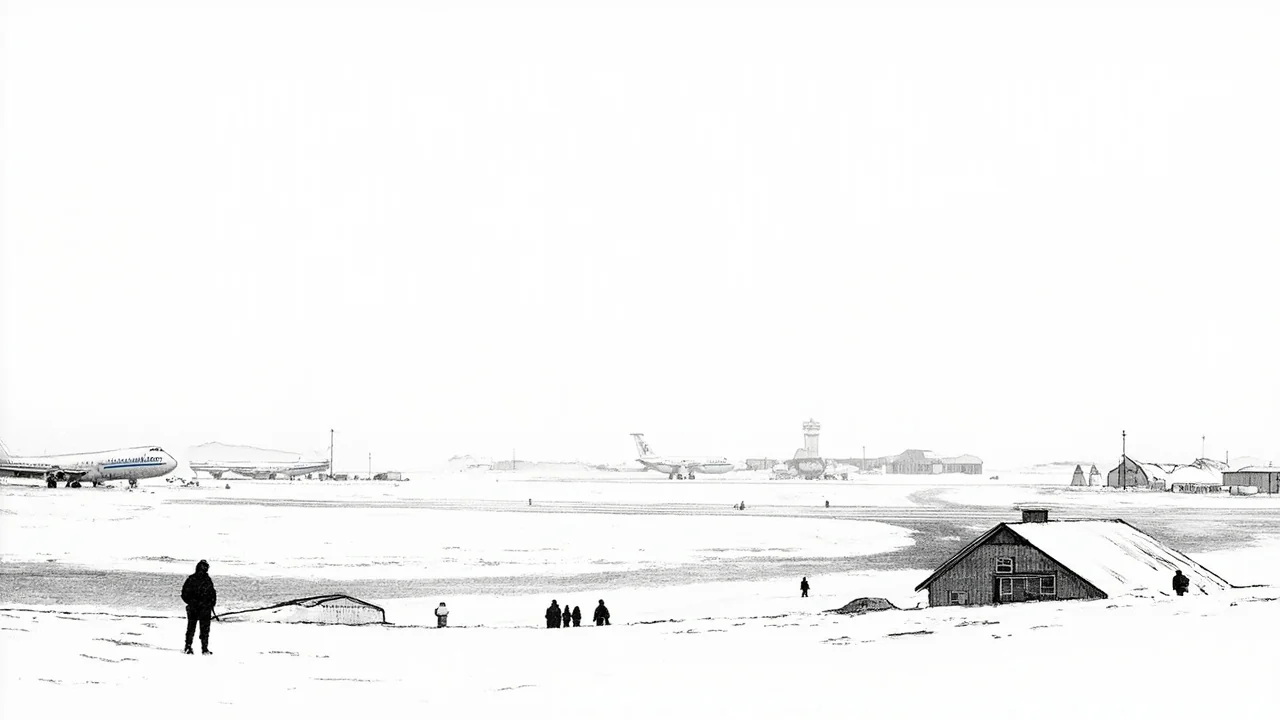
Finland's Kittilä Airport has seen all scheduled flights cancelled for three consecutive days due to extreme cold, with temperatures plummeting to -39.1°C. National carrier Finnair scrapped every Sunday flight to the popular Lapland destination, following a complete shutdown of operations on Friday and Saturday, as the severe frost exceeded critical safety thresholds for aircraft de-icing. The cancellations highlight the profound logistical challenges and economic impact of operating modern aviation infrastructure in one of Europe's most extreme climates, testing the resilience of Finland's vital northern tourism and transport networks.
Arctic Freeze Paralyzes Lapland's Gateway
The cancellations are a direct result of temperatures far exceeding Finnair's operational limits for safe ground handling. The airline confirmed its de-icing equipment cannot function effectively below -34°C, a threshold shattered over the weekend. The Finnish Meteorological Institute recorded a low of -39.1°C in Kittilä-Pakasa on Saturday, with Sunday forecasts predicting a similarly brutal range of -37°C to -39°C. This persistent deep freeze transformed the airport's apron into a zone where standard procedures for removing ice from aircraft wings and fuselages become physically impossible, grounding all traffic. The disruption extended beyond Kittilä, with Finnair also cancelling one round-trip flight between Helsinki-Vantaa and Rovaniemi on Sunday morning, indicating the cold's widespread effect across Finnish Lapland.
This is not merely an inconvenience but a full operational halt. Finavia, the state-owned company managing Finland's airports, reported that Kittilä Airport had precisely zero flight movements on both Friday and Saturday. For a regional airport that serves as the primary gateway for tourists visiting the ski resorts and Santa Claus Village of nearby Levi, such a total closure represents a significant economic shock. The timing is particularly sensitive, coming after the peak Christmas season but still within the valuable winter tourism period that many local businesses rely on for annual revenue. Each grounded flight carries a double cost: lost revenue for airlines and airports, and disrupted travel for hundreds of passengers, including international tourists and local residents.
The Science and Safety Behind the Groundings
The decision to cancel flights is rooted in stringent international safety protocols and the physical limitations of technology. Aircraft de-icing is a non-negotiable pre-flight procedure in winter conditions. It involves spraying aircraft with a heated mixture of water and glycol-based fluid to remove existing ice and snow and to prevent new accumulation for a limited time. When ambient temperatures drop below approximately -30°C, the efficacy of these fluids decreases dramatically. The fluids can freeze before they run off the aircraft's surfaces, potentially creating dangerous ice contamination on wings and control surfaces.
At -34°C and below, the process becomes unreliable and unsafe. "Finnair's de-icing limit is -34 degrees," a company spokesperson stated, confirming the technical rationale for the shutdown. The extreme cold also poses severe risks to ground crew working outdoors, potentially leading to frostbite within minutes, and can affect aircraft systems and fuel. While modern jet aircraft are certified to operate in very cold air temperatures once airborne, the ground handling phase presents the greatest vulnerability. Airlines and airports must therefore implement blanket cancellations when these limits are breached, prioritizing absolute safety over schedule reliability.
This incident underscores a broader climate resilience challenge for Nordic infrastructure. While Finland is expertly adapted to cold winters, the intensity of this particular cold snap pushes systems beyond their designed operational parameters. It raises questions about investment in even more cold-resistant ground support equipment, though the economic case for such technology is complicated by the relative infrequency of these extreme events. For now, the rule is simple: nature sets the schedule when the mercury falls this low.
Economic Ripple Effects Across Lapland
The closure of Kittilä Airport creates immediate and cascading economic consequences. Lapland's economy is heavily dependent on seasonal tourism, with winter being the most lucrative period. Kittilä Airport is the closest air link to Levi, one of Finland's largest and most popular ski resorts. Travellers affected by the cancellations include inbound international tourists, outbound locals, and business traffic. Hotels, tour operators, restaurants, and activity providers in the region face last-minute cancellations and no-shows, directly hitting their revenue.
The impact is multifaceted. Airlines lose ticket revenue while still incurring fixed costs. Airports lose landing fees and passenger-related income. The local hospitality sector loses guests. Passengers face rebooking hassles, potential extra accommodation costs, and missed holiday or work days. For some small businesses operating on thin margins in the high-cost Lapland environment, a multi-day disruption during peak season can have a disproportionately large effect on their annual financial outcome. The situation also tests customer service and logistical flexibility for Finnair, which must re-accommodate passengers on later flights, often once the cold spell relents, leading to compressed demand and full planes later in the week.
This event serves as a stark reminder of the vulnerability of peripheral regional economies to specific infrastructure failures. The Finnish government and the European Union have invested heavily in cohesion policy aimed at supporting remote regions, but some vulnerabilities, like weather, remain largely uninsurable. The incident may prompt renewed discussion among regional policymakers about diversifying transport links, such as rail reliability or road conditions, though these too are susceptible to extreme winter weather.
Policy and Preparedness in a Changing Climate
From a policy perspective, this crisis sits at the intersection of transport policy, regional development, and climate adaptation. While this incident was caused by extreme cold, the broader climate crisis presents a wider array of challenges for Nordic aviation, including increased winter volatility and more frequent freeze-thaw cycles. The Finnish Transport and Communications Agency (Traficom) and the Ministry of Transport and Communications are likely to review the incident as part of ongoing work on transport system resilience.
There is a paradoxical element here: while global warming is the dominant trend, it can lead to greater weather instability, including occasional bursts of extreme cold in northern latitudes. Preparing infrastructure for both milder winters and occasional severe cold snaps requires sophisticated planning and investment. For Finavia, this could mean evaluating the business case for next-generation de-icing systems capable of operating at lower temperatures, or reviewing contingency plans for passenger welfare during extended airport closures.
The Finnish model of comprehensive social responsibility means stranded passengers are unlikely to be left entirely without support, but the financial costs are ultimately borne by the industry and, indirectly, the public. This episode may influence future EU funding discussions related to the connectivity of remote regions, highlighting the need for robust, climate-resilient infrastructure as a cornerstone of regional equality. It also emphasizes the importance of accurate, timely communication between meteorological services, airlines, airports, and passengers—a process that appears to have functioned effectively in this case, with clear advance warning of the operational halt.
Looking Ahead: Resilience in the Far North
As climate patterns evolve, the Arctic region is experiencing change faster than anywhere else on Earth. For Finnish Lapland, this means navigating a complex future where tourism demand may grow, but the operational environment for key infrastructure like aviation faces new tests. The total flight cancellation in Kittilä is a dramatic example of an existing vulnerability laid bare by a traditional, if extreme, Arctic weather event.
The situation will resolve as the cold spell breaks. Finnair and other operators will work to clear the backlog of passengers, and life in Kittilä and Levi will return to normal. However, the incident leaves behind important questions. How often will such extreme temperatures occur in the coming decades? Is the current level of infrastructure investment in the Nordic periphery sufficient to maintain reliable year-round connectivity? And what does true resilience look like for communities whose economic lifelines can be severed by a drop in the thermometer?
For now, the people of Kittilä and the travellers who seek its unique Arctic beauty are reminded of a fundamental truth: in the far north, human schedules remain subject to the formidable power of nature. The silent, frozen runways stand as a testament to the fact that some forces still dictate terms, demanding respect and preparedness from even the most advanced societies. As Finland continues to balance development in its northern regions with the realities of its environment, this weekend's grounded fleet offers a cold, clear lesson in the limits of control.