
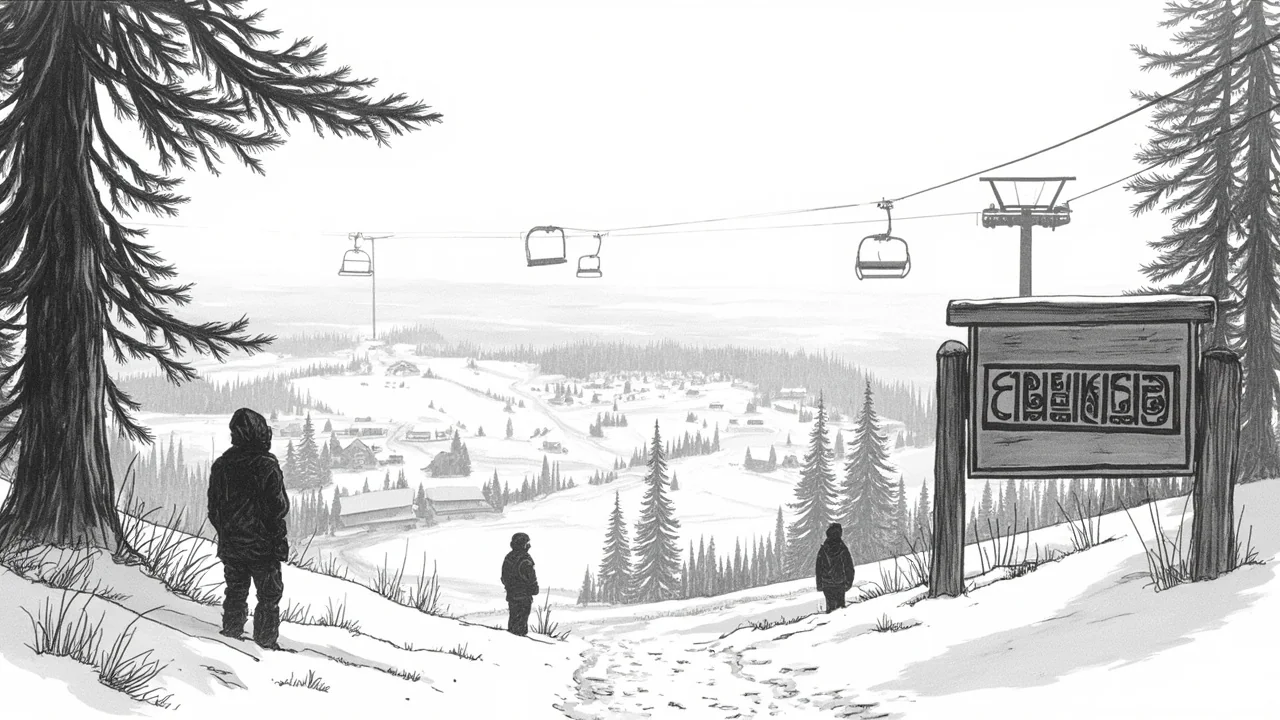
Finland's Lapland region is grappling with a severe cold snap that has forced ski resorts to close and canceled key winter activities, testing the resilience of the vital Arctic tourism industry. Temperatures plummeting below -30 degrees Celsius have shuttered slopes at Europe's northernmost ski center and halted husky safaris, presenting a paradox where the very winter conditions tourists seek become too extreme for safe operation. The deep freeze, while part of the expected Arctic experience, is pushing infrastructure and safety protocols to their limits during the crucial peak winter season.
At the Ritavalkea ski resort in Pello, the lifts have been closed since New Year's Day. "The slopes have been closed because of the severe cold since January 1st, and at least for now it looks like we'll be closed through the weekend," said Janne Niva, the resort's workshop supervisor and slope manager. Niva explained that the operational limit for their lift machinery is set at -18°C. "That's where wear and tear starts to increase, leading to extra costs," he stated. On Friday, temperatures at Ritavalkea hovered near -30°C.
Further north, the situation is equally challenging. The Ski Saariselkä resort, branded as Europe's northernmost ski center, was closed on Thursday and Friday. Their operational threshold is lower, set at -30°C. "It starts to become dangerous, especially for customers who are not accustomed to cold weather conditions. We've decided it's better not to be open then," said CEO Jarmo Katajamaa. This highlights a critical balancing act for the industry: marketing the authentic Arctic chill while ensuring visitor safety in potentially hazardous conditions.
The Economic Chill of Extreme Cold
The financial impact extends beyond closed ticket offices. In Levi, one of Finland's largest tourist centers, the deep cold has forced the cancellation or postponement of several signature activities. "When temperatures go beyond minus thirty, some activities simply have to be canceled or rescheduled to ensure safety for both tourists and animals," explained Satu Pesonen, CEO of Visit Levi. Affected experiences include popular husky safaris and snowmobile excursions, which are cornerstone attractions for international visitors. While the main downhill ski slopes in Levi, Ruka, and Salla have remained open, the ancillary adventure economy takes a direct hit.
For local businesses, the extreme weather creates a complex economic picture. On one hand, closed activities mean lost revenue. On the other, the cold drives customers indoors. "The colder it is, the more it shows in restaurant sales. Customers spend more time and money inside," noted one industry representative from the source material. This shift in consumption patterns offers a partial buffer for hospitality venues, but does not compensate for the lost income from high-margin outdoor adventures. The closures occur during the most profitable time of year, when international visitor numbers are at their peak.
Safety First in a Harsh Environment
Operating in such an environment demands constant vigilance. At the Salla ski resort, staff are on high alert for signs of frostbite among guests braving the slopes. "It brings the danger of frostbite, of course. We have to monitor customers' faces a bit on the lift, and direct them to warm up occasionally when their cheeks turn from red to more pale," said Salla's CEO, Kari Koskimaa. This proactive, safety-first approach is a non-negotiable part of the operational ethos in Finnish Lapland. It underscores that providing an authentic Arctic experience cannot come at the expense of visitor well-being.
The clientele itself shapes these safety decisions. Katajamaa from Ski Saariselkä pointed out that in the mid-winter months, nearly 90 percent of their customers are from abroad. Many come from milder climates and lack innate experience with such extreme cold. The resorts therefore assume a duty of care, making preemptive closures to protect those unfamiliar with the risks. This responsibility is taken seriously, as the region's reputation for safe, well-organized tourism is a key asset.
The Tourist Paradox: Seeking the Extreme
Despite the operational headaches, industry leaders emphasize that these cold spells are an integral part of the Lapland winter product. There is a clear tourist paradox at play: visitors travel to the Arctic Circle for a genuine cold-weather experience, yet there is a physical limit to what is manageable for both humans and machinery. "I'd rather take this cold weather than the rain we had early in the season. This is more normal," Koskimaa from Salla remarked, reflecting a preference for the dry, extreme cold over warmer, wetter conditions that can ruin snow quality.
International demand remains robust, even in the face of blistering temperatures. "The international customer wants the skiing experience no matter what and heads to the slopes even in cold weather," Koskimaa confirmed. This suggests that for the core market, the extreme cold is a feature, not a bug—it validates their choice of destination. The challenge for the industry is to facilitate that desire safely, by maintaining open slopes where possible while drawing a clear line at genuinely dangerous conditions.
Infrastructure and the Limits of Cold
The closures reveal the technical limitations of operating complex machinery in the Arctic. The varying temperature thresholds for closure—from -18°C at Ritavalkea to -30°C at Ski Saariselkä—speak to differences in equipment, maintenance philosophies, and risk assessments. Prolonged operation below these thresholds risks accelerated mechanical wear, breakdowns, and ultimately higher long-term costs. This is a practical, financial reality that tempers the romantic image of endless winter.
These limits also raise questions about future investment and climate adaptation. While the current crisis is one of extreme cold, the industry also faces the opposite threat from warming winters and irregular snowfall. Investing in cold-resistant infrastructure must be weighed against the broader, long-term trends of climate change. For now, the immediate problem is metal that becomes brittle, lubricants that thicken, and the increased energy required to keep any indoor facilities running.
Looking Beyond the Immediate Freeze
The current situation offers a case study in the vulnerabilities and strengths of Arctic tourism. The sector has demonstrated its ability to make swift, safety-oriented decisions. The coordinated messaging from resort CEOs—emphasizing safety while still celebrating the Arctic winter—shows a mature and responsible industry. They are managing expectations, protecting their brand, and safeguarding their customers.
However, the episode also highlights economic fragility. A season already shortened by the late arrival of winter snow is now seeing peak-season disruptions. For small businesses and activity providers that depend entirely on winter tourism, these lost days are a significant blow. The resilience shown is, in part, a resilience born of necessity in one of Europe's most challenging hospitality environments.
As the cold snap eventually relents, the industry will return to full operation, but the lessons will remain. The delicate balance between offering an authentic Arctic adventure and ensuring unwavering safety has been thrown into sharp relief. The deep freeze tests not just machinery and protocols, but the very model of selling extreme nature as a leisure product. For the tourists who braved the cold, they will have a true story of the Arctic winter. For the people of Lapland, it is another chapter in the complex business of living—and working—at the edge of the habitable world.