
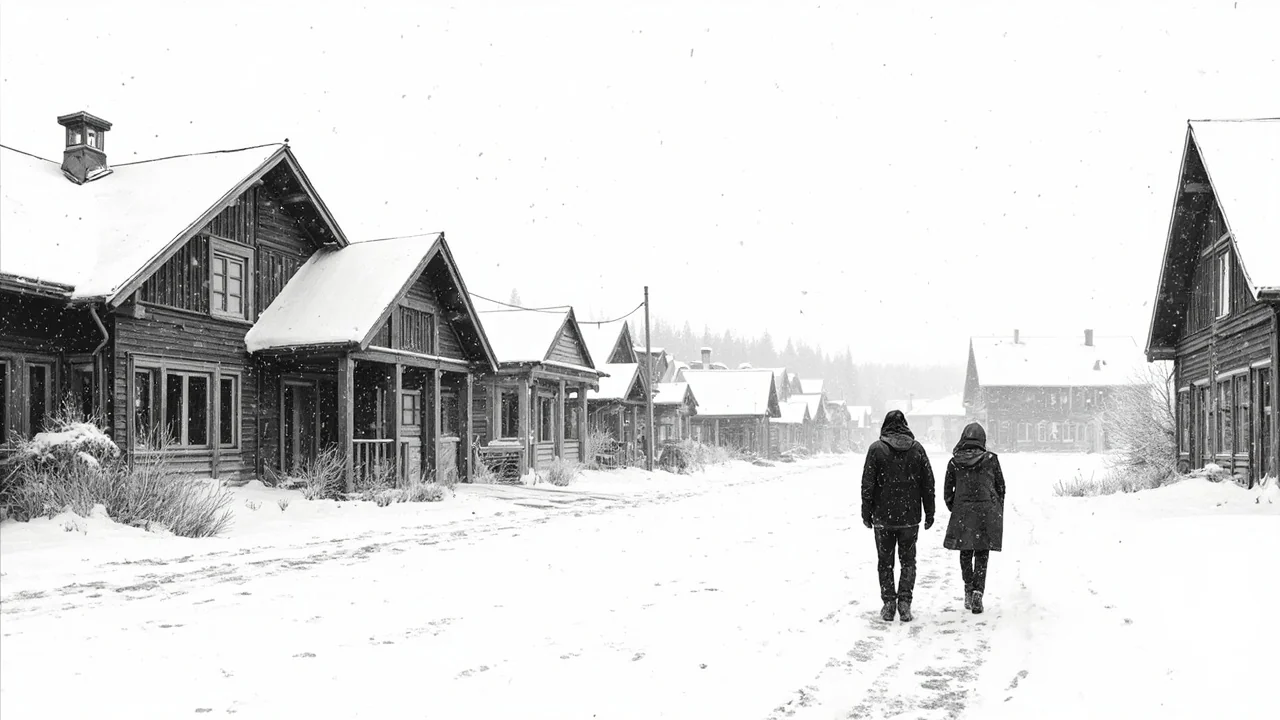
Finland's Lapland region is confronting a severe economic chill as extreme cold, reaching below -42°C, forces businesses in the key Levi ski resort to shut down. The deep freeze has grounded flights, closed restaurants, and slashed ticket sales, exposing the vulnerability of a vital tourism industry built on winter conditions now turning dangerously harsh.
Sonja Toivonen, owner of the Myllyn Äijä restaurant at Levi, described a scene of surreal adversity. "The lemonade and beer taps were starting to freeze," she explained, noting her establishment could not stay warm enough despite heaters running full blast. She concluded the conditions were simply "too extreme" for both staff and customers. "You would have needed ice fishing overalls on, both the staff and the customers," Toivonen said, painting a picture of a hospitality environment pushed beyond its limits.
The Economic Deep Freeze
The impact extends far beyond dining options. Jouni Palosaari, CEO of Levi Ski Resort Oy, provided a stark metric linking temperature to revenue. "If it's -40, that's 40 percentage points off ticket sales," Palosaari stated, quantifying the direct hit to the resort's core business. The cancellations cascade through the local economy, affecting hotels, equipment rentals, and activity providers who depend on a consistent flow of visitors. This cold snap highlights a critical paradox for Arctic tourism: its very raison d'être—cold and snow—can become an existential threat when it intensifies beyond a certain threshold.
Finnair, Finland's national carrier, was forced to cancel all flights to Kittilä Airport, the main gateway to Levi, on one Sunday alone due to the hazardous conditions. These disruptions strand tourists, complicate logistics for tour operators, and deliver a blow to the region's accessibility. The situation reveals a fragile infrastructure chain where extreme weather can sever the link between international visitors and their Arctic destination at multiple points.
Infrastructure Pushed to Its Limits
For businesses, the cold is a practical and mechanical enemy. Janne Kotiranta, owner of the Chef's Burger restaurant, had to close because his ventilation system failed in the extreme cold. In a restaurant kitchen, a functioning extraction system is non-negotiable for safety and comfort. This type of failure points to a broader challenge: buildings and equipment in Lapland are designed for cold, but the intensifying peaks of extreme weather events, potentially linked to broader climate instability, are testing those designs like never before.
The crisis in Levi is not an isolated incident but a symptom of wider volatility. While climate change is often associated with warming, in complex systems like the Arctic, it can manifest as greater variability and more intense weather events, including severe cold snaps. For a region like Lapland, where tourism accounts for a significant portion of employment and GDP, adapting to this new reality is an urgent economic imperative. The Finnish government and the European Union's cohesion policies have long supported development in these northern regions, but resilience planning must now evolve to address this specific vulnerability.
A Policy Challenge for Helsinki and Brussels
From the halls of the Eduskunta in Helsinki to the European Commission in Brussels, the Levi situation presents a multi-level governance challenge. Domestically, it touches on regional development, business continuity support, and infrastructure funding. At the EU level, it intersects with policies on the single market for services, tourism, and the European Green Deal's adaptation strategies. The Centre Party, which holds strong support in rural and northern Finland, will likely pressure the governing coalition of the National Coalition Party, Finns Party, Swedish People's Party, and Christian Democrats for responsive measures.
Experts in climate adaptation and northern economies suggest a multi-pronged response is needed. "This is a wake-up call for the entire Arctic tourism model," says Dr. Eero Lundén, a researcher at the University of Lapland specializing in sustainable tourism. "Investment is needed not just in marketing, but in hardening infrastructure—backup power systems, fail-safe ventilation, and contingency planning for supply chain interruptions. We also need to better communicate risks to potential visitors and develop more diversified, year-round offerings to reduce dependency on winter alone."
Looking Beyond the Cold Snap
The immediate response involves damage control and support for affected small businesses, possibly through rapid crisis funding mechanisms. The longer-term strategy requires a fundamental rethink. Diversification into autumn aurora tourism, spring skiing, and summer hiking can spread economic risk. Furthermore, promoting the unique "extreme weather" experience itself, with proper safety frameworks, could be a niche adaptation, though not a comprehensive solution.
The scenes from Levi—shuttered restaurants, empty slopes, and grounded planes—serve as a powerful case study. They demonstrate how climate volatility, not just warming, poses a direct and immediate threat to local economies. For Finland, a nation that expertly markets its winter wonderland, the challenge is now to future-proof that wonderland against winters that can become too fierce even for its own industry. The success of this adaptation will determine whether Lapland's tourism economy remains resilient or finds itself permanently out in the cold.