
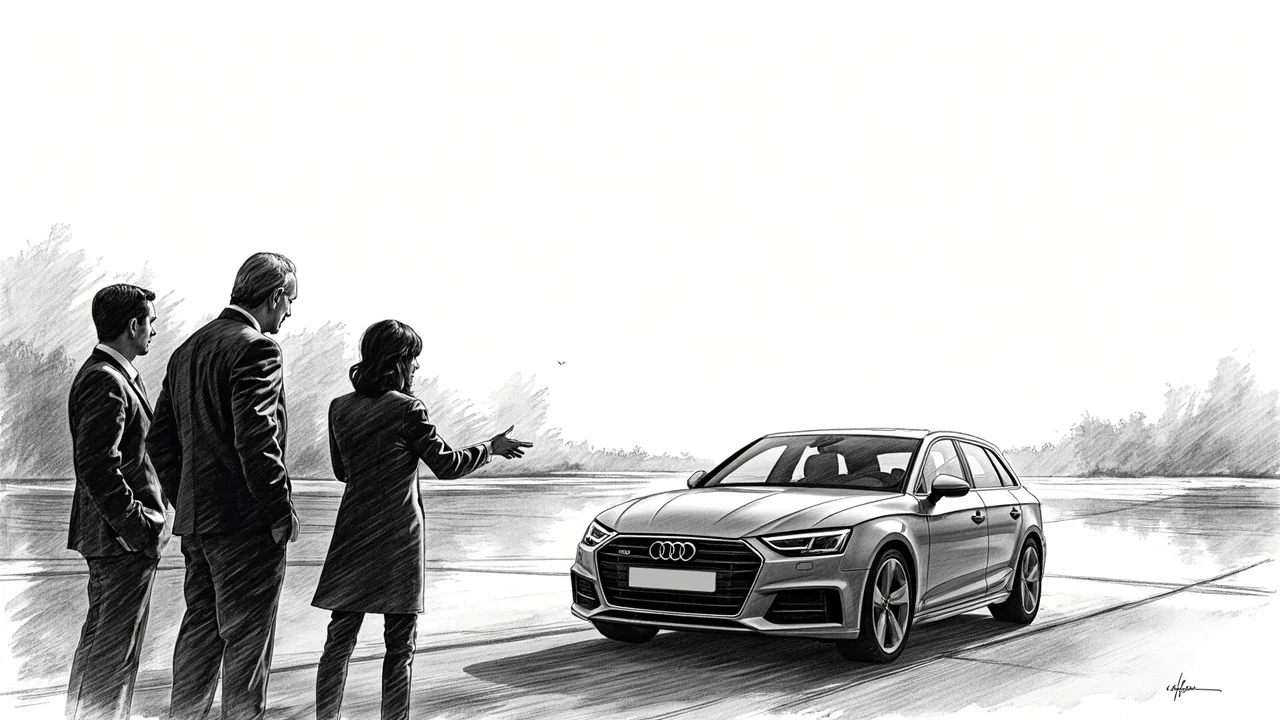
Finland's automotive market is witnessing a bold strategic shift as importer K-Auto announces a sweeping five-year, 100,000-kilometer factory warranty for all new Audis sold in the country starting January 9, 2026. This move, revealed at a press conference, creates a significant competitive advantage for Audi in the Finnish premium segment, where rivals BMW and Mercedes-Benz offer only the EU-mandated minimum two-year warranty. The decision is a direct response to consumer anxieties about new technology, particularly electric vehicles, and aims to stimulate sales during an economic downturn.
A Calculated Competitive Gambit
The new warranty is a genuine manufacturer-backed guarantee, but it is exclusive to Finland. Consumers in Germany or Sweden buying a new Audi will not receive the same terms. This geographically targeted strategy highlights how importers are tailoring offers to specific market conditions. By doubling the standard coverage period, Audi Finland is making a clear statement about product reliability. "We are bringing a five-year warranty to all Audi models in Finland, which we believe will increase customer trust and improve the cars' resale value in the future," said Tero Lappi, Business Director for Audi at K-Auto. This focus on long-term value is a key selling point for premium buyers who consider total cost of ownership.
The Finnish Warranty War Heats Up
Extending warranty periods is a rising trend in the Finnish auto trade. K-Auto itself set the precedent in December 2025 by launching a similar warranty for Volkswagen models. Peugeot also recently extended its factory warranty for electric cars to five years and 100,000 kilometers. This collective move signals an industry-wide pivot towards using extended peace of mind as a primary sales tool. For consumers, it reduces the financial risk of major repairs and simplifies ownership. For brands, it is a powerful marketing lever in a crowded and competitive market where technical specifications alone are no longer sufficient to close deals.
Audi explicitly links the warranty extension to addressing customer concerns about the durability of new technology. Consumer trust in electric vehicles may not yet be as high as for traditional combustion engine cars. In two separate consumer studies presented by Audi, strong warranty terms have risen in importance for buyers. The extended coverage acts as a safety net, encouraging adoption of newer, more complex vehicle architectures. In a sales downturn, such a warranty can be the final deciding factor that secures a purchase, providing customers with the confidence to commit to a significant investment.
The Q6 e-tron: Spearheading the Strategy
Audi anticipates its new Q6 e-tron electric SUV will become its best-selling model in 2026. To sharpen its commercial appeal, the company is introducing a new "volume model" called the quattro S Line version. This variant features enhanced aesthetics and interior with the S Line package, and includes air suspension, adaptive cruise control Plus, and 360-degree cameras as standard equipment. Critically, its price is set at €69,990, which Audi states is €5,000 cheaper than the previous equivalent model. This combination of a sharper price, improved standard equipment, and the new five-year warranty creates a compelling package.
Audi admits the revised pricing, specifications, and extended warranty for the Q6 are also a countermove to strong new product launches from rival brands. With Mercedes-Benz preparing a new GLC and other competitors updating their line-ups, the Finnish premium market is entering a period of intense competition. The warranty offer is a defensive and offensive tool designed to protect market share and attract customers who might otherwise be cross-shopping other German marques. It reframes the value proposition from initial price to long-term, worry-free ownership.
Market Impact and Consumer Calculus
The immediate effect is a new benchmark for premium car guarantees in Finland. For BMW and Mercedes-Benz, which offer customizable extended warranty packages as optional extras at the point of sale, the pressure to respond will mount. Audi's move turns what was often an upsell item into a standard, headline feature. This changes the conversation in showrooms and in consumers' minds. The calculation for a buyer now includes five years of assured coverage, potentially lowering the total cost of ownership compared to a rival brand where an extended warranty adds thousands to the purchase price.
From an industry perspective, this trend towards longer warranties could influence residual values. Audi's assertion that the warranty will improve resale value is logical; a car with significant remaining factory coverage is more attractive on the used market. This creates a virtuous cycle for the brand, fostering stronger loyalty and a more robust secondary market for its vehicles. However, it also places greater financial and logistical responsibility on the importer and dealer network to manage warranty claims efficiently over a longer period. Their backend operations must be prepared for this commitment.
A Bellwether for Broader Trends?
Finland's unique position as a testing ground for this aggressive warranty strategy is noteworthy. The Finnish auto market, while sophisticated, is smaller and potentially more responsive to clear-cut value propositions than larger European markets. If successful, this model could be studied and potentially adapted elsewhere. The strategy reflects a broader evolution in the automotive business: as the technology in cars becomes more complex and expensive to repair, manufacturers are using comprehensive warranties to mitigate consumer fear. This is especially true in the transition to electric vehicles, where battery longevity is a common concern.
The move by K-Auto for Audi and Volkswagen also demonstrates the growing power of large import groups in shaping market dynamics. By implementing this policy across two major brands under its umbrella, K-Auto is setting a new local standard that other importers must now consider. It is a strategic play that leverages scale and local market understanding to create a distinct competitive edge. The coming months will reveal whether this warranty war remains contained to a few brands or triggers a wider industry realignment in Finland and beyond. Will BMW and Mercedes-Benz hold their line with two-year coverage, or will they be forced to match their rival's bold Finnish gambit? The answer will define the next chapter of premium car sales in the Nordic region.