
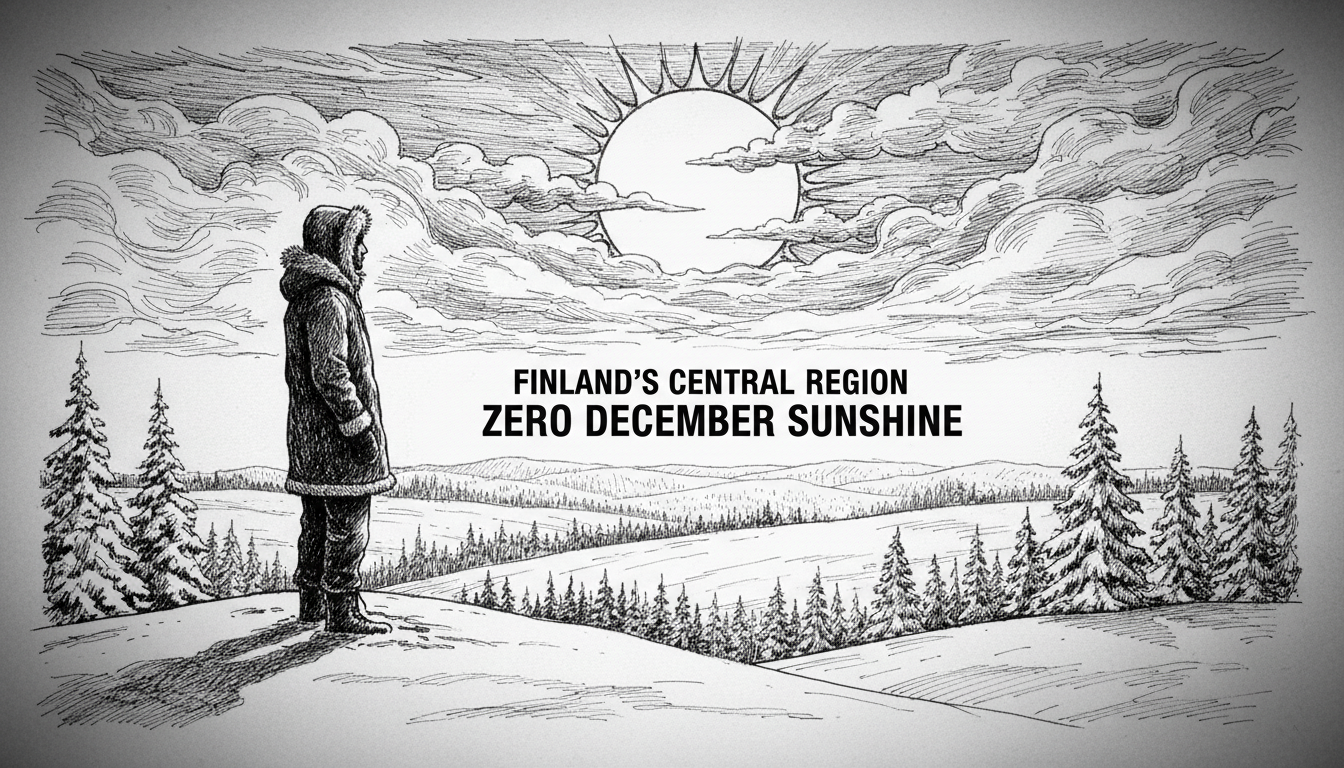
Finland's Central Finland region has recorded zero minutes of sunshine in December, a stark contrast to the typical two-hour average. This complete absence of sunlight, confirmed by the Finnish Meteorological Institute (Ilmatieteen laitos), highlights an unusually gloomy month for residents accustomed to brief winter brightness. Meteorologist Eveliina Tuominen described the conditions as persistently rainy with thick cloud cover, preventing any accidental glimpses of the sun. "It has been quite gloomy," Tuominen stated, underscoring the emotional weight of the data.
Central Finland, known for its lakes and forests, is experiencing a December devoid of solar warmth. The Finnish Meteorological Institute monitors sunshine duration using precise instruments across the country. This zero-reading from Keski-Suomi is not just a statistical anomaly but a tangible reality for locals. December typically offers around two hours of sunshine in this region, based on long-term climate records. The current deviation raises questions about weather patterns and their broader implications.
Meteorological Mysteries Behind the Darkness
Persistent low-pressure systems from the Atlantic have shrouded Central Finland in dense cloud cover throughout December. Meteorologists point to stable atmospheric conditions that trap moisture, leading to continuous rain and snowless skies. Unlike northern Finland's polar night, where the sun remains below the horizon, Central Finland should have some daylight hours. However, the sun's path is obscured by unyielding clouds, creating a perpetual twilight effect. This weather pattern is influenced by wind currents carrying warm, moist air from the southwest, which collides with colder continental air.
Expert analysis suggests that such extended periods without sunshine are rare but not unprecedented. Climatologists note that Finland's climate is warming faster than the global average, potentially altering precipitation and cloud formation. "While one month does not define a trend, it fits into observations of increasing cloudiness in Nordic winters," a climate researcher explained, referencing EU-funded studies on Arctic amplification. The lack of sunshine coincides with weaker-than-average snow cover, exacerbating the sense of darkness and affecting ecosystems.
Contrasting with Seasonal Norms and Neighbors
Historically, Central Finland receives approximately two hours of sunshine in December, with some years seeing slightly more or less. This year's zero hours places it among the darkest Decembers on record. Comparatively, northern Lapland has had some clear days despite shorter daylight, while southern coastal areas like Helsinki have managed a few hours of sunshine. This regional disparity underscores Finland's diverse climate zones, shaped by latitude and geography.
The average sunshine duration for Finland in December varies significantly, from zero in the north to up to 20 hours in the south. Central Finland usually falls in the middle, making this month's total particularly alarming. The Finnish Meteorological Institute maintains archives showing that similar events occurred in the late 1990s, but frequency may be increasing. Data tables from the institute reveal a gradual decline in winter sunshine hours over the past two decades, though more research is needed to confirm a trend.
Human Impact and Coping Strategies
The emotional and practical effects of prolonged darkness are profound for Central Finland's residents. Seasonal Affective Disorder (SAD) rates tend to spike during such periods, with healthcare providers reporting increased demand for light therapy and counseling. Local businesses, especially in tourism and outdoor recreation, face challenges due to the lack of snow and sunshine. Ski resorts have delayed openings, and holiday events have been dampened by the grey skies.
Finns are renowned for their resilience to winter darkness, employing strategies like candlelit traditions, saunas, and artificial lighting. However, this December's extreme gloom tests even the hardiest spirits. Community centers have extended hours to offer warm gathering spaces, and schools incorporate extra indoor activities. Psychologists emphasize the importance of social connection and routine to mitigate the mental health impacts. The situation has sparked discussions in the Eduskunta about funding for public health initiatives related to climate adaptation.
Broader Climate Context and EU Implications
Finland's weather anomalies resonate within the European Union's climate policy framework. As a member state, Finland contributes to the EU's Green Deal, which aims for carbon neutrality by 2050. Changes in cloud cover and sunshine hours could affect solar energy potential and agricultural planning. The European Environment Agency monitors such variables, linking them to broader patterns of climate change in the Nordic region.
Meteorologists caution against attributing single events to climate change, but note that warmer winters may lead to more cloud formation from increased evaporation. This December's lack of sunshine in Central Finland could be a precursor to more frequent occurrences if global temperatures continue to rise. EU directives on environmental monitoring require member states to report extreme weather events, and Finland's data will feed into regional assessments. The Finnish government is reviewing its national adaptation strategy, with input from the Ministry of the Environment.
Looking Ahead to January and Beyond
Forecasts for January suggest a gradual shift in weather patterns, with potential for clearer skies as high-pressure systems build over Scandinavia. However, meteorologists remain cautious, indicating that cloud cover could persist if Atlantic storms continue to dominate. The Finnish Meteorological Institute will update its models based on real-time data, providing guidance for municipalities and citizens.
Long-term, Finland may need to adjust to winters with less sunshine and more precipitation. Urban planning in cities like Jyväskylä, the capital of Central Finland, could incorporate more artificial lighting in public spaces. Research into climate resilience, funded by EU programs, is crucial for developing strategies to combat the effects of darkness on well-being and economy. As days slowly lengthen after the winter solstice, hope rests on the return of the sun, but this December serves as a reminder of nature's variability.
Ultimately, the sunless December in Central Finland is more than a weather statistic; it is a story of human adaptation and environmental change. How will Finns balance their cherished winter traditions with evolving climate realities? The answer lies in continued vigilance, community support, and policy innovation grounded in scientific evidence.