
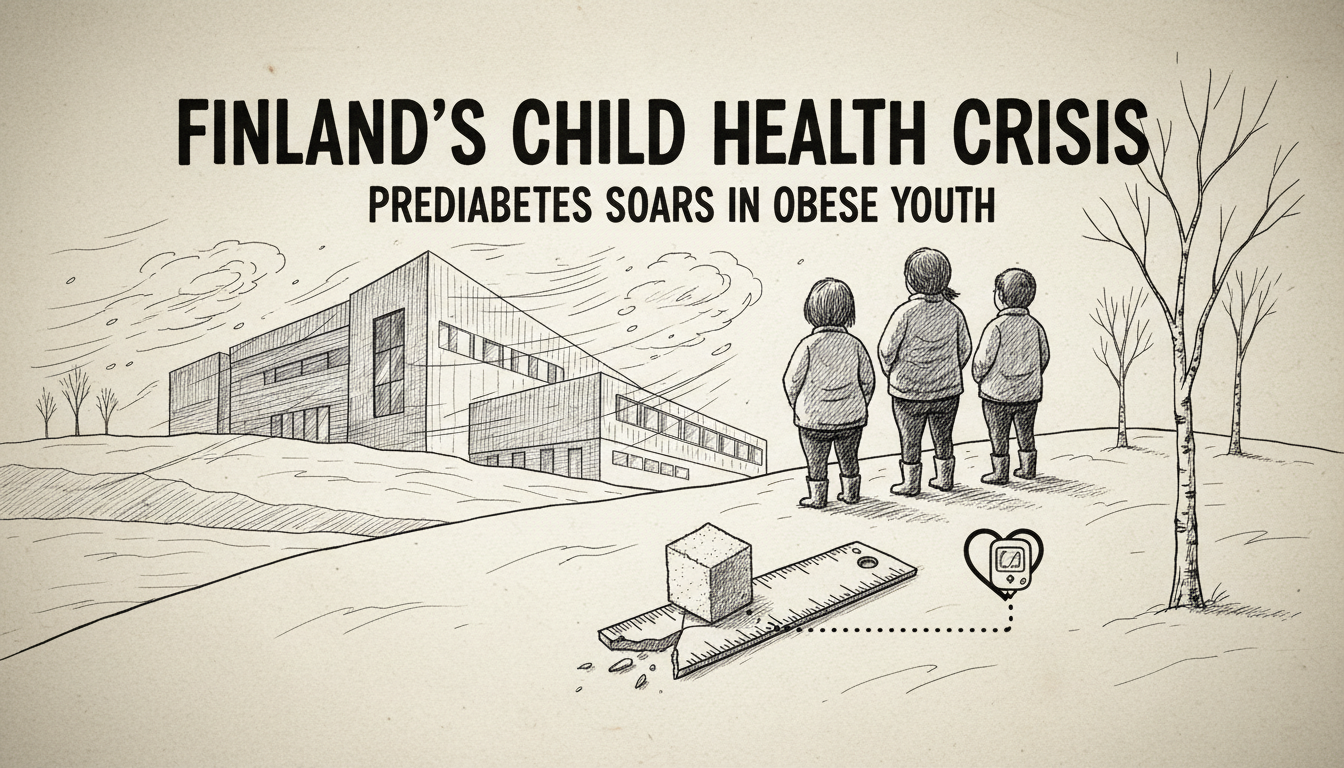
Finland's childhood obesity epidemic has triggered a severe and unexpected health crisis, with a new study revealing that over one-third of obese children now have prediabetes. The research, conducted over 17 years, shows a dramatic increase in this precursor to type 2 diabetes, a condition once almost unheard of in the young. The findings have shocked medical experts and prompted urgent calls for a national intervention strategy.
"The prevalence of prediabetes is truly enormous. This is very concerning," said Hanna Riekki, a Licentiate of Medicine and doctoral researcher behind the study. Riekki noted the most surprising aspect was how sharply prediabetes rates climbed over the study period, independent of the severity of a child's obesity. The research also found just over one percent of the examined children already had full-blown type 2 diabetes, alongside increases in conditions like fatty liver disease.
A Silent Epidemic Emerges
This research provides the clearest picture yet of a silent metabolic shift occurring within Finland's younger generation. While public health officials have tracked rising childhood obesity rates for years, the rapid conversion of that weight into serious, chronic disease markers has exceeded expectations. The study's longitudinal nature, tracking changes from 2005 to 2022, eliminates any doubt that this is a sustained trend, not a statistical anomaly.
The implications are profound for Finland's future public health and economy. Prediabetes indicates that the body's insulin system is already failing, dramatically increasing the risk of progressing to type 2 diabetes, heart disease, and stroke. Diagnosing these conditions in children potentially means a lifetime of medical management, with onset of complications like neuropathy and kidney damage occurring in early adulthood rather than old age. "We are looking at a generation that could face significant health challenges decades earlier than their parents or grandparents," Riekki explained.
Beyond the Scale: Understanding the Drivers
Experts point to a confluence of factors driving this crisis. Changes in the Finnish diet, with increased consumption of ultra-processed foods and sugary drinks, play a major role. Simultaneously, more sedentary lifestyles, fueled by increased screen time and changes in how children play and commute, have reduced daily physical activity. The problem is systemic, intertwined with urban planning, food marketing, and family economics.
Dr. Liisa Kivimäki, a pediatric endocrinologist not involved in the study, emphasized the insidious nature of the trend. "The increase was regardless of obesity degree. This tells us that the metabolic dysfunction is spreading even to those we might classify as moderately overweight. The environmental and lifestyle triggers are so potent that the body's glucose regulation is being disrupted on a wide scale," Kivimäki said. She stressed that the focus must move beyond simple weight measurement to metabolic health screening.
The Finnish Context and Global Parallels
Finland is not alone in this struggle; it mirrors a global pattern identified by the World Health Organization. However, the Finnish data is particularly robust and alarming due to the nation's comprehensive healthcare registries and history of proactive public health research. The country has previously successfully tackled cardiovascular disease through population-wide measures, making the current failure to curb childhood metabolic disease a pointed concern for health authorities.
The study acts as a national wake-up call. Previous public health campaigns have had mixed results, suggesting that piecemeal approaches are insufficient. "Awareness alone is not enough. We need structural changes that make the healthy choice the easy choice for families and children," argued Professor Markku Tauriainen, a public health policy expert. He lists potential actions including stricter regulations on junk food advertising to children, sugar taxes, and mandatory daily physical activity in schools.
A Call for Action and Early Intervention
The research underscores a critical need for revised medical guidelines. Currently, widespread screening for prediabetes in children is not standard practice. The study's authors and independent experts are now advocating for routine blood glucose and insulin testing in all children classified as overweight or obese. Early detection of prediabetes is crucial, as the condition is often reversible with significant lifestyle intervention.
"This is a reversible window, but it is closing fast for many children," Riekki stated. Effective intervention requires a multidisciplinary approach involving pediatricians, dietitians, exercise physiologists, and family support. Municipal health services, which are the backbone of Finnish primary care, would need significant new resources and training to manage the expected caseload.
The Road Ahead: Policy vs. Prognosis
The path forward involves difficult policy decisions and societal introspection. The alternative—inaction—carries a staggering cost. The direct medical expenses of treating a surge of young adults with diabetes and its complications would strain the Finnish social healthcare system. The indirect costs, through lost productivity and reduced quality of life, would be incalculable.
Finland now stands at a crossroads. The nation celebrated for its education system and technological innovation is facing a preventable health disaster within its own youth. The study provides irrefutable evidence; the response will define the health of the next generation. Will Finland mount a coordinated, national response akin to its past public health victories, or will the shocking trend of prediabetes in children continue its steep climb? The answer will be written in policy, plate by plate, and playground by playground, in the years to come.