
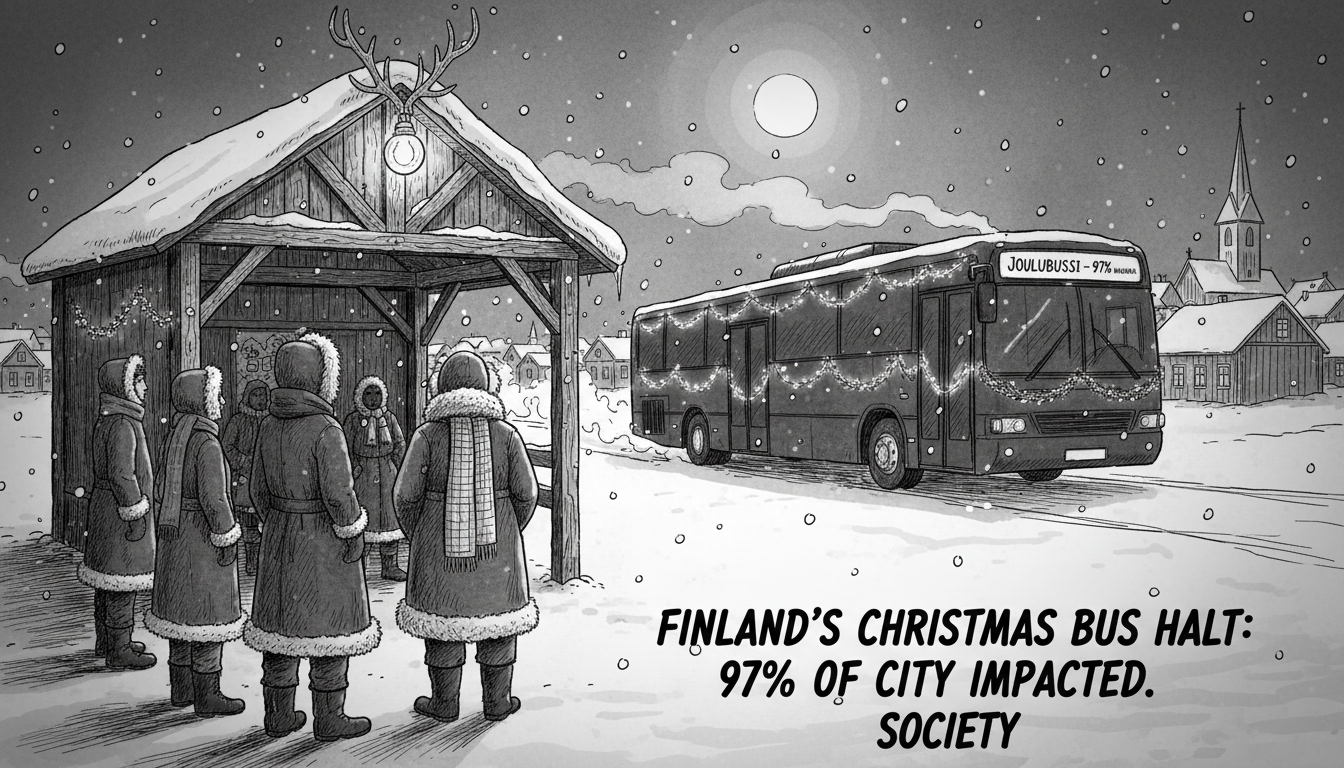
Finland's public transport systems will face a near-total shutdown this Christmas Eve, directly impacting the daily movements of approximately 97% of Jyväskylä's 145,000 residents. The city's Linkki bus network will cease operations at 4:00 PM on December 24, resuming only with a Sunday schedule on Boxing Day, December 26. This annual pause highlights a profound, nation-wide shift from public mobility to private family gatherings, creating logistical challenges and opportunities for local tech solutions in one of Europe's most digitally connected societies.
The Silent Christmas Bus
From 4:01 PM on Christmas Eve until the morning of December 26, the familiar hum of electric and diesel buses will disappear from Jyväskylä's streets. The Linkki service, operated by the regional transport authority Pohjolan Liikenne, follows a standard Finnish model for major holidays. Buses run on a Saturday timetable until mid-afternoon on Christmas Eve before the complete stop. This is not a unique local decision but a reflection of national patterns. In Helsinki, the Helsinki Regional Transport Authority (HSL) also implements severely reduced services, though some core routes may maintain limited late-evening runs for churchgoers. The scale of the shutdown is a testament to the cultural weight of Christmas in Finland, where public life intentionally slows to a crawl.
The economic rationale is clear. Passenger numbers on public transport plummet by an estimated 70-85% during Christmas Eve evening and Christmas Day. Running full services would mean operating nearly empty vehicles at a significant financial loss. ‘We must balance service provision with responsible use of public funds,’ said a representative from Jyväskylä's transport planning office. ‘The demand simply isn’t there when the entire country is seated at the dinner table.’ This operational decision, while practical, forces residents without private vehicles to plan their holiday movements with precision, especially for attending Christmas church services or visiting cemeteries for the traditional candlelight visit.
Digital Timetables and the Public Trust
Communication of these changes is critical. A decade ago, residents would rely on physical leaflets at bus stops or newspaper notices. Today, the primary channels are digital. The Linkki website and mobile app are updated weeks in advance. This shift to digital-first communication is a microcosm of broader Finnish tech adoption, where 92% of the population uses internet banking and public services are predominantly accessed online. However, it creates a digital divide risk. Elderly or less tech-savvy citizens who depend on buses are most vulnerable to being stranded if they miss the online announcements.
Finnish startups in the mobility sector, like MaaS Global (known for the Whim app), have explored integrated transport solutions. Their models, often piloted in Helsinki, aim to bundle public transport, taxis, and rental cars into a single subscription. A holiday period like Christmas, with its abrupt public transport hiatus, represents a complex scenario for such services. It tests their ability to dynamically offer and promote alternative options like taxis or rental cars to fill the mobility gap. ‘Holiday schedules are a stress test for any smart city model,’ noted a mobility analyst from Aalto University. ‘The system must not only inform users of an absence but actively provide and facilitate accessible alternatives.’
A Nordic Contrast in Approach
Comparing Finland's approach to its Nordic neighbors reveals subtle differences. In Oslo, Norway, public transport operates on a heavily reduced but not entirely stopped schedule on Christmas Eve and Day, with a ‘Christmas timetable’ publicly available. Stockholm, Sweden, follows a pattern similar to Finland’s major cities, with very limited services. The almost complete shutdown in medium-sized cities like Jyväskylä is perhaps the most definitive. This reflects a deeply ingrained social contract: workers deserve the time off, and families should be together without the backdrop of a functioning commercial world. The transport shutdown is not seen as an inconvenience but as a societal affirmation of the holiday’s importance.
This tradition, however, faces new scrutiny. Finland’s demographic landscape is evolving. Urban centers are becoming more multicultural, and not all residents celebrate Christmas. For international students, new immigrants, or non-Christian citizens, the shutdown can mean isolation and limited mobility for two full days. Some debate has emerged in public forums about whether a minimal ‘skeleton service’ on core routes would be a more inclusive modern approach. So far, the cultural norm remains firmly in place, supported by the stark economics of low ridership.
The Cemetery Routes and Community Impact
A specific and poignant aspect of the Christmas Eve schedule is the timing of the final buses. With services stopping at 4:00 PM, many people visiting gravesites to light candles in memory of loved ones—a sacred tradition for many Finns—must travel earlier in the day or find other means. Municipalities are often aware of this. In some cities, extra shuttle services to major cemeteries are sometimes arranged for the early afternoon, though this is not explicitly mentioned in the current Linkki announcement. This detail underscores how public transport schedules are interwoven with social and cultural rituals. The cessation of service marks the official transition from the public sphere to the private, familial domain.
Local taxi companies and ride-sharing services experience a predictable surge in demand during these hours. Prices may reflect this increased demand. For the average Jyväskylä resident, the advice from authorities is simple: plan ahead. Check the digital schedules now, arrange rides with family or friends, and be aware that the usual mobility infrastructure will be offline. This planning necessity reinforces the Finnish virtues of sisu (perseverance) and preparation, turning a potential frustration into an exercise in communal forethought.
Looking Beyond the Holiday Shutdown
The annual Christmas transport pause is a stable fixture, but the systems managing it are evolving. The Finnish technology sector, renowned for companies like Nokia and Supercell, excels in connectivity and software. The next frontier for cities like Jyväskylä may involve more sophisticated, AI-driven mobility platforms that can seamlessly transition users from a halted bus network to an activated pool of alternative transport options, with real-time pricing and availability. Companies developing IoT solutions for smart cities could find a valuable test case in managing these predictable yet disruptive annual events.
For now, the message is clear. Finland grinds to a respectful halt. The Linkki buses in Jyväskylä will go quiet, echoing a national stillness. It is a powerful reminder that in one of the world’s most technologically advanced societies, some traditions—like gathering quietly at home—still dictate the rhythm of daily life. The challenge for Finnish innovators is to build digital bridges that honor that tradition while ensuring no one is left behind in the silence.