
Finland's elderly care system is grappling with a profound demographic shift, but one couple's radical move highlights a small-scale solution. Marja and Petri Sillberg left their stable careers and Helsinki life behind to open a family care home for six seniors in rural Polvijärvi. Their story illustrates a growing model of care as the nation seeks practical alternatives to institutional settings.
A Radical Leap North
Just a few years ago, Marja and Petri Sillberg were embedded in the professional rhythm of the capital region. They resigned from their permanent jobs, sold their home, and relocated over 400 kilometers northeast to the municipality of Polvijärvi in North Karelia. Their new mission was not retirement, but a complete career and life pivot. They renovated a house to meet strict regulatory standards and opened the doors of 'Voikukka,' a family care home, or perhekoti, welcoming six elderly residents into their daily lives. This model, where care is provided in a private home by live-in caregivers, represents a deliberate choice toward community-integrated, person-centered care.
The Finnish Ministry of Social Affairs and Health has long promoted such decentralized care options. This push is framed within the 2020-2023 strategy to strengthen community-based services. The Sillbergs' story is a direct manifestation of this policy direction, moving care from large facilities into domestic environments. For the residents, it means living in a family setting rather than an institution.
The Daily Rhythm of Voikukka
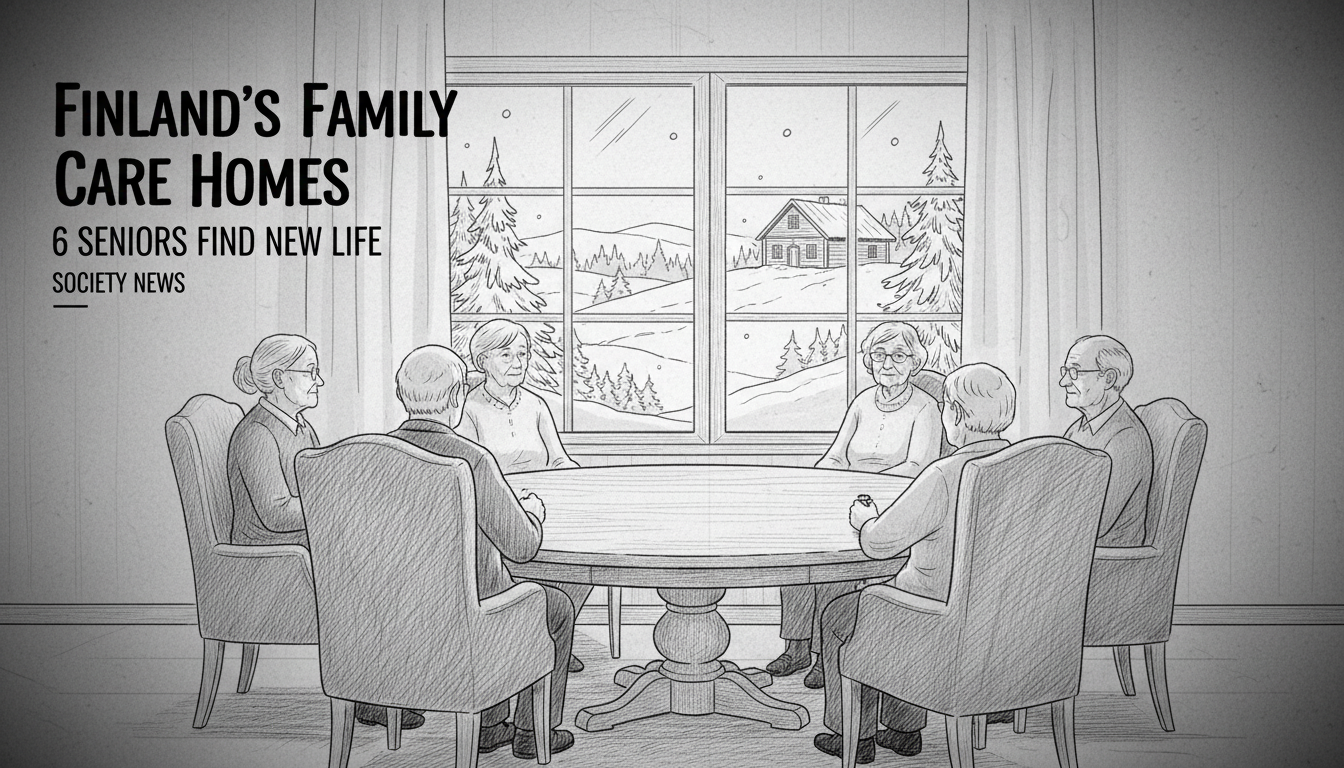
Life at Voikukka revolves around a shared domesticity. Petri Sillberg’s ring of a mealtime bell signals the gathering for lunch. Room doors open, and rollators make their way to the long kitchen table. Marja serves homemade vegetable puree soup, and the group sits together to eat. This simple scene is central to the home's philosophy. It contrasts sharply with the scheduled, often impersonal, meal services of larger care institutions.
The care is continuous and integrated. The line between caregiver and household member is intentionally blurred, creating a sense of belonging and normalcy. Activities are woven into the day's fabric, from quiet moments in the living room with a resident like Pertti Juutinen to managing medications and personal care. The model's strength lies in its capacity to offer consistency and deep familiarity, which gerontology experts link to improved emotional well-being in older adults.
Policy Meets Practice in Rural Finland
The Sillbergs' operation functions under Finland's Act on Social Welfare (Sosiaalihuoltolaki). This legislation sets quality and safety standards for all service providers, including family care homes. Municipalities, like Polvijärvi, purchase these care placements, funding the model through public social care budgets. As of 2020, roughly 400 such homes operated across Finland, a number analysts expect to grow as demand increases.
This growth faces significant challenges. Recruitment of dedicated caregiver couples is a major bottleneck. The role demands a tremendous personal and professional commitment, blending 24/7 caregiving with running a small business. Funding levels from municipalities are a constant topic of debate in the Eduskunta, with caregivers advocating for fees that truly reflect the intensive nature of the work. Without sustainable financing, the model's expansion could stall.
The Demographic Imperative
The push for models like the Sillbergs' is driven by undeniable numbers. In 2022, approximately 15% of Finland's population was aged 75 or older, a proportion steadily rising. Traditional large-scale care homes are expensive to build and operate, and they can struggle to provide a homelike atmosphere. Family care homes offer a complementary solution, particularly in rural areas like North Karelia where maintaining large institutions is less feasible.
Experts in social care policy point to the dual benefit of such approaches. They can potentially improve quality of life for recipients while offering a cost-effective service for municipalities. Furthermore, they can revitalize rural communities by creating new care-based livelihoods, countering the trend of centralization. The model aligns with broader EU care principles emphasizing autonomy and de-institutionalization.
A Sustainable Future for Care?
Marja and Petri Sillberg represent a viable path, but their path is not easy. Their success depends on a supportive regulatory environment, adequate public funding, and their own unwavering dedication. The Finnish government’s recent reforms aim to standardize and improve service quality across all care providers, a move that will impact small family homes.
The critical question for policymakers in Helsinki is how to scale the human element. Can the state create conditions that encourage more people to make the choice the Sillbergs did? This involves financial incentives, training support, and ensuring a fair work-life balance for caregivers themselves. The future of elderly care in Finland may well depend on finding answers that honor both the dignity of aging and the dignity of care work.
As the lunch table at Voikukka clears, the value of the model is visible in the quiet routine. It offers a testament to a different vision of aging—not on the margins of society, but at the heart of a home. For Finland, navigating its silver century, supporting these small-scale solutions may be as important as planning large-scale policy.