
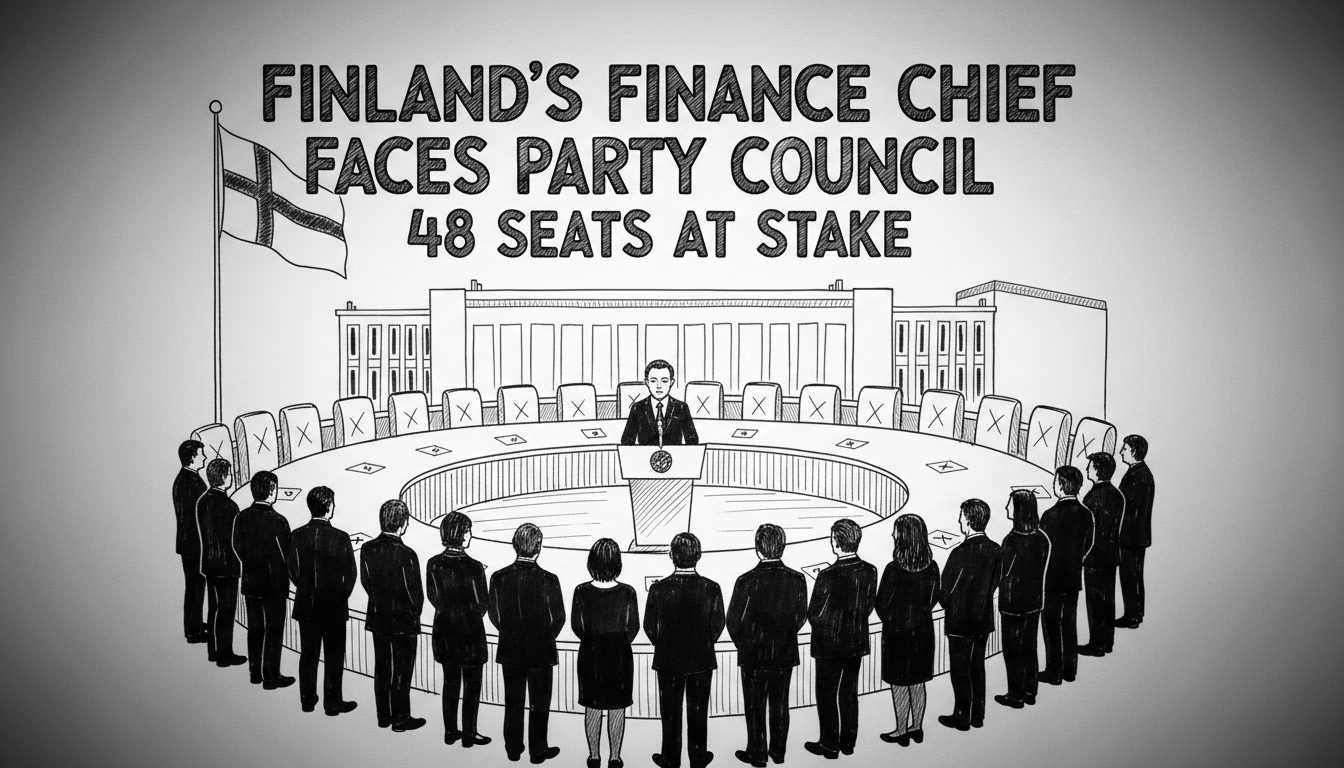
Finland's Finance Minister Riikka Purra addressed the Finns Party council Sunday in a closed-door meeting that signals the populist party's next political moves. Speaking at the Pikkuparlamentti annex in Helsinki, Purra's speech to the 200-member party council aimed to solidify strategy for the ruling coalition government. The address comes at a critical juncture for the party, which holds 48 seats in the 200-seat Eduskunta and serves as a key partner in Prime Minister Petteri Orpo's coalition. Political analysts across Helsinki are parsing Purra's messaging for clues about upcoming budget battles and potential policy shifts affecting Finland's EU relations.
A Closed-Door Address with Public Implications
The party council meeting represents one of the most significant internal gatherings for the Finns Party between national elections. Unlike parliamentary sessions that are publicly broadcast, these council meetings allow party leadership to communicate directly with grassroots representatives who shape party policy. Purra's dual role as party chair and finance minister creates a unique dynamic where government policy and party ideology must align. Her speech likely addressed the tension between implementing coalition agreements and maintaining the party's distinct populist identity. The decision to hold the meeting at Pikkuparlamentti, just steps from the main Parliament building, underscores the party's transition from opposition to governing power.
Political scientist Dr. Laura Järvinen from the University of Helsinki notes the strategic importance of such gatherings. "When Purra speaks to the party council, she's speaking to the engine room of the Finns Party," Järvinen explained. "These are the activists and local representatives who expect the party to deliver on its election promises regarding immigration, EU skepticism, and economic policies. Her challenge is to show progress while managing expectations within a multi-party government framework."
Governing from the Right: Coalition Dynamics and Challenges
The Finns Party entered government in June 2023 after securing 20.1% of the national vote, becoming the second-largest party in Parliament. Their partnership with Prime Minister Orpo's National Coalition Party and the Swedish People's Party represents Finland's most right-leaning government in recent history. This coalition structure requires constant negotiation, particularly on issues where the Finns Party's platform diverges from traditional conservative or liberal positions. Purra's council address undoubtedly touched on these negotiations, especially regarding the 2025 budget proposal her ministry is preparing.
Key policy areas where the Finns Party seeks to leave its mark include stricter immigration controls, reforms to social benefits, and a critical approach to certain EU policies. As finance minister, Purra holds considerable power to advance these goals through budgetary means. However, coalition compromises have already led to watered-down versions of some flagship proposals, creating potential friction with the party base. Sunday's meeting served as an opportunity for Purra to demonstrate how the party is advancing its agenda within governmental constraints.
The Purra Leadership: Consolidating Power Amid Scrutiny
Riikka Purra took leadership of the Finns Party in August 2021 following internal turmoil, becoming the first woman to lead the party. Her tenure has been marked by efforts to professionalize the party's image while maintaining its populist appeal. The council meeting represents a test of her authority and her ability to maintain party unity behind government policies that inevitably involve compromise. Unlike her predecessor Jussi Halla-aho, whose leadership focused on opposition rhetoric, Purra must deliver tangible policy results while in government.
Her performance as finance minister has drawn both praise and criticism. Supporters point to her firm stance on public spending and debt reduction, while opponents argue her proposals disproportionately affect lower-income Finns. The party council includes members from both the pragmatic and ideological wings of the party, requiring Purra to navigate carefully. "Purra must reassure the council that the party hasn't lost its soul by entering government," said political commentator Mikko Kärnä. "At the same time, she needs to show that her ministerial position is being used effectively as a tool for implementing the party's program. It's a delicate balancing act."
Policy Directions: EU Relations and Economic Priorities
A significant portion of Purra's address likely focused on Finland's relationship with the European Union, a perennial concern for the Finns Party. While the party has moved away from outright advocacy for leaving the EU, it maintains a critical stance toward further integration and advocates for returning certain powers to national governments. As finance minister, Purra participates directly in EU economic meetings, giving her a platform to advance this agenda. Her council speech probably outlined specific EU directives or fiscal policies her ministry will challenge or support.
Domestically, the government's economic program includes substantial spending cuts and welfare reforms aimed at reducing public debt. Purra's ministry is central to implementing this program, which faces opposition from trade unions and left-wing parties. The party council represents constituents who both support fiscal conservatism and depend on public services, creating complex political calculations. Purra needed to explain how the government's austerity measures align with the party's promise to protect "ordinary Finns" from elite interests.
Looking Ahead: The 2024 Municipal Elections and Beyond
The council meeting also served as a strategic planning session for upcoming electoral tests, particularly the 2024 municipal elections. While the Finns Party performs strongly in national elections, its local government presence is less established. Building municipal-level strength is crucial for long-term political influence and for identifying future parliamentary candidates. Purra's leadership will be judged not only on government performance but also on the party's ability to grow its local footprint.
The closed-door nature of the meeting allowed for frank discussion about campaign strategies and resource allocation. With the party participating in government, its municipal candidates must both champion local issues and defend national policies. This creates unique challenges compared to when the party was in opposition. Purra's ability to provide a coherent message that works at both levels will significantly impact the party's electoral fortunes.
The Helsinki Perspective: Governing in a Multi-Level System
From the government district in Helsinki, the Finns Party's evolution from protest movement to governing party continues to reshape Finnish politics. Purra's address to the party council represents more than routine internal communication; it's a moment where the direction of a major political force gets recalibrated. The policies developed in these meetings will influence everything from Finnish positions in Brussels to local budget decisions in municipalities across the country.
The true impact of Sunday's meeting will become apparent in coming weeks as the government advances its legislative agenda. Will the Finns Party push for harder lines in coalition negotiations following Purra's council address? Or will the message emphasize stability and pragmatic governance? The answers will determine not only the fate of the current government but also the future trajectory of Finnish populism. As Purra left Pikkuparlamentti after her address, she carried with her the expectations of 48 parliamentarians and the voters they represent—a weight that grows heavier with each policy decision made in the halls of power just across the street.