
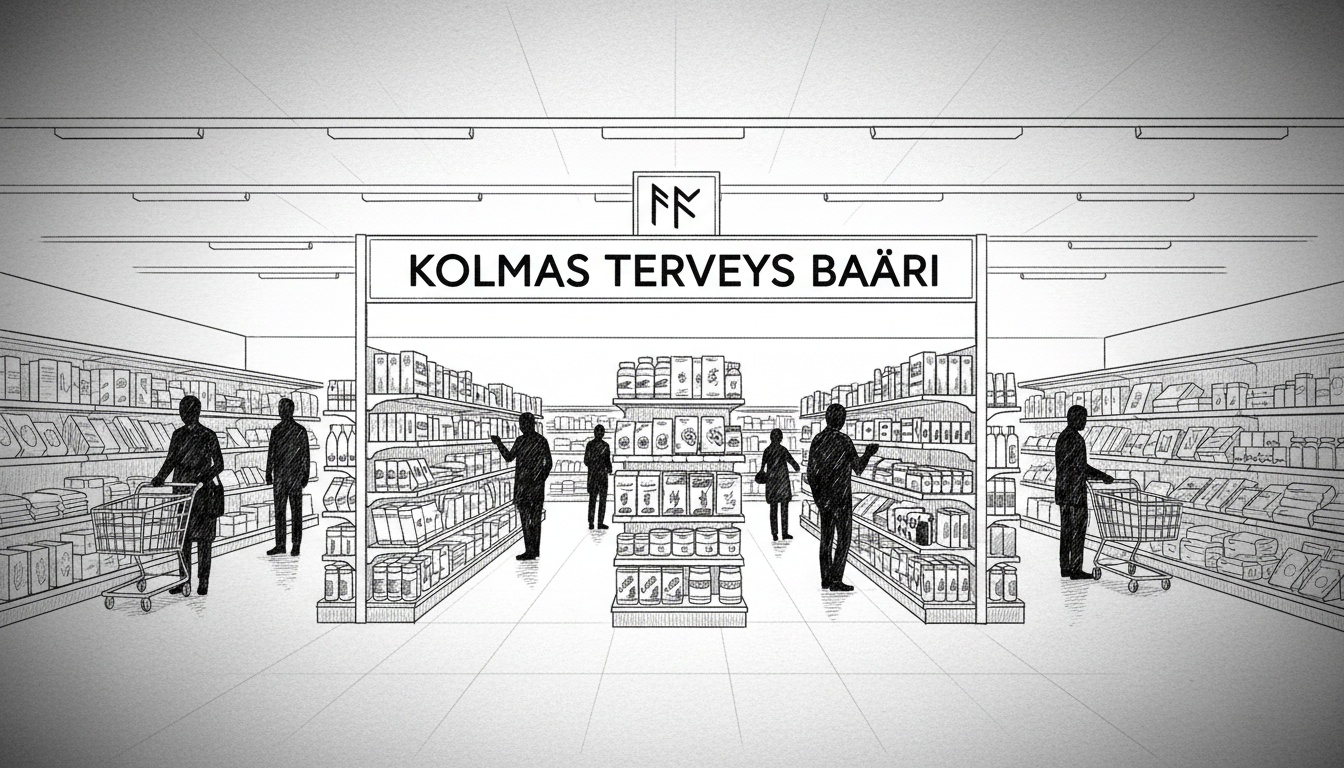
Finland's grocery stores are undergoing a quiet transformation, with one in three large supermarkets now hosting a dedicated health-focused eatery alongside its traditional aisles. The latest example opened this week in Jyväskylä, where the K-Citymarket in Seppälä launched a Smooth It snack bar. This move highlights a strategic shift in Finnish retail, responding directly to a national consumer trend prioritizing wellness and convenience. Store owner Vesa Nurminen stated the new bar directly answers the current 'wellbeing and health boom.'
Smooth It's concept focuses exclusively on fresh, additive-free snacks. Each morning, staff in the store's produce department kitchen prepare that day's offerings: fresh porridges, chia seed puddings, vitamin shots, and a rotating selection of smoothies. The company emphasizes using domestic berries year-round and avoids all added sugars. This operational model blends retail and food service into a single, streamlined customer experience.
From Aisles to Eateries
The Seppälä Citymarket installation is not an isolated experiment. It represents the accelerating evolution of the Finnish supermarket from a purely transactional space to a multifaceted destination. Across the country, retailers like K-Citymarket and S-Market are integrating services that encourage customers to linger and consume on-site. These include full-service restaurants, coffee shops, sushi bars, and now, dedicated health snack stations. The goal is to capture a greater share of the consumer's daily food expenditure, which increasingly includes ready-to-eat meals and snacks.
This strategy addresses a clear change in Finnish lifestyles. Urbanization, busier schedules, and a heightened focus on health have created demand for quick, nutritious options. 'Consumers no longer see a grocery store as just a place to buy ingredients for later,' says Dr. Elina Järvinen, a professor of retail management at the University of Helsinki. 'They see it as a source for immediate, healthy consumption. Retailers who successfully integrate these food service elements are building stronger customer loyalty and increasing basket size.'
The Local Ingredient Promise
A key part of Smooth It's appeal in the Jyväskylä market is its commitment to Finnish ingredients. Promoting domestic berries, even during winter months through frozen production, resonates with Finnish consumers' strong preference for local produce. This national focus is a significant sales point, aligning with trends supporting local agriculture and perceived freshness. The preparation of items directly in the store's fruit and vegetable section further reinforces this message of provenance and immediacy.
Vesa Nurminen's decision to bring Smooth It to his store was driven by personal observation of the brand's success elsewhere. 'I have long admired Smooth It's operations and their fresh and healthy alternatives,' he explained. His statement reflects a broader pattern where individual grocery store owners, acting as entrepreneurs within larger chains, are piloting new concepts to differentiate their specific locations. This decentralized approach allows chains to test and scale successful ideas rapidly.
Experts See a Lasting Shift
Business analysts view this expansion as part of a durable trend, not a passing fad. The integration of food service and retail, often called 'grocerants,' is expected to keep growing. The challenge for concepts like Smooth It will be maintaining consistency and quality across locations while competing with other in-store options and traditional cafes. Their niche relies on a specific health-conscious demographic willing to pay a premium for clean-label, functional foods.
'The demand for convenient and healthy options is structural,' notes Dr. Järvinen. 'For small businesses in the health food sector, partnering with established retailers offers immediate foot traffic and credibility. The challenge is in the logistics—ensuring the fresh, small-batch philosophy can work within the larger, efficiency-driven supermarket system.' Success depends on managing supply chains for fresh produce and training staff to prepare items daily, a more complex operation than stocking packaged goods.
Implications for Finland's Food Landscape
The growth of health bars within grocery stores has wider implications. It potentially shifts some business away from traditional cafes and lunch restaurants, offering consumers a one-stop shop. It also raises the bar for product transparency, forcing other vendors to be clearer about ingredients. For the food industry, it signals that the healthy snack category has moved firmly into the mainstream, supported by major retail platforms.
In Jyväskylä, the success of the new Smooth It bar will be monitored closely by other retailers in Central Finland. If it attracts steady traffic and increases overall store visits, similar openings in Oulu, Tampere, and Turku are likely to follow. The concept's growth trajectory suggests that the line between grocery shopping and dining out will continue to blur. Finnish consumers are voting with their wallets for convenience without compromising their health standards.
This retail evolution prompts a final question: if your local supermarket can reliably offer a fresh, healthy meal prepared with local ingredients, how often will you choose it over a conventional restaurant? The answer to that will determine the future shape of Finland's high streets and shopping centers.