
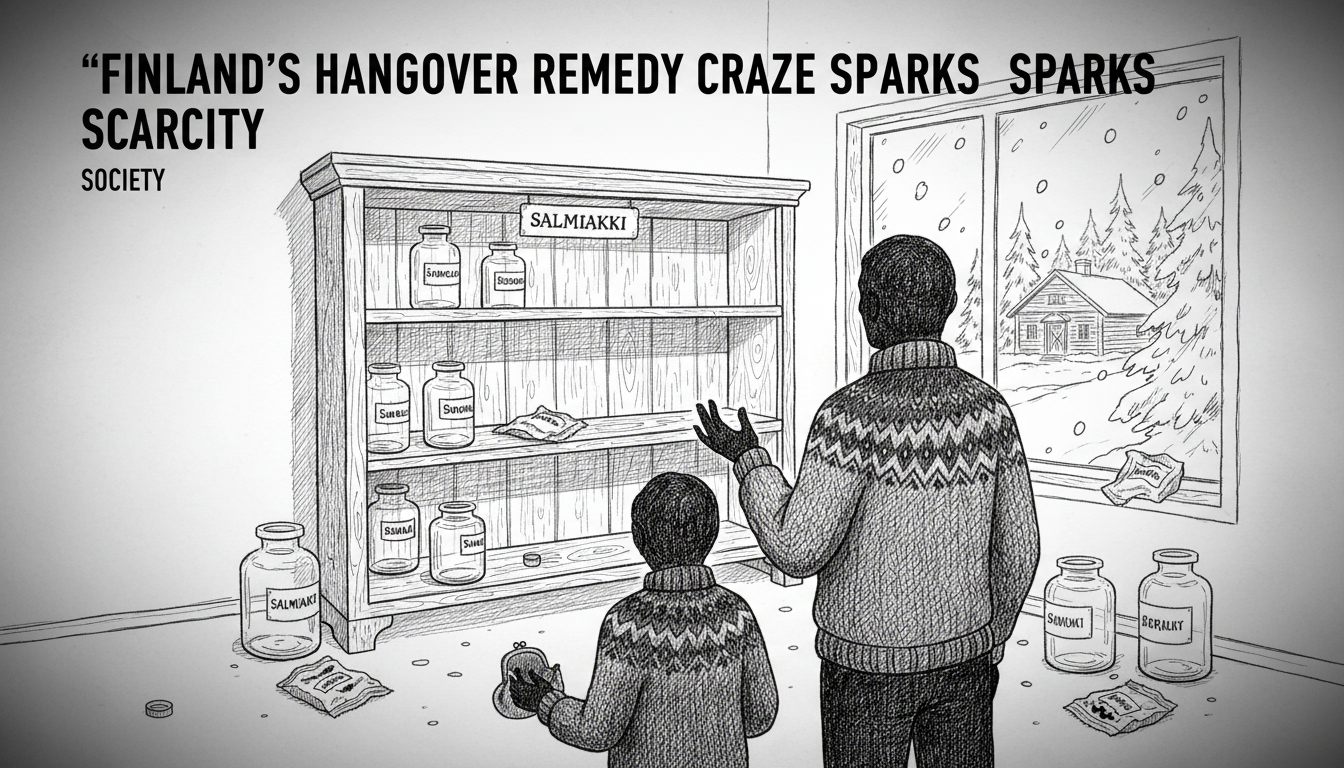
Finland's pharmacies report a doubling in sales of L-cysteine supplements in September, driven by viral social media claims it prevents hangovers. The surge in consumer demand has created sporadic shortages across the country, turning an amino acid marketed as a dietary supplement into an unlikely national phenomenon. This trend highlights a persistent public quest for a reliable hangover cure, set against a backdrop of limited scientific evidence and a complex regulatory landscape for wellness products.
From Niche Supplement to National Sensation
The remarkable journey of L-cysteine from a niche dietary component to a sought-after consumer product unfolded rapidly this autumn. Rafael Al-Sabaawi, the head of the Apteekki 360 online pharmacy, confirmed the sales spike and the subsequent availability challenges. He directly links the demand increase to online discussions framing the supplement as a preventative measure for hangovers. "Although there is no official scientific proof for this use, the topic has been prominent on social media, and we believe that explains the growth in demand," Al-Sabaawi stated. The narrative spread primarily through user-generated content on platforms like Instagram and TikTok, where personal testimonials often carry more weight than clinical studies for many consumers. This pattern of digital-driven demand for health products is becoming increasingly common, placing traditional pharmacies at the intersection of science and social media trends.
The Science Behind the Hype
A 2020 Finnish study forms the cornerstone of the claims circulating online. That research suggested the amino acid L-cysteine could reduce levels of acetaldehyde in the body. Acetaldehyde is a toxic byproduct created when the liver metabolizes alcohol and is a primary contributor to hangover symptoms like nausea and headache. The study's protocol advised consuming the supplement concurrently with alcohol, proposing that the following morning might see a reduction in adverse effects. However, the scientific community views these findings with considerable caution. The study was funded by Cataput Cat, a company that commercially markets L-cysteine products. This funding source introduces a potential conflict of interest. Furthermore, the research has not been independently replicated, a critical step for validating any medical or health claim. Without larger, independent clinical trials, the evidence remains preliminary. Experts consistently note that the biochemistry of a hangover is multifaceted, involving dehydration, inflammation, and disrupted sleep, which a single compound is unlikely to fully address.
Mixed Results from User Experiences
Anecdotal reports from Finnish consumers who have tried products containing L-cysteine, such as the supplement Myrkl, present a contradictory picture. A small-scale trial by a national newspaper illustrated this variance clearly. One 23-year-old female participant reported an exceptionally positive experience, noting no headache, nausea, or fatigue even after a long train journey the next day. In stark contrast, a 27-year-old male tester found little to no benefit, describing a hangover that felt entirely typical. A third participant, a 25-year-old woman, woke up feeling well despite restless sleep but acknowledged her alcohol consumption that night might not have caused severe symptoms regardless. These personal accounts underscore the subjective nature of hangovers and the powerful role of the placebo effect in any perceived remedy. They also highlight the difficulty of gauging efficacy without controlled conditions, as individual tolerance, alcohol type, consumption speed, and food intake all dramatically influence outcomes.
Expert Analysis: A Regulatory Gray Zone
The frenzy around L-cysteine opens a broader discussion about the regulation of dietary supplements and the public's health literacy. Nutritionists and public health experts express concern over consumers using supplements as a license for increased alcohol consumption, a potentially dangerous behavioral shift. "There is no magic pill that negates the effects of alcohol on the liver, brain, or decision-making," says Dr. Liisa Kuosmanen, a Helsinki-based specialist in addiction medicine. "The most effective strategies for preventing a hangover are still moderation, pacing drinks with water, and eating food." She emphasizes that while rehydration and nutrients can aid recovery, they do not eliminate the core cellular damage caused by alcohol toxicity. From a regulatory standpoint, the situation reveals a significant gap. In Finland and across the European Union, dietary supplements are not medicines. They enter the market without the same rigorous pre-approval process required for pharmaceuticals to prove efficacy and safety for specific conditions. Companies can market them for general wellness but cannot make direct medical claims like "cures hangovers." However, consumer testimonials and social media influencers effectively bypass these marketing restrictions, creating a regulatory challenge for authorities like the Finnish Food Authority (Ruokavirasto).
Cultural Context and Commercial Drivers
Finland's relationship with alcohol provides essential context for this trend. The culture includes periods of concentrated social drinking, which fuels a perennial market for hangover mitigation solutions. The commercial ecosystem is ready to respond. The 2020 study, despite its limitations, provided a "scientific" hook for marketing. Supplement companies operate in a competitive space where capturing a trend like this can lead to significant revenue. The subsequent scarcity then feeds a cycle of heightened demand, as rarity is often perceived as evidence of value. This commercial dynamic often outpaces the slower, more methodical world of academic research. For retailers, the trend is a double-edged sword. It drives sales and foot traffic but also creates logistical headaches with supply chains and forces pharmacies into an advisory role they may not be fully equipped for, fielding questions about the efficacy of a product not intended as a medicine.
Looking Ahead: A Sober Reality Check
The current scarcity of L-cysteine products in Finland is likely a temporary supply chain issue. The larger, more enduring questions are about public health communication and consumer protection. Will this trend lead to a renewed call for more stringent regulation of how supplement benefits are communicated online? Could it spur public funding for independent, comprehensive research into hangover remedies, given their societal and economic impact? The phenomenon serves as a case study in how digital narratives can shape real-world consumer behavior and market dynamics, often leaping ahead of scientific consensus. For now, Finnish consumers navigating the holiday season are left to weigh viral anecdotes against expert advice. The promise of a pain-free morning after remains alluring, but the evidence, much like the supplement itself, appears to be in short supply.