
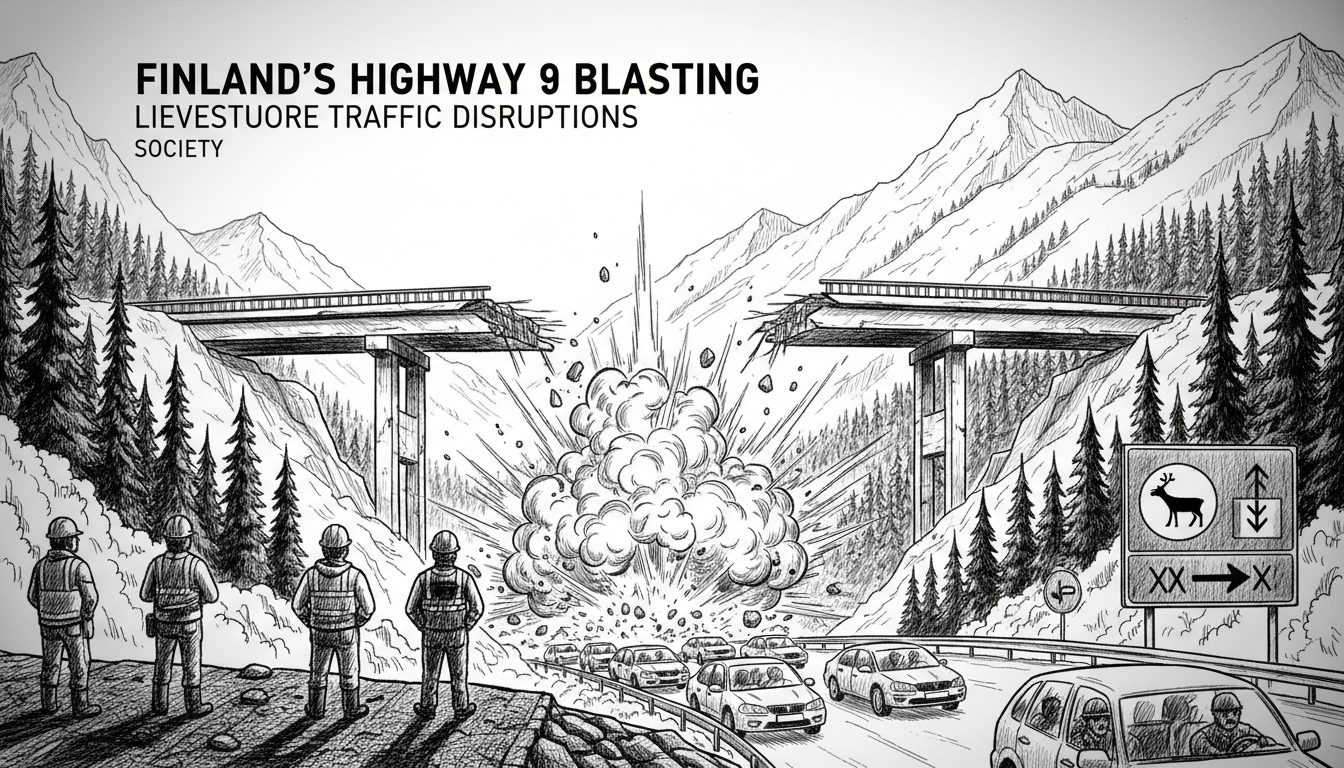
Finland's Highway 9 faces significant traffic disruptions as major excavation and blasting work begins near Lievestuore after the new year. The Finnish Transport Infrastructure Agency (FTIA) confirmed the project will involve breaking ground-level stones and excavating bedrock at the Hoho and Lievestuore interchanges in Laukaa municipality. This essential but disruptive work is part of ongoing national efforts to modernize Finland's crucial east-west transport corridor connecting Turku to Joensuu.
Residents and commuters should prepare for temporary road closures, traffic light-controlled single-lane sections, and potential delays throughout the project's duration. The FTIA has outlined strict safety protocols for the controlled explosions required to fracture the region's characteristic granite bedrock. Local authorities are coordinating to manage the impact on daily travel and ensure alternative routes are clearly signposted.
The Rocky Challenge of Finnish Infrastructure
Highway 9, known locally as Ysitie, traverses some of Finland's most geologically challenging terrain. The work near Lievestuore is a textbook example of the complexities involved in upgrading the nation's road network. "Finland's bedrock is our greatest natural asset and our most persistent infrastructure challenge," explained Dr. Elina Saarelainen, a geotechnical engineer at Tampere University. "Projects like this require precise blasting techniques to fracture the granite without damaging surrounding areas or creating excessive vibration."
The excavation sites at the Hoho and Lievestuore interchanges were selected to improve road alignment and safety. These interchanges serve critical local and regional traffic flows in Central Finland. The blasting will allow for necessary grading and construction that cannot be achieved with conventional machinery alone. This phase is foundational for any subsequent widening or resurfacing work planned for this segment of the highway.
Safety Protocols and Community Coordination
Managing public safety during blasting operations in a populated area is a top priority for project managers. The FTIA will implement a comprehensive safety perimeter around each blast site. Traffic will be halted completely for short periods during actual detonations, with advance warning provided through variable message signs and local media alerts. "Every blast is meticulously calculated," said project manager Jukka Nieminen from the FTIA's Central Finland office. "We use minimal charges to achieve the necessary fracturing, and all work follows the strictest national safety guidelines for vibration and fly rock control."
Local police and road maintenance crews will be on-site to direct traffic during the most disruptive phases. The municipality of Laukaa has been briefed on the schedule to keep residents informed. While the exact timetable for blasts is often weather-dependent, the agency promises to provide as much notice as possible. Night work will be minimized to reduce noise disturbance for nearby communities in Lievestuore and Hoho.
Long-Term Benefits Justify Short-Term Disruption
While inconvenient, this type of groundwork is essential for Finland's strategic road network. Highway 9 is a vital link for freight transport, tourism, and daily commutes across the country. Improvements to its alignment and interchanges directly contribute to national goals of reducing travel times, lowering accident rates, and improving year-round reliability. Well-constructed road foundations also reduce long-term maintenance costs and extend the lifespan of the asphalt surface.
Investing in key highways supports regional economic development by improving access to markets and services. For Central Finland, reliable east-west connections are crucial for forestry, manufacturing, and technology sectors. The disruptions caused by this project are a temporary trade-off for decades of improved transport efficiency. Similar blasting and excavation projects have been successfully completed on other national highways, such as parts of Highway 4 (E75) and Highway 12.
Navigating the Disruption: Advice for Travelers
For those who regularly use Highway 9 around Lievestuore, planning ahead will be key. The FTIA recommends checking real-time traffic information via the national Liikenneinfo service before departing. Allowing extra travel time is advisable, especially during peak morning and afternoon periods. Heavy goods vehicles may face specific restrictions or be directed to use alternative routes during the most intensive work phases.
Local detours will utilize municipal roads, but drivers should expect these alternatives to experience increased congestion. The agency urges patience and caution from all road users near the work zones. Adhering to temporary speed limits and instructions from traffic controllers is critical for protecting both workers and fellow motorists. The project serves as a reminder of the constant, often unseen, effort required to maintain Finland's high-standard infrastructure across its demanding landscape.
The Bigger Picture of Finland's Transport Policy
This project on Highway 9 is not an isolated event but fits into a broader national infrastructure strategy. The Finnish government, through the Ministry of Transport and Communications, allocates significant funding annually to road maintenance and development. These investments are guided by long-term plans that prioritize safety improvements, capacity enhancements on critical corridors, and climate resilience.
Parliamentary committees regularly review transport infrastructure spending, balancing regional needs with national connectivity goals. The work near Lievestuore reflects this ongoing commitment, even when it involves complex and disruptive construction methods. As Finland continues to develop its transport network, confronting the granite foundation of the country remains a fundamental, unavoidable step in the process. The temporary inconvenience of delayed journeys will eventually give way to smoother, safer travel on a key national artery.