
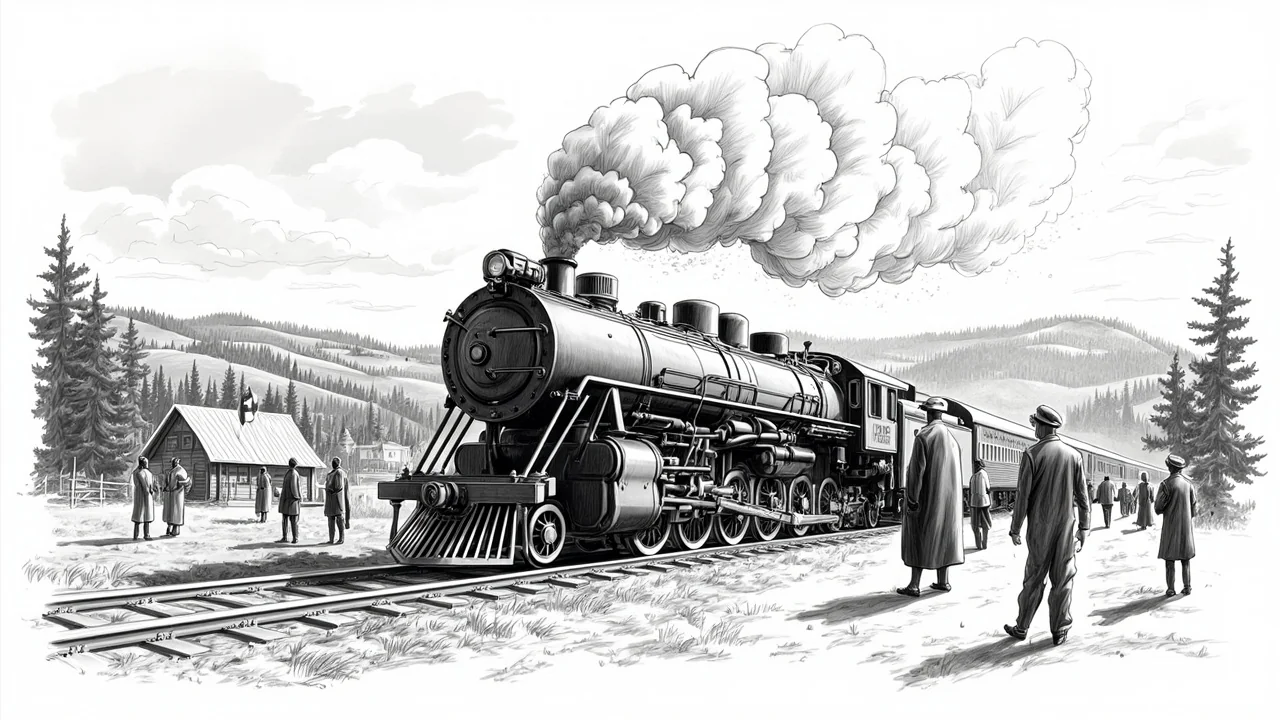
Finland's historic Ukko-Pekka steam locomotive, with a capacity for 400 passengers, is chugging back to life on the tracks between Kouvola and Helsinki this weekend. The 1948-built engine, a beloved relic of Finnish rail history, departed Kouvola on Friday afternoon, its distinctive whistle cutting through the modern silence of diesel and electric travel. This movement marks a rare operational outing for the veteran train, which last ran in 2023, offering a tangible link to a bygone industrial era.
A Weekend Journey Through Time
The schedule is a nostalgic tour through Southern Finland. After its journey from Kouvola, the locomotive will operate trips from Helsinki to Siuntio and Kirkkonummi on Saturday before returning east. The departure from Helsinki back to its home base is set for 18:52. These itineraries are not about speed or efficiency but about the experience itself—the rhythmic chug of the engine, the smell of coal smoke, and the slow, steady progress through the landscape. Tickets are purchased in a fittingly old-fashioned way: with cash on board the train.
Reijo Sarantila, the volunteer managing director of the operating company Höyryveturimatkat 1009 Oy, confirmed the train now pulls six carriages. “There has usually been space for everyone in Southern Finland. The train has never been completely full,” Sarantila noted in a recent statement. This suggests a dedicated but manageable audience for these heritage runs. Onboard, travelers find a café carriage serving sweets and drinks, and a conductor's van that accommodates strollers and bicycles, blending historical authenticity with practical modern needs.
The Uncertain Future of a National Icon
This weekend's runs occur against a backdrop of uncertainty for Ukko-Pekka. Last September, reports surfaced that the locomotive was for sale, with Sarantila planning for retirement. He indicated at the time that inquiries had come from across Finland and that it was fairly certain the engine would leave Kouvola. The future ownership and operational home of the locomotive, one of only 22 such models built between 1937 and 1957, now hang in the balance. These runs could be among its last under the current volunteer-led organization.
The potential sale raises profound questions about the stewardship of Finland's technical heritage. Who is qualified to care for a machine of this age and complexity? Is its value purely sentimental, or can it serve as a viable educational and tourism asset? The volunteer, or talkootyö, model highlighted by the current operators is deeply rooted in Finnish culture, demonstrating community dedication. However, it also exposes the vulnerabilities of preserving heavy machinery without institutional or state-supported backing.
More Than Just a Train Ride
Operating a 76-year-old steam locomotive is an immense logistical undertaking far beyond simply firing the boiler. It requires specialized mechanical knowledge, access to workshops, and compliance with modern rail safety regulations. Every journey is a minor miracle of preservation. The locomotive, designated number 1009, is a rolling museum piece, representing the peak of steam technology in post-war Finland. Its journeys create living history, allowing new generations to experience the sights and sounds that defined travel and transport for decades.
From a policy perspective, heritage operations like Ukko-Pekka exist in a grey area. They are not core public transport, yet they contribute to cultural life and tourism. Unlike some European nations where historic railways are heavily subsidized as part of national heritage, in Finland they often depend on private passion and ticket revenue. This model ensures authentic, grassroots operation but makes long-term survival precarious. The Finnish government's cultural and transport ministries have historically taken a hands-off approach to such individual historic vehicles, focusing instead on museum collections.
The Enduring Allure of Steam
Why does a steam train capture the public imagination so powerfully? The answer lies in its visceral, multi-sensory presence. In an age of seamless, silent electric travel, the steam locomotive is unabashedly physical. You feel its power in your chest, see the labor of its machinery, and understand the basic conversion of heat, water, and steel into motion. It is a profound contrast to the abstract, digital world. For many Finns, especially older generations, the sound of a steam whistle evokes memories of a different pace of life and the might of Finland's industrial rebuilding.
This weekend's trips offer a specific, time-limited opportunity to participate in that living history. The details of the schedules and operations are curated on a dedicated website, a digital doorway to an analog experience. For families, it is a unique outing; for railway enthusiasts, a pilgrimage; and for casual observers, a surprising and charming spectacle in the contemporary landscape.
As Ukko-Pekka makes its way along the tracks this weekend, it carries more than 400 possible passengers. It carries the weight of history, the passion of its volunteers, and questions about its own future. Each whistle blast is a defiant statement against obsolescence, a reminder that some machines earn a lasting place in a nation's heart. The journey continues, for now, but where its final stop will be remains the most pressing question for this iron icon of Finnish history.