
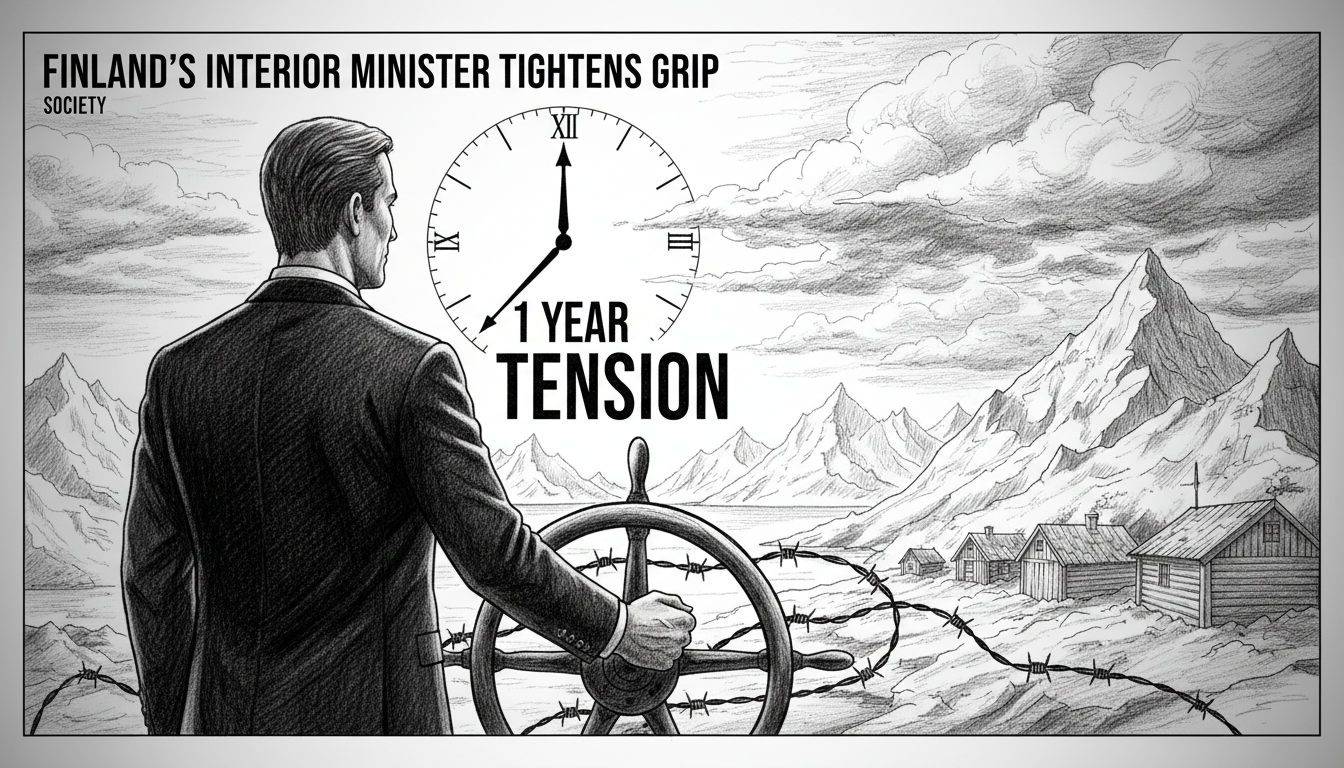
Finland's Interior Minister Mari Rantanen has consolidated political control over her ministry, creating a climate of pressure and fear among civil servants during her first year in office. Multiple sources within the Ministry of the Interior describe a fundamental shift in working methods, with Rantanen and her political staff frequently intervening in preparatory work and officials facing reprimands for expressing views that diverge from the minister's political line. This intense political steering, particularly from a minister with a police background now overseeing broader internal security, raises profound questions about the balance between political priorities and impartial administration in one of Finland's most sensitive government departments.
A Ministry Under Pressure
Since assuming her role in Prime Minister Petteri Orpo's coalition government in June 2023, Rantanen's leadership has transformed the daily atmosphere within the ministry's headquarters in Helsinki. Civil servants report a palpable sense of pressure and a fear-based environment that has persisted throughout the government's term. The core complaint centers on a perceived lack of trust; many officials feel their professional expertise is neither valued nor respected by the political leadership. This manifests in direct interventions, where Rantanen's office closely scrutinizes and alters policy preparation, a process traditionally granted more independence to the non-partisan civil service. One recurring concern among staff is that Rantanen, a former police officer, prioritizes police interests above the ministry's other crucial mandates, which include border security, rescue services, migration, and overall civil preparedness.
The Mechanics of Political Control
The tension stems from a hands-on approach by Rantanen and her core team. Sources indicate they readily involve themselves in the technical preparation of matters, a level of granular oversight that departs from standard Finnish ministerial practice. Officials who have voiced opinions or drafted memos that deviate from the minister's stated political direction have reportedly been 'corrected' or admonished. This creates a chilling effect, where civil servants may hesitate to provide full-spectrum analysis or alternative policy options, crucial for evidence-based governance. The Ministry of the Interior operates in highly charged policy areas—especially immigration and integration—where the Finns Party's platform is particularly pronounced. The concern among governance experts is that a politically pressurized administration may struggle to implement complex laws fairly or prepare for long-term challenges if short-term political messaging consistently overrides professional assessment.
Expert Analysis: Eroding the Buffer
Political scientists and public administration experts view these developments with significant concern. "The Finnish system relies on a clear, though sometimes delicate, distinction between political decision-making and administrative preparation," explains Dr. Laura Järvinen, a professor of public administration at the University of Helsinki. "The civil service provides the facts, options, and legal frameworks. The minister and the government make the political choices. When that boundary blurs, and civil servants feel pressured to align with a political agenda prematurely, it risks the quality and legitimacy of policy." She notes that while every minister has the right to set priorities, systematic pressure that inhibits candid advice undermines the system's integrity. Another analyst, focusing on Nordic governance models, points out that such centralization of control is often counterproductive. "A minister's effectiveness is tied to their ability to harness the full expertise of their ministry. Creating an atmosphere of distrust is more likely to breed risk-aversion and silence than innovation or diligent policy work," the analyst stated.
The Broader Context of Finnish Politics
This situation does not exist in a vacuum. Mari Rantanen is a key figure from the Finns Party, the second-largest party in the ruling coalition. Their strong stance on immigration and national sovereignty forms a central pillar of the government's program. The Ministry of the Interior is the primary engine for executing related policies, from border management to deportation processes. The reported tightening of control can be seen as an attempt to ensure rapid and unwavering implementation of this agenda. However, this approach tests the traditional Finnish model of consensus and institutional stability. Previous governments, spanning the political spectrum, have generally maintained a more arm's-length relationship with the permanent civil service, even while pushing through significant reforms. The current dynamic suggests a more ideological, top-down management style that aligns with the Finns Party's disruptive political brand but clashes with established administrative culture.
Implications for Policy and Security
The practical consequences of this strained environment could be far-reaching. The Ministry of the Interior coordinates critical national security functions beyond policing, including cybersecurity, emergency response, and counter-terrorism. These areas require transparent communication, interdisciplinary cooperation, and long-term strategic planning—processes potentially hampered by a climate of fear and excessive political micromanagement. On the contentious issue of migration, a heavily politicized ministry may face greater legal challenges and international scrutiny if policies appear driven more by ideology than rigorous legal and operational preparation. Furthermore, low morale and high staff turnover could deplete institutional memory and expertise, weakening Finland's resilience at a time of heightened geopolitical tension in the region. The ministry's ability to serve future governments of different political compositions could also be compromised if its neutrality is perceived to be eroded.
A Test for Finnish Governance
The unfolding situation at the Ministry of the Interior presents a fundamental test for Finnish governance norms. It pits a political mandate for swift change against the traditions of an independent, professional civil service. While Minister Rantanen has a democratic right to pursue her party's policies, the methods employed, as described by ministry sources, challenge unwritten rules about how Finnish ministers interact with the state apparatus. The coming months will reveal whether this style of leadership leads to more effective policy implementation or to bureaucratic paralysis and increased internal conflict. The outcome will resonate beyond the ministry's walls, serving as a case study on the resilience of Finland's administrative state in an era of more polarized and assertive politics. As one long-serving official somberly noted, the fear isn't about policy disagreement—it's about the slow erosion of the professional space necessary to serve the state, regardless of who holds political power. The question for Finland is whether that space can be preserved.