
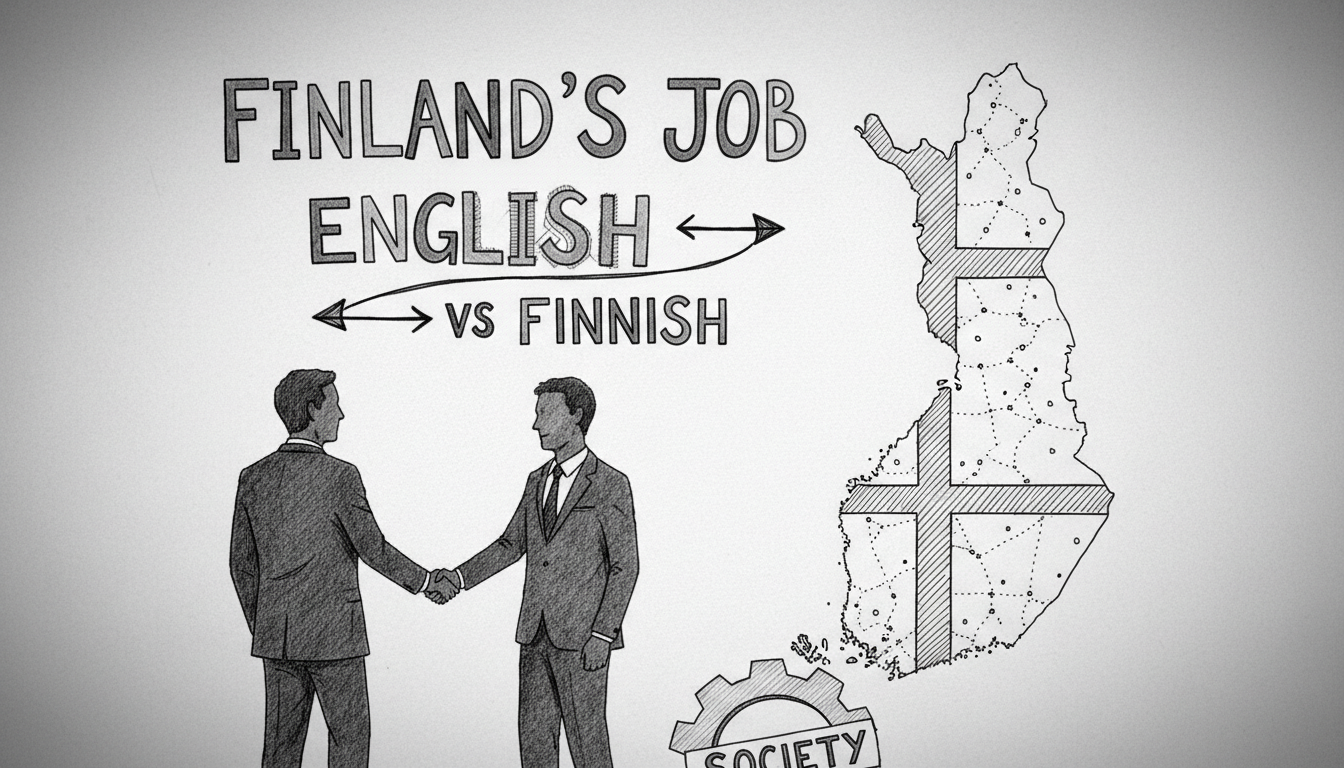
Finland's language requirements for jobs create a dual reality for international workers. A software engineer from Portugal secured a role at gaming giant Supercell in Helsinki without speaking Finnish. Her contract required only English. Meanwhile, a nurse from Spain faced strict Finnish proficiency demands from Helsinki University Hospital. These contrasting experiences define the complex landscape for foreign professionals in Finland.
The English-Dominant Tech Corridors
Finland's technology sector operates as a largely English-speaking ecosystem. Companies like Supercell, Wolt, and Nokia list most technical positions with English as the sole language requirement. A recent analysis of job advertisements on major platforms found 85% of tech roles required only English. This reflects a global competition for talent where companies cannot limit themselves to Finnish speakers.
Helsinki's startup hubs demonstrate this reality daily. At Maria 01, Europe's largest startup campus, networking events and investor pitches happen exclusively in English. Founders from over 50 countries collaborate without Finnish. The government actively supports this through Business Finland, which provides English-language relocation services to help companies hire internationally.
"Our talent pool is global, so our working language is English," says Ilkka Paananen, CEO of Supercell, which employs over 400 people. "We have developers from Portugal, designers from South Korea, and product managers from Brazil working together in Helsinki. Requiring Finnish would eliminate 95% of the world's best talent."
Where Finnish Remains Non-Negotiable
The situation reverses dramatically in public sector and customer-facing roles. Teaching positions demand native-level Finnish proficiency. Healthcare roles require specific medical Finnish certification. Social workers must understand nuanced client conversations in Finnish. These requirements exist to protect vulnerable populations and ensure accurate communication in critical situations.
Even within Finnish corporations, customer-facing positions often mandate local language skills. Retail giants like S-Group and Kesko require Finnish for roles involving direct public interaction. Their primary customer base is Finnish-speaking, making language essential for daily operations.
"In healthcare, language isn't just about communication—it's about safety," explains Dr. Laura Kivistö of Helsinki University Hospital. "A misunderstanding in medication instructions or symptom description can have serious consequences. We require a certified level of medical Finnish because patients must be able to express themselves in their native language during vulnerable moments."
The Practical Compromises and Legal Framework
Finland's constitution recognizes both Finnish and Swedish as official languages, creating another layer of complexity. In coastal regions like Turku and Helsinki, some positions accept Swedish instead of Finnish. Job advertisements sometimes specify "Finnish or Swedish required," particularly in public administration.
Many forward-thinking companies have developed hybrid solutions. They hire English-speaking specialists while investing in language training. Engineering firm KONE provides 200 hours of paid Finnish lessons to new international hires. Energy company Fortum offers similar programs through adult education centers, costing approximately €4,000 per employee. Most participants reach basic conversational proficiency within six months.
This approach addresses both business needs and integration concerns. "We need specialized engineers who might only exist in a handful of countries worldwide," says KONE's Head of Talent Acquisition. "But we also want them to feel at home in Finland. The language training is an investment in their long-term success here."
Strategic Advice for International Job Seekers
Your approach should begin with industry assessment. Technology, gaming, and certain engineering fields offer the most English-only opportunities. Research specific companies—Nokia's latest news often highlights international hiring drives, while Helsinki startups like Swappie and Aiven post English-language roles regularly.
For public sector or healthcare roles, assume Finnish is mandatory. Begin language studies before applying. University of Helsinki and other institutions offer specialized "Finnish for Professionals" courses focusing on medical, legal, or technical vocabulary.
Consider regional variations. The capital region (Helsinki, Espoo, Vantaa) has the highest concentration of English-speaking workplaces. Tampere and Oulu's tech sectors are also increasingly English-friendly. Smaller towns and rural areas present greater language barriers.
Economic Implications and Future Trends
Finland faces significant labor shortages in technology, healthcare, and skilled trades. The technology sector alone needs thousands of new professionals annually. Strict language requirements in some fields conflict with economic needs. Analysts suggest Finland must streamline its approach to attract global talent while maintaining essential language standards in sensitive fields.
"We're in a global race for talent," says economist Petri Rouvinen from the Research Institute of the Finnish Economy. "Countries like Sweden and the Netherlands have more flexible approaches for international professionals. Finland's strict language requirements in certain sectors create unnecessary barriers when we face demographic challenges and skill gaps."
The government has initiated programs like "Talent Boost" to attract foreign professionals, but language policies remain inconsistent across sectors. Some experts advocate for tiered language requirements—basic Finnish for integration, with specialized certification only for roles involving sensitive communication.
The Integration Factor Beyond Employment
Language requirements extend beyond job descriptions. Learning Finnish significantly improves social integration and daily life quality. While you can work at Supercell without Finnish, shopping, healthcare visits, and community participation become challenging without local language skills.
Many international professionals who initially planned short stays remain in Finland long-term. Their success often correlates with Finnish language acquisition. "I came for a two-year contract at Nokia," says software developer Anika Sharma from India, now living in Espoo for eight years. "The first year was fine with just English at work. But to build a life here—make Finnish friends, understand the culture, feel at home—I needed the language. My company paid for lessons, and it changed everything."
Finland's population of 5.5 million includes growing international communities, particularly in Helsinki. This demographic shift may gradually influence language policies. As more companies operate globally and more Finnish children grow up bilingual, the workplace language landscape continues evolving.
Navigating Your Finnish Career Path
The key question isn't whether you need Finnish to work in Finland, but where and how you want to work. The gaming industry centered in Helsinki's Kamppi district functions in English. The healthcare system across the country requires certified Finnish proficiency.
Your strategy should match your sector. For tech roles, focus on building specialized skills—Finland's gaming industry particularly values expertise in game design and live operations. For public sector roles, begin Finnish studies immediately, aiming for official certification.
Finland offers high-quality employment opportunities for international professionals. Understanding the dual language reality—English-friendly tech corridors alongside Finnish-essential public services—provides the roadmap for success. The country needs foreign talent, but on terms that respect both global business practices and local linguistic protections. Your career path depends on which side of this divide your ambitions lie.