
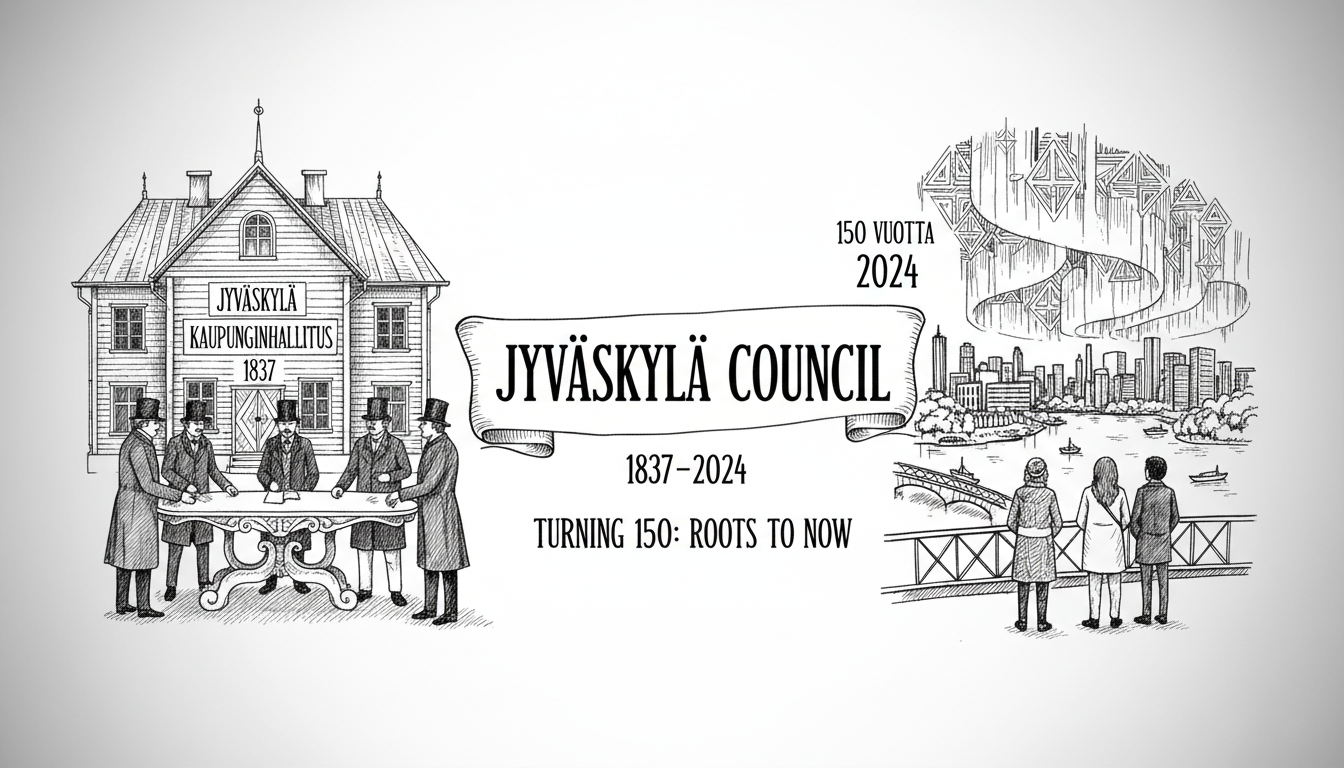
Jyväskylä city council celebrates its 150th anniversary this week, marking a century and a half of local governance in one of Finland's key educational and cultural hubs. The council's celebratory session on Tuesday evening featured special programming, reflecting on its evolution from a small-town board to a modern municipal authority governing a city of 145,000 people. This milestone offers a unique lens through which to examine the durability and transformation of Finnish local democracy, a system often cited as a cornerstone of the nation's political stability and high trust in institutions.
A Legacy of Local Decision-Making
The Jyväskylä city council, or kaupunginvaltuusto, was established in 1874, thirty-seven years after the town itself received its city rights in 1837. This timing places its formation during a period of significant administrative reform in the Grand Duchy of Finland, then part of the Russian Empire. The council's creation was part of a broader movement toward structured municipal self-governance, which laid the groundwork for Finland's later independence and robust democratic traditions. For a century and a half, this body has been the highest decision-making authority in the city, responsible for budgets exceeding hundreds of millions of euros, strategic planning, and overseeing everything from schools and social services to public transport and cultural institutions.
Today's council is composed of 67 elected representatives from across the political spectrum, including the National Coalition Party, the Social Democrats, the Finns Party, the Green League, and the Left Alliance, among others. Their debates in the council chamber directly shape the daily lives of Jyväskylä's residents. "Local councils are the engine room of Finnish democracy," says Dr. Elina Kettunen, a political scientist at the University of Jyväskylä specializing in municipal governance. "They are where national policies meet the street, where abstract budget lines translate into specific services. The 150-year continuity in Jyväskylä shows a system that, while constantly adapting, has maintained its core function: representing citizens in the matters closest to them."
From Timber Town to Modern Hub
The council's history mirrors the dramatic development of Jyväskylä itself. The city, situated in the heart of the Finnish lake district in the province of Central Finland, grew from a modest trading post into a nationally recognized center of education and innovation. This transformation was heavily influenced by council decisions on infrastructure, land use, and investment in public institutions. The establishment and continued support for the University of Jyväskylä, founded in 1934, stands as one of the council's most impactful long-term legacies, fundamentally altering the city's economic base and international profile.
Council archives reveal debates spanning industrialization, wartime crises, post-war urbanization, and the digital revolution. Early records show concerns over road maintenance and sanitation, while contemporary agendas feature discussions on sustainable urban planning, digital service integration, and attracting global talent. This evolution highlights a constant tension in municipal governance: balancing immediate, practical needs with long-term strategic vision. The council has navigated economic recessions, population shifts, and the ongoing challenge of providing high-quality welfare services within a sustainable fiscal framework, a challenge amplified by Finland's aging demographics.
The EU Dimension and Local Autonomy
Finland's accession to the European Union in 1995 added a new layer to local governance, and the Jyväskylä council's work now often intersects with EU directives and funding opportunities. While the EU has no direct administrative relationship with municipalities, its policies on state aid, public procurement, environmental standards, and regional development funds create a framework within which the council must operate. For instance, projects related to clean energy transitions, research infrastructure, or cross-border cooperation often involve complex alignment with EU regulations and objectives.
"Finnish municipalities enjoy strong constitutional autonomy, but they operate in a multi-level governance system," explains Dr. Kettunen. "The Jyväskylä council must interpret and implement national legislation, which itself is increasingly shaped by EU membership. A council decision on public transport procurement or building energy efficiency is no longer just a local matter. It connects to national climate targets and EU-wide green deals. This requires a more sophisticated level of administrative competence from local politicians and officials than ever before."
Contemporary Challenges and Civic Trust
The anniversary comes at a time when Finnish municipalities face profound challenges. Centralization trends have seen some services and regulatory powers shift to the state level, while economic pressures strain local budgets. Simultaneously, councils are on the front lines of integrating new technologies, promoting biodiversity, and ensuring social cohesion. The Jyväskylä council, like its counterparts across Finland, is grappling with how to maintain a high standard of public services—a hallmark of the Nordic model—amidst these pressures.
Public trust remains relatively high in Finland, but engagement in local elections can fluctuate. Anniversaries like this serve as a reminder of the institution's role and history, potentially fostering greater civic connection. The celebratory session included reflections on past achievements, but the regular agenda of planning permissions, school allocations, and welfare provisions continued. This duality—honoring history while managing the mundane—is the essence of local government. The council's longevity suggests an institution that has learned to adapt while retaining its core democratic mandate.
A Model of Nordic Municipal Governance
The 150-year journey of the Jyväskylä city council offers a microcosm of Finnish political development. Its sustained operation through independence, wars, economic upheaval, and technological change demonstrates the resilience of the Nordic municipal model. This model is characterized by broad responsibilities, significant taxing powers, and a strong ethos of public service. While debates rage in the Eduskunta in Helsinki over national direction, it is in hundreds of council chambers like Jyväskylä's where policies become reality.
As the city looks ahead, its council will confront questions of sustainable growth, digital equity, and intergenerational fairness. The lessons from its 150-year archive are not of specific policy solutions, but of process: the importance of open debate, evidence-based decision-making, and accountability to the local electorate. In an era of global challenges and sometimes distant supranational politics, the continued relevance of the local council rests on its ability to address these tangible, everyday concerns while steering the community toward a shared future. The anniversary is less about nostalgia and more about examining the tools of democracy that have built a modern city, asking if they are fit for the next 150 years.