
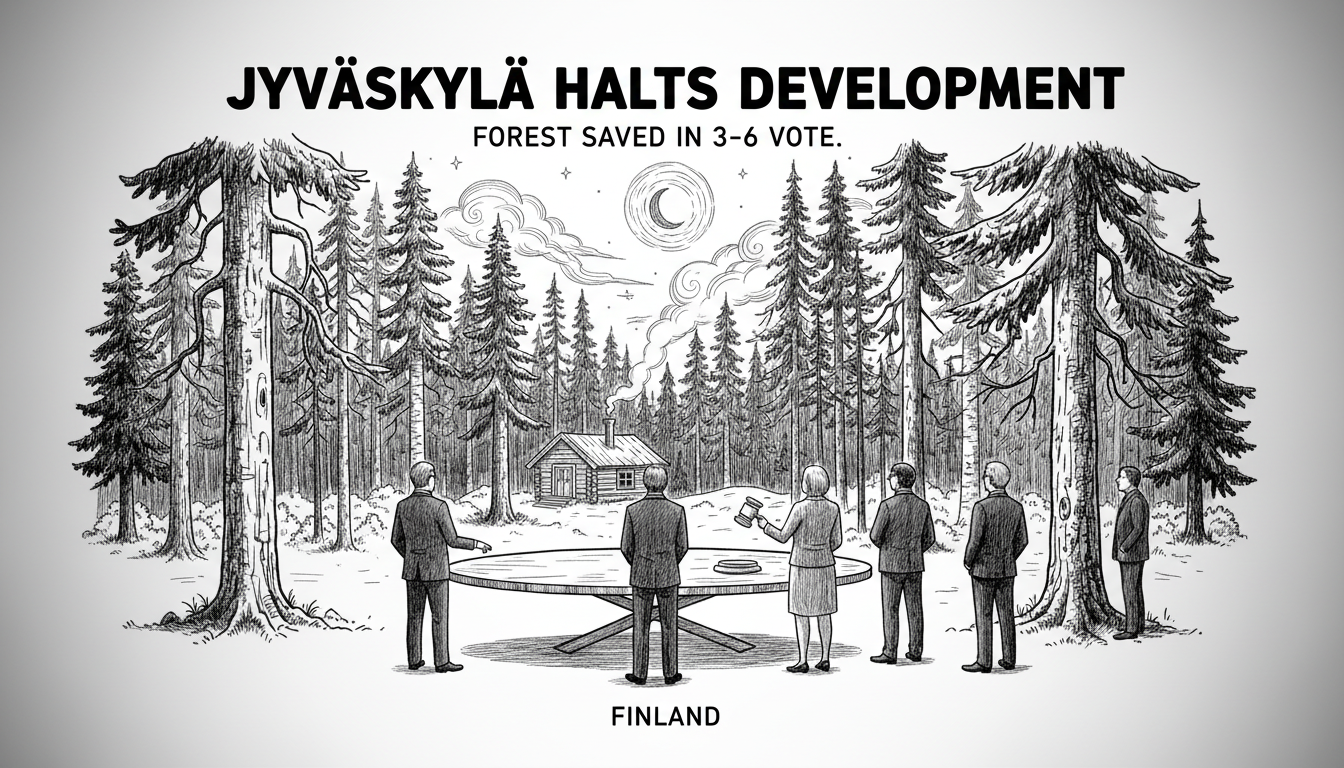
Finland's city planning process has delivered a decisive victory for green space preservation in the central city of Jyväskylä. The city planning board voted 3-6 to remove the Köhniöntaus area from a draft general plan for residential and commercial construction, re-designating the steep, forested land as a permanent recreational zone. This move, following significant public opposition, halts a long-debated development project and sets a clear precedent for balancing urban growth with nature conservation in Finnish municipalities.
The decision centers on Köhniöntaus, a rugged, wooded slope nestled between Lake Köhniöjärvi, a railway line, and Highway 23. For years, its potential for housing has been weighed against its value as a natural corridor and recreational asset. The board's vote during a meeting on the draft Jyväskylä 2050 general plan represents a formal shift in policy, prioritizing public sentiment and ecological considerations over expansion. The second draft of the overarching plan will be published for official review in mid-January, now incorporating this significant change.
A Victory for Grassroots Opposition
The outcome was not a surprise to local observers who tracked the public feedback on the plan's first draft. Residents submitted substantial commentary opposing any construction on the challenging terrain of Köhniöntaus. This consistent, vocal resistance provided the political foundation for the planning board's decision. The 3-6 vote margin indicates a strong consensus among board members, reflecting how Finnish participatory planning processes can directly influence high-level land-use decisions. The area's topography—described as steep and forested—was likely a key factor, as developing such land is costly and environmentally disruptive.
“This decision underscores a fundamental principle in Nordic urban planning: the public’s voice in shaping their immediate environment is powerful,” said a Helsinki-based urban policy analyst familiar with the case. “When a community consistently identifies a natural area as invaluable for recreation and biodiversity, municipalities are increasingly listening. It’s a classic Finnish compromise between development needs and the deep-seated cultural value of accessible nature, or ‘jokamiehenoikeus’ (everyman's right).”
The Mechanics of Finnish Land-Use Planning
To understand the weight of this decision, one must understand the hierarchy of Finnish planning law. The general plan, or ‘yleiskaava’, is the supreme municipal land-use document. It sets the long-term strategic vision, defining broad zones for housing, industry, transport, and conservation. It does not permit specific buildings but creates the legal framework for them. Detailed local master plans, or ‘asemakaavat’, are then created within this framework to parcel specific plots and grant building rights.
By changing Köhniöntaus from a potential development zone to a recreational area in the general plan, the Jyväskylä board has effectively removed the possibility of detailed zoning for construction there for a generation. This strategic move protects the area more definitively than battling individual construction projects later. The Jyväskylä 2050 plan, now in its drafting phase, is designed to guide the city's growth and sustainability efforts for the next quarter-century, making this inclusion a long-term commitment.
The Broader Trend: Green Spaces Versus Urban Infill
The debate in Jyväskylä mirrors a central tension in cities across Finland and the Nordic region. Municipalities face pressure to increase housing density, promote sustainable transit-oriented development, and curb urban sprawl. This often leads to proposals for infill development on existing green spaces within city boundaries. Simultaneously, there is growing public and political recognition of the climate resilience, public health, and biodiversity benefits provided by urban forests, parks, and wetlands.
Köhniöntaus sits at the intersection of these pressures. Its location near transport links makes it theoretically attractive for development. However, its ecological value and popularity for informal recreation—like hiking, berry picking, and enjoying nature—proved more compelling. The decision signals that not all undeveloped land within a city's footprint is automatically a candidate for building, especially when it serves a vital function as a green lung and offers challenging terrain that increases construction costs and environmental impact.
What Happens Next for Jyväskylä 2050?
The revised draft of the Jyväskylä 2050 general plan will be published for review by relevant authorities in mid-January. This stage, known as the ‘viranomaislausuntokierros’, involves statutory consultations with government agencies, neighboring municipalities, and other official bodies. They will assess the plan's compliance with regional goals, environmental legislation, and other national guidelines. While the planning board's decision on Köhniöntaus is a powerful directive, this official consultation is a standard, mandatory step in solidifying the plan.
Following this consultation period, the plan will likely undergo further revisions before a final version is presented for adoption by the city council. The strong, clear vote from the planning board makes it highly improbable that the status of Köhniöntaus will be reversed in later stages. The focus will now shift to how the city plans to formally integrate the area into its network of recreational green spaces and whether any infrastructure, like maintained trails or signage, will be added to enhance public access while protecting the environment.
A Model for Other Finnish Municipalities?
This case provides a clear model of the Finnish planning system functioning as intended: proposed changes undergo public scrutiny, feedback is collected and analyzed, and elected or appointed officials make binding decisions that reflect that dialogue. The transparent process, from draft publication to board vote, demonstrates a responsive form of local governance. Other Finnish cities grappling with similar disputes over valuable intra-urban green zones will be watching Jyväskylä's approach.
The decision also highlights the practical importance of public participation. Residents who took the time to formally oppose the construction in the initial feedback round directly contributed to this outcome. It serves as a reminder that the ‘yleiskaava’ process, though technical, is a primary channel for civic influence on a city's long-term shape and character. In an era of climate awareness, such victories for urban nature are increasingly seen as essential, not just desirable.
As Jyväskylä moves forward, the preserved forest of Köhniöntaus will stand as a testament to a community's preference for trees over rooftops. The final, adopted general plan will chart a course for a city that has consciously chosen to limit its physical footprint in at least one area, valuing immediate access to wilderness for its citizens. The 3-6 vote was more than a procedural step; it was a definitive statement about the kind of city Jyväskylä aims to be by 2050. Will this mark a turning point where Finnish cities more frequently choose preservation, or will development pressures continue to mount on remaining green spaces? The ongoing dialogue around the Jyväskylä 2050 plan will offer further clues.