
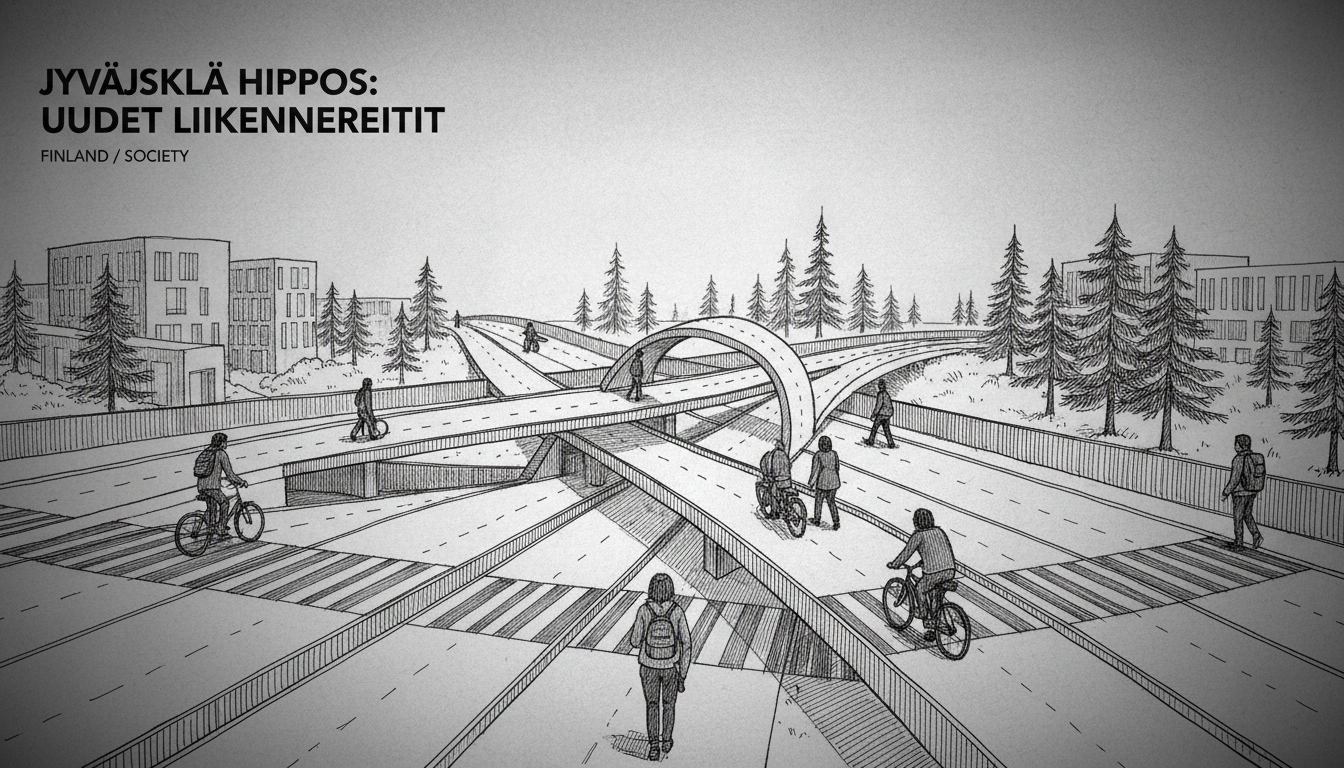
Jyväskylä's massive Hippos sports complex project, a 300-million-euro development, will enact significant changes to local traffic and parking starting Monday. The expansion of the active construction zone marks a new, disruptive phase for the popular sports park, directly impacting thousands of weekly visitors and athletes. Fencing will go up around the future sports and competence centers, while work on a new parking garage expands, shrinking available space and altering pedestrian routes.
Navigating the New Construction Landscape
From Monday onwards, the familiar paths through the Jyväskylä sports park will shift. The immediate change involves the physical sealing off of the main construction sites for the upcoming sports center and a separate competence center. Concurrently, the worksite for a multi-story parking facility, being built where the old Hippos baseball stadium once stood near Köyhälampi pond, will grow significantly. This expansion extends the construction footprint toward the existing Viveca building, a hub for various sports clubs and activities. City officials have posted updated route maps online, urging cyclists and pedestrians to plan for extra travel time. The temporary re-routing aims to maintain safe access to all operational facilities, including swimming halls, ice rinks, and outdoor fields, during the building surge.
Drivers face the most direct inconvenience. The number of open-air parking spots will drop sharply as the parking garage project consumes land. While the long-term plan promises hundreds of new sheltered spaces, the short-term reality is a scramble for alternatives. The city has directed visitors to use designated overflow parking areas on the periphery of the Hippos district, with clear signage promised. Local bus services are also adjusting some stops to accommodate the altered traffic flows. For residents like Maria Lehtonen, a weekly swimmer, the changes add hassle. 'It's a pain now, but we're trying to remember it's for a better facility soon,' she said, echoing a common sentiment of frustrated acceptance.
The Vision Behind the Disruption
The disruption serves a grand vision for central Finland's sporting future. The Hippos development is not merely an expansion but a total transformation into a national-level sports, exercise, and well-being campus. Project leads frame it as an economic and social catalyst for Jyväskylä, a city long associated with education and athletics. The finished complex aims to attract major national and international sporting events, tournaments, and training camps, boosting tourism and hotel occupancy. Economists point to the hundreds of construction jobs created now and the permanent employment in operations, maintenance, and hospitality that will follow completion.
'Large-scale urban development always involves a balancing act,' said urban planning expert Dr. Elina Saarelainen from the University of Jyväskylä. 'The Hippos project promises substantial long-term benefits for public health, city branding, and local economy. The critical challenge for the city and contractors is transparent communication and minimizing the duration of acute inconveniences. Effective management of this phase will build public goodwill for the entire project.' She emphasized that the environmental impact of such a large build, including stormwater management and green space preservation around Köyhälampi, remains a key point of scrutiny for local stakeholders.
Long-Term Gains Versus Short-Term Pains
The project's scale ensures that the current parking and traffic woes are just the beginning of a multi-year process. The next phases will see the actual rise of the new sports center buildings, likely causing further logistical challenges. However, the blueprint shows a integrated campus designed for smooth movement—once finished. The planned parking garage is a central component, intended to consolidate vehicles and free up surface land for green spaces and pedestrian plazas. The goal is to create an environment where people can move between facilities for swimming, ice sports, team games, and fitness without needing their car.
Local business associations are cautiously optimistic. While concerned about potential dips in casual visitor numbers during peak construction, they anticipate a significant boost from event tourism in the future. The competence center, focusing on sports science and education, also solidifies Jyväskylä's academic reputation in the field. The city council, which has unanimously backed the project's funding phases, views it as a strategic investment in the region's post-industrial identity. The Hippos complex is designed to be a year-round attraction, combating seasonal fluctuations in activity.
The Road Ahead for Jyväskylä
For now, the focus is on navigating the orange fences and detours. The success of this disruptive phase hinges on clear, consistent public messaging and responsive adjustment to unforeseen issues. The contractor has set up a dedicated information line for immediate concerns related to the construction site logistics. As the heavy machinery rolls in on Monday, the community's patience will be tested. The enduring question is whether the promise of a world-class sports and well-being destination, capable of hosting international competitions and serving daily users with improved amenities, will outweigh the inevitable frustrations of the build. The transformation of the Hippos area represents a bold bet on Jyväskylä's future, one paved with temporary traffic cones and the promise of a lasting legacy.