
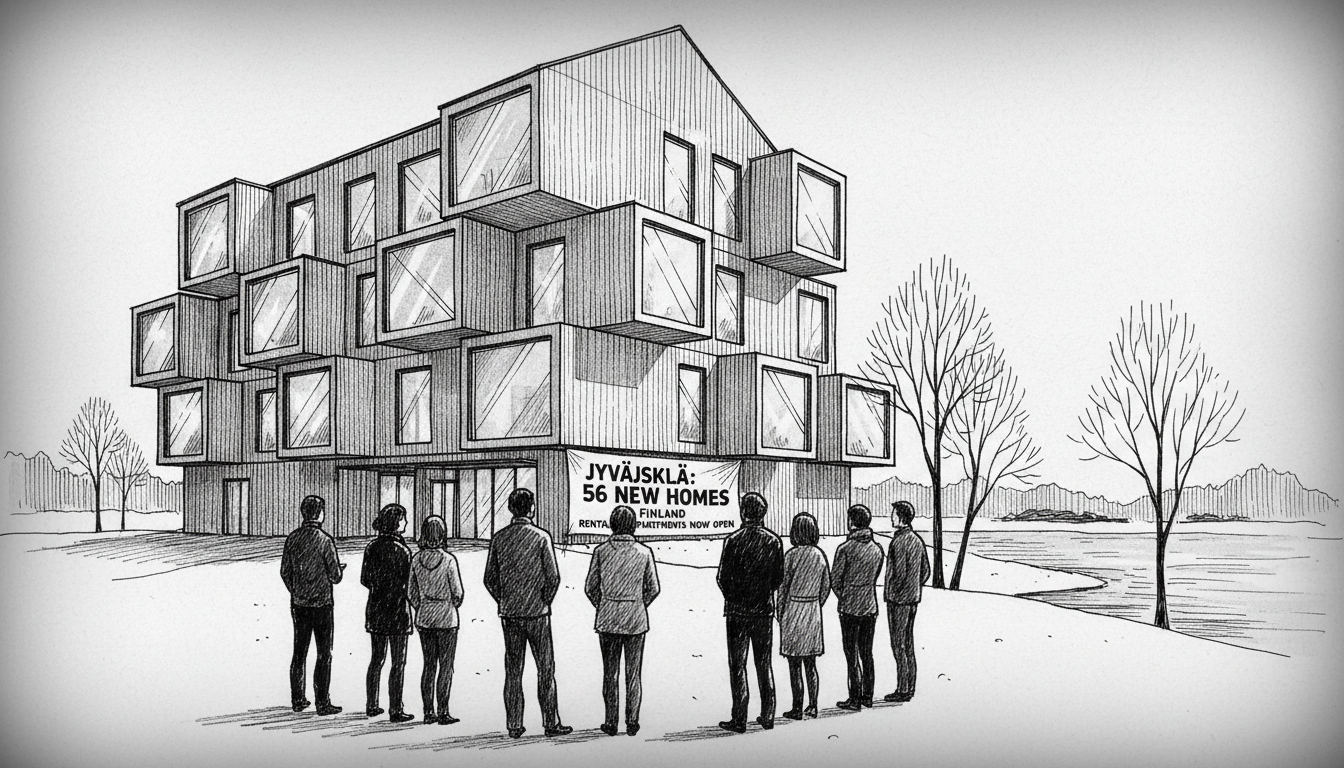
Finland's rental housing market has expanded with the completion of a 56-unit apartment building in Jyväskylä, a key development in the city's ongoing urban transformation. The new property at Rullakatu 3 in the Kankaan district, developed by non-profit provider A-Kruunu and built by YIT Housing, represents a strategic addition of state-subsidized rental homes. This project highlights a central pillar of Finnish housing policy: using non-profit developers to create affordable, high-quality rental stock in growing urban centers, moving beyond reliance on private market forces alone.
A Model for Urban Regeneration
The Rullakatu 3 building is more than just a new address; it is a physical marker in the ambitious redevelopment of Jyväskylä's Kankaan district. This area, once dominated by a paper mill, is being systematically transformed into a modern, sustainable urban neighborhood. City planners envision a mixed-use community where residents can live, work, and access services within a walkable environment. The completion of this housing block injects critical residential density into the area, supporting local services and public transport viability. For Jyväskylä, a city known for its university and tech sector, providing modern housing is essential to attract and retain skilled workers and students, fueling further economic growth.
Finland's approach to urban development often focuses on repurposing former industrial zones, known as brownfield sites, rather than sprawling into untouched green spaces. The Kankaan project fits this model perfectly. It cleans up and revitalizes land with an industrial past, integrating new construction with existing urban infrastructure. This strategy promotes sustainable city growth, reduces car dependency, and preserves natural areas on the urban fringe. The new apartments offer residents proximity to the city center and Lake Päijänne, blending urban convenience with access to nature—a combination highly valued in Finnish living standards.
The Non-Profit Housing Engine: A-Kruunu's Role
The developer behind the project, A-Kruunu, is a critical actor in Finland's housing ecosystem. As a non-profit organization, its primary mission is not shareholder profit but providing affordable, well-maintained rental housing. A-Kruunu owns approximately 7,000 apartments across Finland, making it a significant player in the ARAVA (Housing Finance and Development Centre of Finland) system. This system provides state-subsidized loans and grants to developers like A-Kruunu, with strict conditions on apartment size, quality, and rent levels. The rents in these new Jyväskylä apartments are therefore likely to be set according to cost-based principles, offering stability and predictability for tenants in a market where private rents can fluctuate more freely.
This model addresses a core challenge in many growing cities: the tension between market-rate development and housing affordability. By channeling public support through non-profit entities, Finland ensures a steady pipeline of rental homes insulated from the most speculative market pressures. "Our focus is on long-term quality and tenant well-being, not short-term financial returns," a representative from a similar non-profit housing provider explained, describing the sector's philosophy. The involvement of YIT Housing, one of Finland's largest construction companies, as the main contractor ensures the building meets high technical and environmental standards, which are often stipulated in the state subsidy agreements.
Policy Context and National Housing Strategy
The Jyväskylä project arrives amid ongoing national discussions about housing adequacy. While Finland is often praised for its progressive policies, including a dramatic reduction in homelessness, pressures persist in attractive growth centers. Cities like Helsinki, Tampere, Turku, and Jyväskylä itself face demand for housing that outpaces supply, particularly in the affordable rental segment. The Finnish government, through the Ministry of the Environment, consistently emphasizes increasing housing production as a key objective. Investments in non-profit rental housing are a central tool in this strategy, complementing efforts to streamline planning and encourage private investment.
Politicians from across the spectrum, including the Social Democratic Party and the Centre Party, have historically supported the ARAVA system, though debates continue over funding levels and the balance between state support and market solutions. The completion of projects like Rullakatu 3 provides tangible evidence of policy in action. It demonstrates how national funding frameworks, local municipal planning, and non-profit execution can converge to create concrete results. For the residents who move in, this policy translates into a secure tenancy in a new building within a developing community.
The Tenant Perspective and Future Implications
For the future tenants of the 56 apartments, the benefits are multifaceted. They will occupy brand-new homes built to modern energy efficiency codes, which translates to lower heating costs and a smaller carbon footprint—a significant concern in a country with harsh winters. The apartments are likely to feature flexible layouts, accessibility considerations, and communal spaces that foster social interaction, all common features in newer Finnish housing developments. Living in the Kankaan district places them in a neighborhood literally being built around them, with the promise of new shops, parks, and services emerging in the coming years.
The success of this development will be measured not just by its occupancy rate, but by how it contributes to the social fabric of Kankaan. Successful urban regeneration requires more than buildings; it needs a sense of community. The design and management of the property will play a role in this. Will there be communal gardens, shared saunas, or spaces for resident associations? These elements, deeply ingrained in Finnish housing culture, turn a collection of apartments into a neighborhood.
Looking ahead, the Jyväskylä project serves as a case study for other Finnish cities managing growth. It shows the importance of clear zoning, partnerships with reliable non-profit developers, and integrating housing into broader sustainability goals. As Finland continues to urbanize, the demand for such thoughtfully planned, affordable rental housing will only intensify. The cranes in Kankaan are building more than apartments; they are constructing a tested model for future-focused urban living. The ultimate question is whether funding and political will can sustain the pace of production needed to keep Finnish cities both dynamic and accessible for all income groups.