
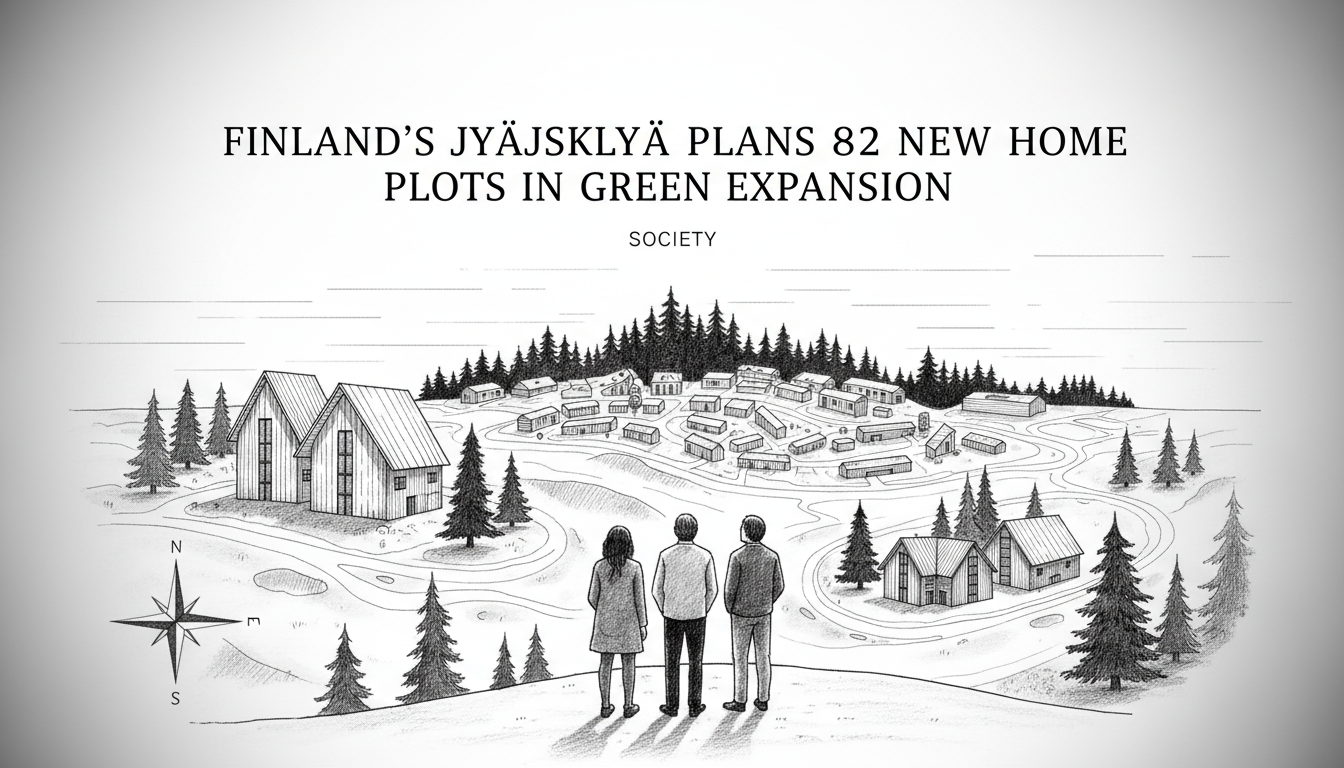
Finland's Jyväskylä city council is moving forward with a significant residential expansion in the Palokka district. The City Planning Committee will review a draft plan next week for the Palokka Heikkilä area, proposing 82 new plots for detached houses and approximately 12 hectares of new recreational green space. This development, located a few kilometers north of the city center, is projected to bring around 300 new residents to the growing university city in central Finland's Lakeland region.
This project highlights a common tension in Finnish urban development: balancing the persistent demand for single-family homes with the need to preserve natural environments and ensure sustainable growth. Municipalities like Jyväskylä hold primary responsibility for zoning and land use, making local decisions critical for shaping the nation's housing landscape. The plan represents a deliberate choice to expand low-density housing on the city's periphery.
A Strategic Move for a Growing City
Jyväskylä, home to a major university and a population of over 140,000, consistently ranks as one of Finland's most desirable cities to live in. Its location amidst lakes and forests creates high demand for housing that offers a connection to nature. The Palokka district, already a mix of residential areas and commercial zones, is a logical target for expansion. The new Heikkilä sub-area plan specifically carves out space for a classic Finnish dream: a detached house with a private garden.
"Municipalities are constantly walking a tightrope between providing diverse housing options and managing urban sprawl," says Dr. Elina Kettunen, a professor of urban geography at the University of Helsinki. "A plan for 80-plus detached house plots is a substantial commitment to low-density living. The key questions are about integration—how well this new area connects to existing public transport, cycling networks, and services, and what the net loss of green space will be after construction."
The inclusion of 12 hectares of designated recreational area is a direct response to such critiques. This land, which will remain undeveloped, is intended for public use and ecological preservation. It acts as a counterbalance to the built environment, offering residents walking trails, playgrounds, and access to nature right on their doorstep.
The Detached House: A Persistent Finnish Ideal
The focus on pientalo (detached house) plots taps into a deep-seated aspect of Finnish culture. Despite trends towards urban apartment living, the single-family home with its own sauna and plot of land remains a powerful aspiration for many families. This development caters directly to that market segment, likely young families and professionals looking to put down roots in the region.
Demand for such housing remains strong in growing cities like Jyväskylä. The plan can be seen as an economic development strategy, aiming to attract and retain taxpayers who might otherwise look to neighboring municipalities for housing. Adding 300 residents also supports local schools, shops, and services, creating a positive feedback loop for the Palokka district.
However, experts point to sustainability concerns. "Detached housing consumes more land, energy, and infrastructure per capita than apartment blocks or row houses," notes Dr. Kettunen. "While the recreational area is a positive, the overall carbon footprint and long-term maintenance costs of these new neighborhoods for the municipality must be part of the calculation. Finnish cities are increasingly encouraged to promote denser, transit-oriented development."
The Nordic Planning Model in Action
The process unfolding in Jyväskylä is a textbook example of the Nordic model of municipal-led urban planning. The City Planning Committee's review is a public, transparent step. After committee discussion, the draft plan will be displayed for public inspection, allowing residents to voice opinions and raise concerns about traffic, environmental impact, or the character of the neighborhood.
This participatory approach is designed to build consensus and identify potential problems early. It contrasts with more market-driven development models. Here, the city is not just a regulator but the active master planner, deciding where roads go, where green spaces are protected, and what type of housing is built. The 12 hectares of recreational land weren't left undeveloped by chance; they were deliberately zoned as such by city planners.
"The strength of this system is long-term vision and integration of public amenities," explains Dr. Kettunen. "The weakness can sometimes be a slow pace of development. By pre-planning the infrastructure and green spaces, the city ensures a coherent community rather than a haphazard subdivision. The value of that planned recreational space will be immense for future residents."
Infrastructure and Integration Challenges
A key test for the Palokka Heikkilä plan will be its integration into the wider city. Adding 300 people and potentially over 100 new vehicles requires careful planning for traffic flow, public transport connections, and cycling routes into Jyväskylä's center. The plan must also account for increased demand on water, sewage, and electrical grids, as well as proximity to schools and healthcare services.
The environmental impact assessment, a standard part of Finnish planning, will scrutinize effects on local drainage, wildlife corridors, and soil quality. The 12-hectare green zone will play a crucial role in mitigating some of these impacts, potentially managing stormwater runoff and providing a habitat for local species.
For future residents, the appeal is clear: a new home in a planned community with guaranteed access to nature, within the boundaries of a vibrant, manageable city. For Jyväskylä's government, the project represents both a response to housing demand and a strategic investment in the city's northern sector. The sale of the plots will also generate significant revenue for the municipal coffers, funding other public services.
A Blueprint for Peripheral Growth?
As the City Planning Committee reviews the draft, its decision will be watched by other Finnish municipalities facing similar pressures. The Jyväskylä model—a substantial number of detached house plots paired with a significant allocation of permanent recreational green space—offers one template for peripheral expansion. It attempts to satisfy the popular demand for private homes while formally safeguarding public natural assets.
The ultimate success of Palokka Heikkilä will be measured decades from now. Will it be a vibrant, sustainable, and well-integrated neighborhood, or an isolated enclave dependent on cars? The foundations for that answer are being laid in the committee's deliberations today. The plan underscores a central truth of Finnish urban life: the negotiation between the deeply held ideal of a house in the woods and the practical realities of 21st-century sustainable community building is ongoing, one plot of land at a time.