
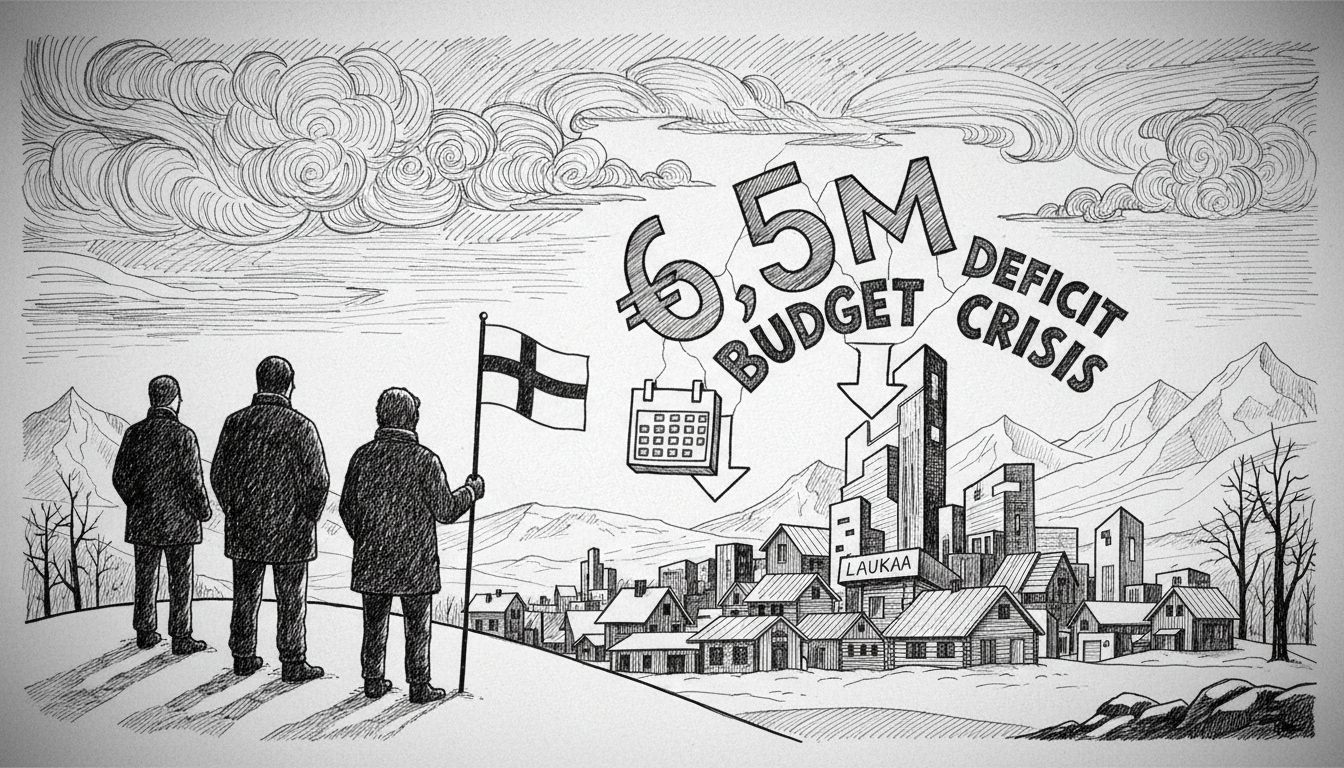
Finland's municipal budget deficits are pushing local governments into difficult decisions, with the central Finnish town of Laukaa becoming the latest example. The Laukaa municipal council is demanding action to control repeated budget overruns after a revised financial forecast revealed a deepening crisis. The municipality's accumulated deficit is now set to rise to 6.5 million euros, forcing councilors to confront a 1.6 million euro weakening in this year's result and a one million euro increase in municipal debt.
"We knew there would be overspending, but the figures that have become clear in recent weeks surprised the decision-makers," one councilor noted during the final meeting of the year, where both the 2023 supplementary budget and the 2024 budget were reviewed. The situation highlights a growing tension in Finnish local governance, where responsibilities for costly services like education and healthcare meet the hard limits of municipal finance. For Laukaa's 19,000 residents, the numbers translate into a direct threat to public services and potential future tax increases.
The Anatomy of a Municipal Shortfall
The councilors received an updated budget adjustment proposal that painted a stark picture. The largest single item driving the deficit is a 875,000 euro deterioration in the operating margin of the municipality's education department. Personnel costs are cited as the primary explanation for this massive overrun, reflecting nationwide pressures from inflation and collective bargaining agreements. Beyond core service delivery, two significant one-off losses have exacerbated the problem.
The municipality is recording a 200,000 euro credit loss from the bankruptcy of Hirviareena, a local arena and events center. Furthermore, a 550,000 euro write-down is being made on the value of shares held in Virastosydän, a property company. This adjustment acknowledges that the shares' value had been previously calculated at a significantly inflated rate. These losses point to the risks municipalities face when engaging in commercial ventures or investments beyond their core statutory duties.
A National Pattern of Fiscal Strain
Laukaa's struggle is not an isolated case but part of a broader pattern affecting Finnish municipalities. Municipalities are the primary providers of welfare state services in Finland, responsible for education, social care, healthcare, and infrastructure. They finance these through municipal income tax, state subsidies, and service fees. When budgets repeatedly fail, it indicates systemic issues in forecasting, cost control, or revenue generation.
Financial analysts often point to a combination of factors in such situations. "Municipal budget overruns typically stem from a perfect storm of increased operational costs, particularly personnel, overly optimistic revenue projections, and unexpected external shocks," explains a public finance expert familiar with the Finnish system. "The bankruptcy of a jointly owned asset like an arena is a classic example of a shock that can blow a carefully planned budget off course. The key for long-term stability is improving predictive models, enforcing stricter spending discipline, and sometimes making politically difficult choices about service levels."
The political dimension is acute. The council's criticism of "repeated supplementary budgets" and "swelling expenses" reflects a frustration with budgetary process failures. Supplementary budgets are meant for unforeseen circumstances, not for chronic miscalculation. This erosion of budgetary credibility makes long-term planning for infrastructure and service development nearly impossible, trapping municipalities in a cycle of reactive financial management.
The Political and Practical Reckoning
The debate in Laukaa mirrors discussions happening in council chambers across Finland. The political parties represented on the council, including the National Coalition Party (Kokoomus) and the Finns Party (Perussuomalaiset), have specifically criticized investment expenditures and the recurring need for supplementary budgets. Their scrutiny places the municipal executive board under pressure to present a credible path back to balance.
Practical solutions are complex and often painful. They can range from efficiency drives and administrative streamlining to more direct service cuts or increases in municipal tax rates. Selling non-core assets, like the written-down shares in Virastosydän, may be considered. Some municipalities explore alternative revenue streams, such as enhancing local business parks or tourism, but these strategies take years to bear fruit and carry their own risks.
The human impact of municipal deficits is real, though often delayed. A deteriorating financial base can lead to larger class sizes, longer waiting times for social and healthcare services, reduced maintenance of parks and roads, and a decline in cultural offerings. For residents, this means the tangible erosion of the quality of life and the social contract they expect from their local government.
Looking Beyond the Balance Sheet
The case of Laukaa raises fundamental questions about the sustainability of the current Finnish municipal model. Municipalities are tasked with implementing nationally mandated services but must finance them within local economic constraints, which vary dramatically between growing urban centers and shrinking rural regions. State subsidies are designed to balance this, but as costs rise faster than revenues, the system is under strain.
Furthermore, episodes like the Hirviareena bankruptcy force a conversation about the role of municipalities in economic development. Should towns own and operate sports arenas and property companies? While the goal of stimulating local activity is laudable, the financial liabilities can be substantial. The line between providing a public good and engaging in risky commercial activity is often blurred, with taxpayers ultimately bearing the downside.
The write-down of the Virastosydän shares is a moment of necessary, if painful, accounting honesty. It corrects an earlier over-valuation and resets the books to a more realistic baseline. While it makes the current year's deficit look worse, it creates a more accurate foundation for future planning. This kind of transparency, though politically uncomfortable in the short term, is essential for regaining control.
The Road Ahead for Laukaa and Finland
The immediate task for Laukaa's council and administration is to finalize a 2024 budget that stops the bleeding. This will require making hard choices between expenditures, potentially renegotiating service scope, and finding operational savings. The council's expressed desire to "get budget overruns under control" must now be translated into specific, actionable directives and monitoring mechanisms.
On a national level, the Finnish government and the Association of Finnish Local and Regional Authorities are continuously negotiating the framework of municipal financing. Stories like Laukaa's add urgency to these discussions. Is the division of labor and resources between the state and municipalities still fit for purpose? As the population ages and cost pressures mount, the system requires constant evaluation and adjustment.
For the citizens of Laukaa, the coming years will reveal whether their council can steer the municipality back to solid financial ground. The 6.5 million euro deficit is a heavy burden for a town of its size. The decisions made in the next few budget cycles will define the level and quality of local services for a generation. The challenge is not merely accounting but governance, requiring political will, managerial skill, and perhaps a renewed conversation with residents about what they truly value and what they are willing to pay for. The balance sheet, in the end, is a reflection of collective priorities.