
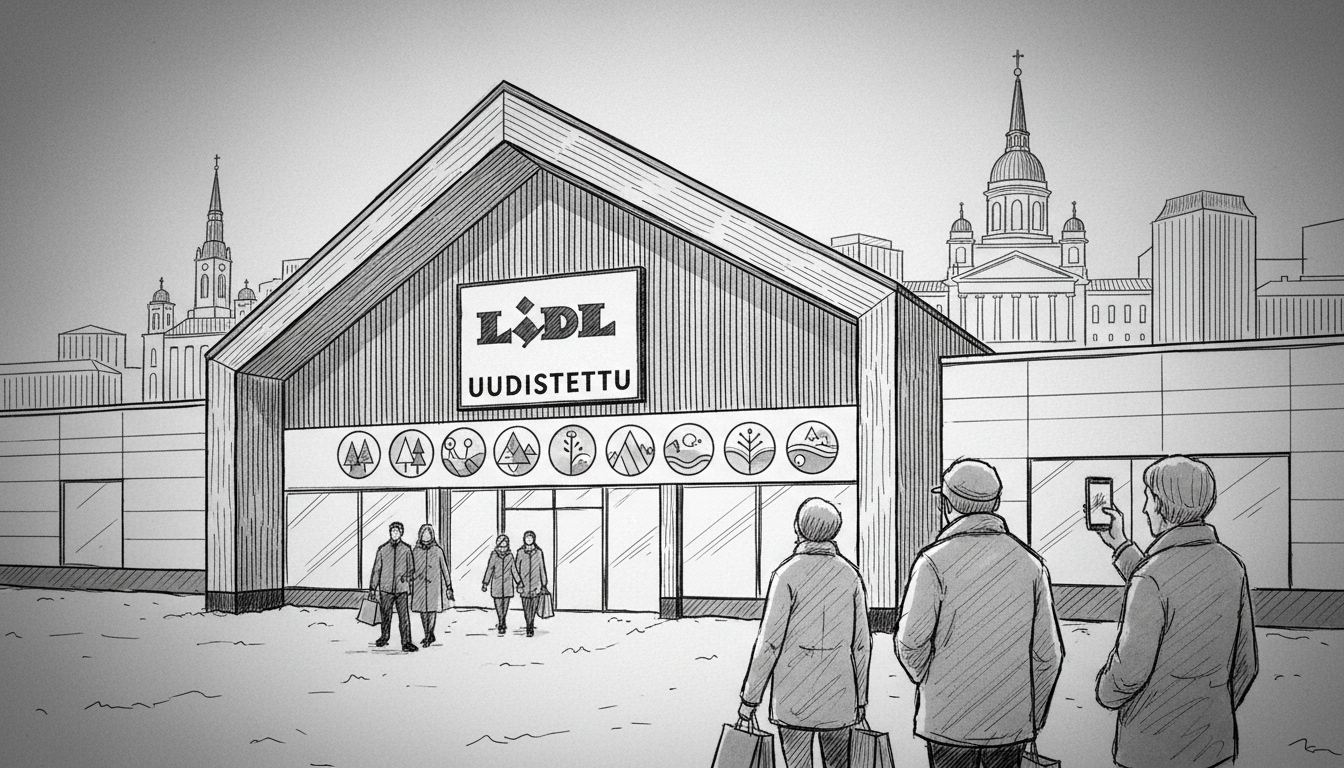
Finland's Lidl supermarket chain is investing hundreds of thousands of euros per store to renovate all 12 of its locations in the Keski-Suomi region. The comprehensive overhaul includes new layouts, furniture, lighting, and technology, with a key change moving meat products from open freezers to closed cabinets. The project began in November at the Keljo store in Jyväskylä and will roll out across the region over the next two to three years, according to area manager Marcin Malewicz.
"They have been a bit awkward to take from those deep bins," Malewicz said of the old open freezers for meat, highlighting a direct customer experience improvement. This regional initiative is part of a broader national strategy for the German discount giant, which also plans to introduce a self-scanning system via smartphone app in other Finnish stores next year. The app-based scanning is already operational in five locations in Espoo, signaling a clear push towards digital integration and checkout convenience.
A Strategic Refresh in a Competitive Market
The scale of investment—hundreds of thousands per store—indicates this is more than a simple facelift. Lidl Finland is executing a calculated upgrade to its store environment and operational model. The Finnish grocery sector is notoriously competitive, dominated by the S Group and Kesko cooperatives, which together hold a massive market share. Lidl, since its entry in 2002, has carved out a solid position as the main discount alternative, but maintaining and growing that share requires constant evolution.
Analysts see this move as a dual-purpose strategy. First, it enhances the in-store experience by modernizing fixtures and improving product accessibility, directly addressing specific customer pain points like the deep meat freezers. Second, the introduction of self-scanning technology addresses the growing consumer demand for speed and autonomy. "Retail is no longer just about the lowest price point," said a Helsinki-based retail analyst who preferred not to be named. "It's about the entire ecosystem: convenience, store feel, and seamless technology. Lidl is smartly investing in all three to stay relevant and competitive against the giants."
The Details of the Renovation Plan
The renovations are comprehensive. Changes will affect shelf arrangements and overall store layout, suggesting a re-evaluation of customer flow and product placement strategies. Updates to furniture, technical systems, and lighting are also planned, which will significantly alter the ambiance and functionality of the stores. The shift of meat products from open, deep-cooled bins to closed refrigeration cabinets is a notable detail. This change improves food hygiene presentation, reduces energy consumption, and makes products easier for customers to reach.
Malewicz confirmed that no new stores are currently planned for the Keski-Suomi region, making this renovation program the primary focus for capital expenditure. This suggests a strategy of consolidating and strengthening existing footprints rather than expansion. By significantly upgrading current locations, Lidl aims to increase customer frequency and basket size from its established customer base while potentially attracting new shoppers from rival chains with a more modern store concept.
The Digital Shift: Self-Scanning on the Horizon
Parallel to the physical renovations is the digital rollout. The planned introduction of a self-scanning system via a mobile app represents a significant step in Lidl's Finnish operations. The system, already piloted in Espoo, allows customers to scan items as they shop using their smartphones and pay via the app, bypassing traditional checkout lines. This technology is becoming an industry standard in many markets, driven by consumer appetite for quicker shopping trips.
For Lidl, known for its efficient, low-cost operational model, self-scanning promises further efficiencies. It can reduce queue times, optimize staff allocation, and gather valuable data on shopping patterns. The success of this system in Finland will depend on user adoption and reliability. Finnish consumers are generally tech-savvy and receptive to digital solutions, but the system must be flawless to gain trust. The phased rollout, starting in the capital region before expanding, is a prudent approach to testing and refinement.
The Broader Context of Nordic Retail
Lidl's investments in Finland mirror trends across the Nordic retail sector. In Sweden and Norway, major chains are also heavily investing in store modernization and checkout-free technology. The Nordic consumer expects a blend of high-quality store environments, competitive pricing, and digital convenience. Lidl's parent company, the Schwarz Group, is implementing similar tech-driven strategies across its global operations, learning from pilots in various countries.
In Finland, S Group and Kesko have also invested heavily in their store networks and digital platforms, including their own scan-and-go solutions and robust e-commerce services. Lidl's renovation wave can be seen as a necessary catch-up and competitive countermove. By improving the physical store while adding a digital layer, Lidl is working to close the perceived gap with the market leaders, who have long focused on a premium in-store experience alongside their pricing strategies.
What This Means for Finnish Shoppers
The immediate impact for customers in Central Finland will be a period of disruption followed by a noticeably different shopping environment. The renovated stores will likely feel brighter, more organized, and easier to navigate. The closed meat cabinets are a small but symbolic change, representing a shift towards a more contemporary food retail standard. In the longer term, the arrival of self-scanning will offer a new way to shop, appealing particularly to those in a hurry.
These changes reflect a broader evolution in Lidl's identity. From a purely hard-discount model focused on bare-bones efficiency, the chain is maturing into a more rounded retailer that considers aesthetic and experiential elements. This does not mean it is abandoning its core value proposition. Instead, it is enhancing the discount model with modern comforts and conveniences, aiming to make low-cost shopping more pleasant and efficient.
Looking Ahead: A Nationwide Blueprint?
The Keski-Suomi renovation project serves as a large-scale pilot. Its execution and customer reception will likely inform Lidl's strategy for the rest of Finland. If the refreshed stores drive higher sales and customer satisfaction, similar investment waves in other regions are almost certain. The simultaneous national rollout of the scanning app indicates that digital transformation is a separate, parallel priority with its own timeline.
The key question is whether these substantial investments will translate into measurable market share gains against S Group and Kesko. The Finnish grocery market is mature and loyalties can be strong. Lidl's renovations may not cause a massive shift, but they are essential for retaining its current position and appealing to the next generation of shoppers who value both price and a smooth, modern retail experience. For now, Lidl is signaling it is in Finland for the long haul, ready to invest deeply to secure its place at the table.