
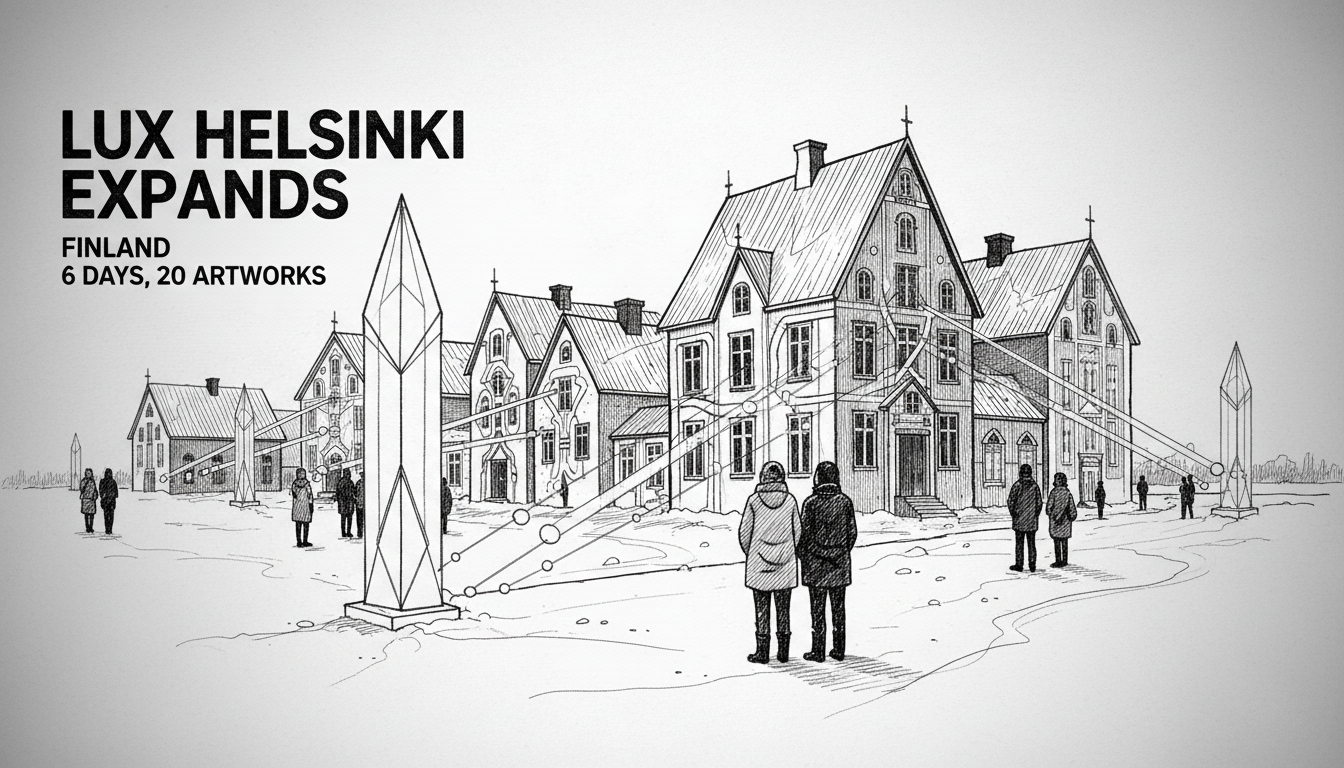
Finland's Lux Helsinki light art festival extends to six days in January 2025, responding to strong public demand for more time to experience its transformative winter installations. The festival will feature 20 artworks scattered across Helsinki's core, with the largest piece transforming the iconic cranes of the historic Helsinki Shipyard into a monumental beacon. This expansion from the traditional five-day format marks a significant evolution for an event that draws an estimated 300,000 to 400,000 visitors to the darkened streets of the capital each winter.
Organizers at the Helsinki Events Foundation announced the schedule change, framing it as a direct answer to audience feedback. The festival will now run from Epiphany, January 6th, through Sunday, January 11th. Most installations will illuminate the city from 5:00 PM to 10:00 PM. A special morning program, Lux Aamu, will also activate select pieces from 7:00 AM to 9:00 AM on January 8th and 9th, offering a burst of light energy during the darkest morning commutes.
A City Transformed by Light and Narrative
The festival's footprint centers on Helsinki's most recognizable public spaces. Key locations include the Citizen's Square (Kansalaistori) in front of the Central Library Oodi, Hietalahti Square, the Old Church Park (Vanha kirkkopuisto), the Espa Stage, Erottaja square, and the Citycenter complex. The experience extends indoors to the Kanneltalo cultural center and ten downtown art galleries, creating a diffuse trail of light that encourages exploration. Visitors are advised to experience the artworks in any order they choose, crafting a personal journey through the illuminated city.
This curated path does more than decorate; it tells stories. Each installation uses light and color to provoke thought and convey narrative, moving beyond mere spectacle. The dispersal across galleries and cultural centers intentionally bridges public outdoor art with the established gallery scene, suggesting light art's legitimate place in contemporary discourse. This integration elevates the festival from a seasonal attraction to a serious cultural event.
Shipyard Cranes Become the Centerpiece
The festival's most ambitious work, 'Valon huoneet' (Rooms of Light), will command the Hietalahti waterfront by illuminating the massive cranes of the Helsinki Shipyard. Finnish-Turkish visual artist Melek Mazici created the piece to honor the shipyard's 160-year history and the people who have worked there. In a statement released by the shipyard's current operator, the shipbuilding company DAVIE, Mazici explained her inspiration came from those who "lit the shipyard's lights for over 160 years, during dark and windy early mornings and cold, short winter days."
DAVIE's involvement is symbolic, representing what the company calls a "renaissance" for the historic shipyard. The firm noted that its current project—building a new icebreaker—has effectively "relit the lights" at the facility. By turning the industrial cranes into majestic, glowing landmarks, the artwork physically and metaphorically connects Helsinki's proud maritime past with its vibrant creative present. It transforms a symbol of heavy industry into one of artistic illumination, reflecting the city's ongoing urban evolution.
Combating the Polar Night with Cultural Vitality
Lux Helsinki's strategic timing is no accident. Held in early January, the festival directly confronts the psychological and physical challenges of the Finnish polar night. With daylight lasting only a few hours, the festival injects vitality into the public realm, encouraging civic engagement and outdoor activity during a period when hibernation is tempting. Urban planning experts frequently cite events like Lux Helsinki as critical tools for placemaking and year-round city livability.
Tourism analysts also highlight its economic and promotional impact. By attracting hundreds of thousands of domestic and international visitors, the festival boosts hotel occupancy, restaurant traffic, and retail sales during a traditional post-holiday lull. It positions Helsinki as a dynamic winter destination, countering the stereotype of a cold, dark Nordic capital with one that is creatively energized and visually stunning. The festival showcases Finnish expertise in design, technology, and light, reinforcing the nation's brand on an international stage.
The Logistics of a Growing Urban Festival
Managing an open-access, free festival of this scale across central Helsinki presents considerable logistical challenges. The expansion to six days increases demands on city services, public transport, and security. Organizers must carefully coordinate light installations to minimize energy use and light pollution, aligning with Helsinki's ambitious sustainability goals. The festival's growth reflects its success but also tests the capacity of public infrastructure to host ever-larger cultural gatherings.
Resident reception is generally positive, though increased foot traffic in residential downtown areas requires careful communication and community engagement. The balance between creating a spectacular tourist draw and serving the local community is delicate. The inclusion of morning viewings (Lux Aamu) appears to be a direct nod to residents, offering them a unique experience during their daily routines, separate from the evening tourist crowds.
A Look at the Festival's Future and Legacy
The decision to extend Lux Helsinki signals confidence in its cultural and economic formula. It follows a broader European trend of light festivals—like Lyon's Fête des Lumières or Amsterdam's Light Festival—becoming major calendar events. However, Lux Helsinki retains a distinctly Finnish character, embracing the extreme winter darkness rather than fighting it, and often incorporating themes of nature, silence, and introspection alongside more playful installations.
As the festival grows, questions about its future direction emerge. Will it continue to expand in duration or geographical spread? How will it incorporate new technologies like interactive light or augmented reality? Can it maintain its free access model if costs rise? The 2025 edition, with its extended run and landmark shipyard installation, sets a new benchmark. It demonstrates a move towards more monumental, site-specific works that engage deeply with Helsinki's history and urban fabric.
The transformation of the shipyard cranes is particularly telling. It represents a shift from using light to adorn buildings to using it to reinterpret and re-contextualize industrial heritage. This approach suggests a maturing festival that seeks not just to beautify, but to comment and connect. As Helsinki continues to evolve, Lux Helsinki appears poised to use its beams not merely to chase away the winter dark, but to illuminate the city's ongoing story. Will this focus on narrative and place-specific art become the festival's defining legacy, setting it apart in the crowded international circuit of light festivals?