
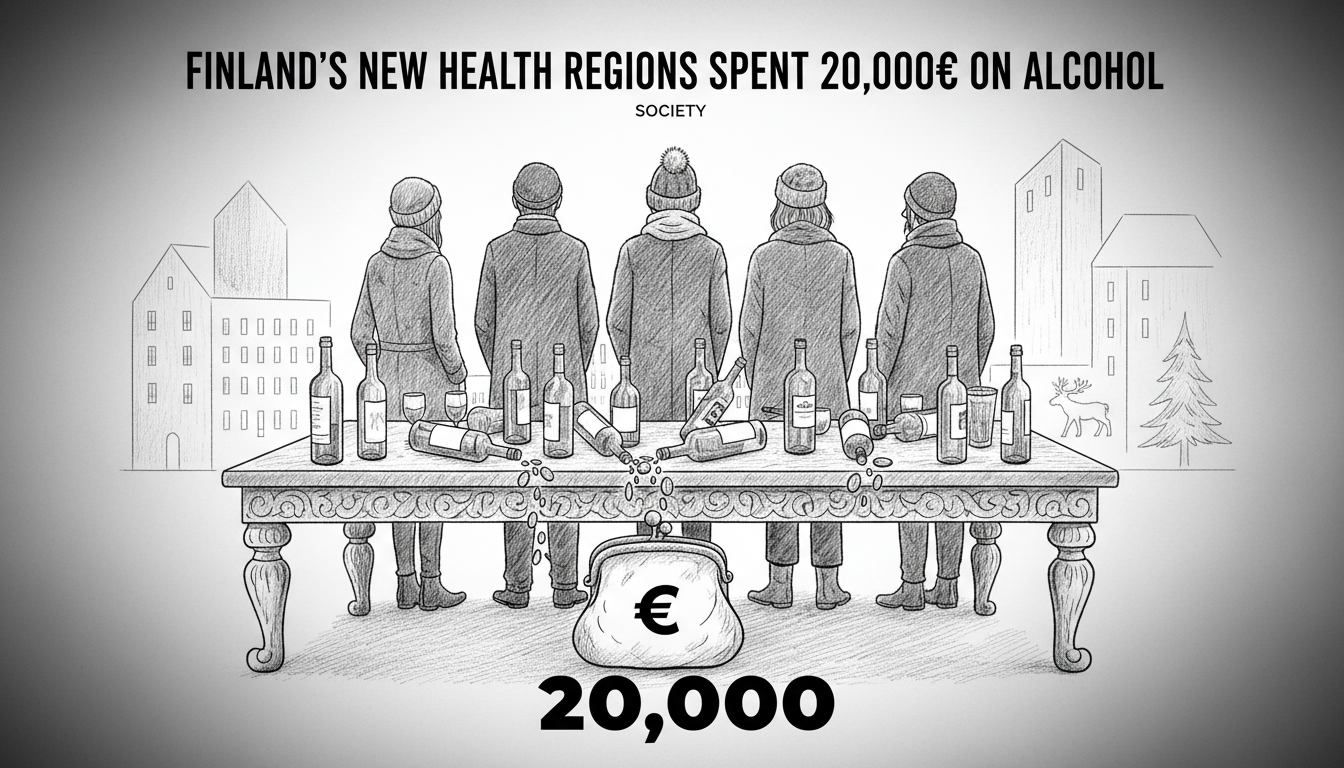
Finland's new wellbeing services counties spent between a few hundred and over 20,000 euros on alcohol purchases in less than two years, according to data obtained by public broadcaster Yle. The figures reveal significant regional disparities in spending on hospitality for events and meetings, emerging as the counties face intense pressure to cut costs across their healthcare and social service operations. The data covers purchases from January 2024 to mid-November 2025, a period following the historic 2023 reform that created the 21 counties to manage Finland's public health and social services.
A Reform Under Financial Scrutiny
The wellbeing services counties represent the most significant administrative overhaul in modern Finnish history. Established to replace a fragmented municipal system, they were designed to ensure equal access to healthcare and social services while improving cost-efficiency. The reform shifted responsibility from over 300 municipalities to 21 larger regions, with a combined annual budget exceeding 25 billion euros. Against this backdrop, even relatively modest expenditures on items like alcohol attract scrutiny. "Every euro saved in administrative costs is a euro that can be directed toward patient care or essential services," notes Dr. Liisa Mäkelä, a public policy researcher at the University of Helsinki. "The public rightly expects austerity and clear priorities from these new, powerful entities."
The data shows a wide spectrum of spending. Three counties—Pohjois-Pohjanmaa (North Ostrobothnia), Pirkanmaa, and Päijät-Häme—each reported alcohol expenditures just over 20,000 euros for the 22-month period. A majority of counties spent amounts in the low thousands of euros, while a handful reported costs of only a few hundred euros. Complete data was not available from all regions; the Helsinki University Hospital district (HUS), the City of Helsinki, and the North Karelia wellbeing services county stated that compiling the information would require disproportionate administrative work. Data from Kanta-Häme and Kainuu were excluded due to uncertainties in their reported figures.
The Context of Hospitality and Public Perception
Officially, alcohol purchases by public authorities are typically for hospitality at official events, seminars, or receptions. In Finnish public administration, such spending has historically been a point of occasional debate, balancing the tradition of offering refreshments with the need for fiscal responsibility. The sums involved are objectively small when set against the multibillion-euro budgets of the wellbeing services counties. For instance, 20,000 euros represents a minuscule fraction of a single county's annual operating budget, which can run into the billions.
However, experts argue the symbolic weight of the expenditure is heavy. "The timing is critical," says Professor Jukka Viitanen, a specialist in public sector economics. "These counties are negotiating tough austerity measures, which may impact service levels and staffing. When citizens hear about cuts to home care hours or longer specialist wait times, and then see figures for alcohol spending, it creates a perception problem. It challenges the principle of exemplary conduct in the use of public funds." The issue was raised in the Finnish Parliament, the Eduskunta, by opposition MPs. Hanna Holopainen of the Social Democratic Party questioned whether such spending aligns with the health-promoting mission of the counties themselves.
Navigating Austerity and Public Trust
The Finnish Ministry of Finance has issued general guidelines on hospitality for all government agencies and publicly funded bodies, emphasizing moderation, necessity, and transparency. There is no specific nationwide ban on alcohol purchases, leaving discretion to individual organizations. Each wellbeing services county has its own internal guidelines governing representative expenses. A spokesperson for the Pirkanmaa wellbeing services county stated their spending was "in accordance with internal rules for official hospitality" and related to events promoting regional cooperation and employee wellbeing.
The core tension lies in the counties' dual challenge: establishing new operational cultures while immediately implementing substantial savings. The Finnish government has mandated these regions to find significant efficiency gains to ensure the long-term sustainability of the welfare system. "This isn't really about the alcohol itself," Dr. Mäkelä explains. "It's a stress test for the accountability and transparency frameworks of these new institutions. How they justify every line item, especially non-essential ones, will build or erode public trust. Detailed, accessible reporting is not just bureaucracy; it's essential for legitimacy."
A Comparative Look at Regional Priorities
The disparity in spending figures suggests varying internal policies and priorities across the counties. The regions that spent the least—merely a few hundred euros—appear to have adopted a highly restrictive or even abstinent approach. This could reflect a stricter interpretation of austerity or a deliberate policy choice to avoid any potential controversy. Without standardized national rules, a postcode lottery of sorts emerges not in healthcare provision, but in administrative spending habits.
This patchwork approach may attract attention from policymakers in Helsinki. Some analysts suggest the government could move to harmonize rules on representative expenses across all publicly funded entities, including the wellbeing services counties. "Uniform guidelines would level the playing field and remove ambiguity," Professor Viitanen argues. "It would protect county officials from criticism and ensure public funds are used with consistent prudence nationwide, aligning with the reform's goal of reducing regional inequality." The issue also intersects with Finland's broader cultural relationship with alcohol, where state policy has long balanced restriction with taxation, making any public sector spending on alcohol a sensitive topic.
The Path Forward for Welfare Counties
The revelation of these expenditures arrives at a pivotal moment. The wellbeing services counties are still consolidating their operations, and their financial practices are under a microscope. The debate likely will not result in a ban but could lead to tighter internal controls and more proactive public disclosure. Several county boards have already announced internal reviews of their hospitality policies in light of the published data.
The ultimate test will be whether these entities can demonstrate that every euro is optimized for their core mission: providing high-quality, equitable health and social care. As they navigate severe budgetary constraints, their choices on non-essential spending will be viewed as a bellwether for their overall fiscal discipline. The modest sums for alcohol, therefore, carry a weight far beyond their financial value. They serve as a tangible measure of the counties' commitment to austerity and their sensitivity to public sentiment during a period of profound structural change in Finnish society. The question for their administrators is not merely what is permissible, but what is prudent and defensible to a taxpaying public expecting world-class care.