
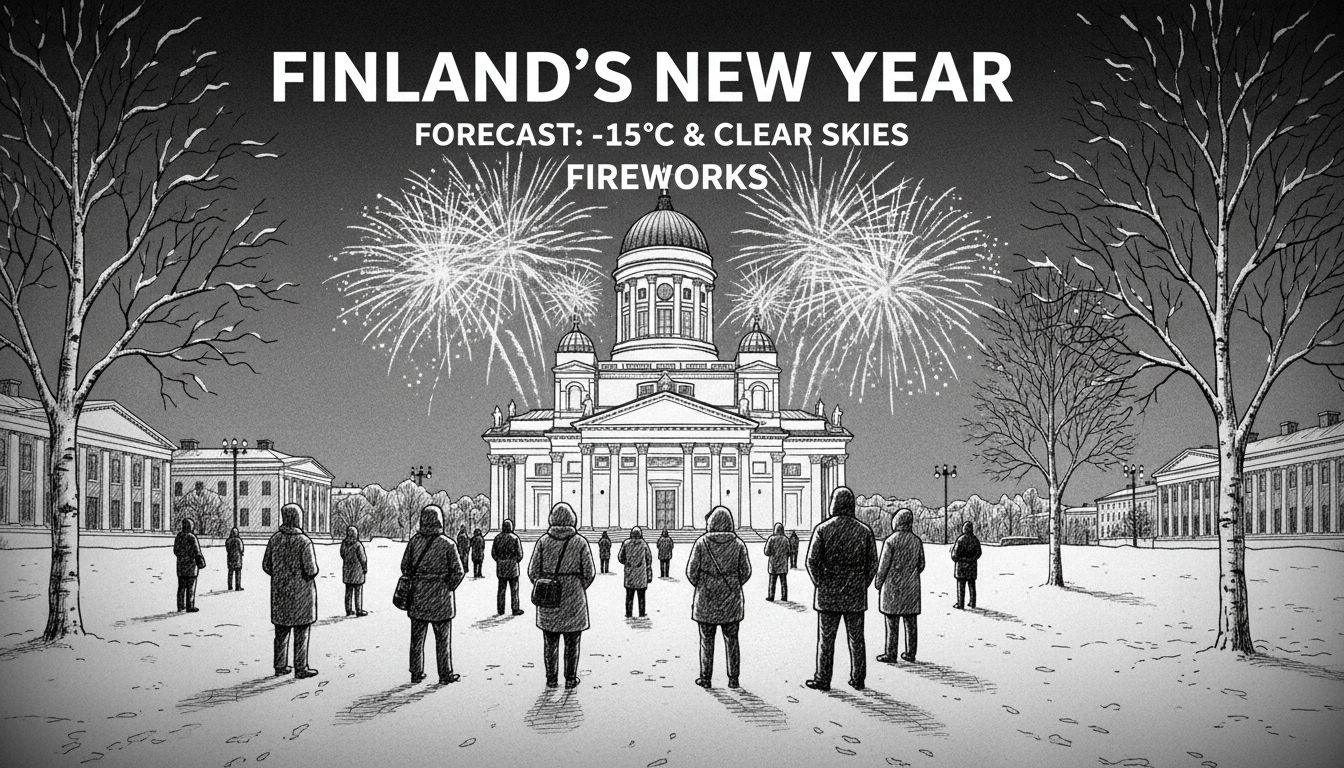
Finland's New Year weather is setting the stage for a classic, cold celebration, with the city of Kouvola expecting ideal conditions for its traditional midnight fireworks display. The Finnish Meteorological Institute forecasts a dry, clear evening with temperatures plunging to between -10 and -15 degrees Celsius, offering perfect visibility for pyrotechnics against a crisp winter sky. This specific forecast for southeastern Finland highlights a broader national trend of a cold, snowy holiday period, aligning with typical Finnish winter patterns that deeply influence cultural festivities.
A Meteorological Gift for Year-End Celebrations
According to Eetu Rim, a meteorologist on duty at the Finnish Meteorological Institute, the weather will cooperate fully with celebration plans. "The evening will clear up," Rim confirmed, providing a precise outlook. "Overnight, the temperature may range between -10 and -15 degrees below zero." New Year's Day itself will see increasing cloud cover but no precipitation, with a steady chill of around -15 degrees Celsius. The Institute's ten-day forecast for the Kouvola region promises consistently freezing temperatures and occasional light snowfall in the days following the holiday, cementing a truly wintry start to 2025. This stability is a boon for event planners and residents alike, allowing for secure outdoor gatherings.
Such conditions are not unusual for a Finnish December but are notably favorable compared to potential alternatives like heavy snow, freezing rain, or strong winds that can disrupt events. The dry air and lack of significant wind are particularly critical for fireworks safety and visibility. This forecast allows municipal authorities and private citizens to proceed with traditional displays, which are a cornerstone of New Year's Eve across the country. The clear skies will also offer a stunning backdrop for the natural phenomenon of twilight, which lasts for several hours in southern Finland during the deep winter.
Navigating Tradition Within a Strict Legal Framework
The ideal weather coincides with Finland's highly regulated approach to pyrotechnics, a system that balances public celebration with safety and environmental concerns. Finnish law permits the sale of category F2 and F3 fireworks to adults (18+) only during a strict seven-day period leading up to New Year's Eve. Their use is then allowed on December 31st from 6:00 PM until 2:00 AM on January 1st, a narrow eight-hour window designed to concentrate the disturbance and enable coordinated emergency service readiness. Outside this period, using consumer fireworks is generally prohibited without a special permit.
This regulatory environment reflects a ongoing national conversation. "Every year, we see the same debates," notes safety expert Laura Mäkinen, who has consulted for several municipalities. "The joy and tradition of personal fireworks are weighed against the risks of injuries, the immense stress on pets and wildlife, and the spike in air pollution. The clear, cold weather forecast actually intensifies the local pollution impact, as temperature inversions can trap smoke and particulates close to the ground." Many major cities, including Helsinki, Tampere, and Turku, now invest in large, professional public displays, actively encouraging residents to watch these instead of setting off their own. The goal is to provide a spectacular experience while minimizing decentralized risks.
The Deep Cultural Chill of Finnish Winter
The forecasted -15 degree temperature is more than a number; it is a defining feature of the Finnish holiday experience. Winter in the region of Kymenlaakso, where Kouvola is located, is reliably cold and snowy, with average January temperatures typically hovering between -5 and -10 degrees Celsius. The predicted holiday lows are thus crisp but not exceptional, representing the authentic character of the season. This climate necessitates specific preparations that are second nature to Finns but noteworthy for international observers: dressing in multiple thermal layers, ensuring vehicles are winter-ready with studded tires, and being mindful of icy surfaces on roads and walkways.
Public health officials consistently use forecasts like this to reiterate cold-weather advice. The emphasis is on appropriate clothing—particularly protecting extremities—and the dangers of alcohol consumption in extreme cold, which accelerates heat loss and increases the risk of hypothermia. For the thousands who will gather outdoors to watch fireworks, the advice is practical: wear warm, wind-resistant outerwear, insulated boots, gloves, and a hat, and limit prolonged exposure despite the captivating displays. The weather also impacts emergency services, which remain on high alert for cold-related incidents alongside any potential fireworks injuries.
Economic and Logistical Implications of a Cold, Clear Forecast
A predictable and dry forecast has tangible economic benefits. Retailers of fireworks, cold-weather gear, and celebration supplies experience stable sales without the last-minute cancellations that storm warnings can trigger. Hospitality venues with outdoor terraces or pre-planned fireworks viewing events can confidently proceed, and municipal public works departments can focus on general winter maintenance rather than emergency response to weather-related chaos. The certainty allows for efficient allocation of resources, including police and ambulance services, which strategically position teams for the evening's peak activity.
Conversely, the intense cold presents challenges. Fireworks manufacturers provide specific instructions for handling products in sub-zero temperatures, as materials can become brittle. Event organizers must ensure staging areas are safe from ice, and public transport schedules must account for potential delays, even on dry roads, due to the severe cold. The forecast also solidifies energy consumption patterns, as households and venues will maintain high heating levels throughout the celebration, a factor monitored by national grid operators.
Looking Beyond the Holiday: A Pattern of Winter Stability
The ten-day outlook suggesting sustained cold and intermittent snow after New Year's Day points to a stable winter weather pattern. This has broader implications for industries like energy, transportation, and tourism. A reliable snow cover is positive for winter sports tourism, a vital sector in many Finnish regions. It also allows for the continued use of winter roads across the nation's extensive network of frozen lakes, which serve as crucial seasonal transport routes in more remote areas. The Finnish Meteorological Institute's models are closely watched by these sectors for planning and operational purposes.
From a climatic perspective, this forecast aligns with expected seasonal norms for a Finnish winter, distinct from the more volatile and warming patterns observed in some recent years. It represents the classic, stable cold that much of Finland's infrastructure and cultural practices are designed to accommodate. As climate change progresses, these reliably cold and snowy holiday periods may become less frequent, adding a layer of cultural significance to traditional celebrations enjoyed under such quintessential conditions.
The clear, frigid skies over Kouvola this New Year's Eve will provide more than just a backdrop for fireworks; they offer a moment of seasonal predictability in an unpredictable world. The celebration, framed by strict safety laws and embraced with practical preparedness, underscores a distinctly Finnish relationship with winter—one of respect, adaptation, and finding communal joy within the deep chill. As the clock strikes midnight and the first explosions of color illuminate the -15 degree air, the weather itself will be an integral, celebrated part of the tradition.