
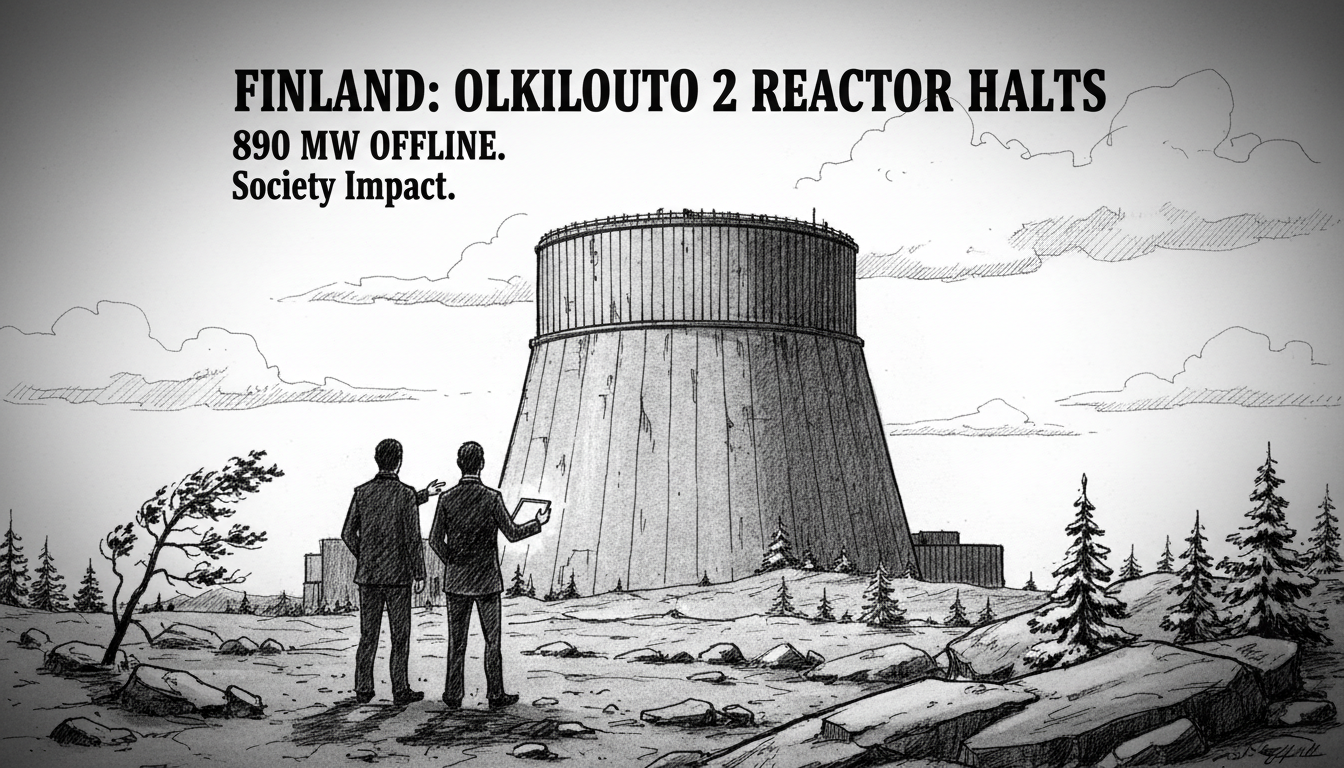
Finland's Olkiluoto nuclear power plant lost a significant portion of its generating capacity on Friday when the Olkiluoto 2 reactor was taken offline due to a technical fault. Plant operator Teollisuuden Voima Oyj (TVO) stated the issue emerged during a software update to the reactor's power control system. An initial estimate suggests the 890-megawatt boiling water reactor could return to service by 3 a.m. on Sunday, pending successful troubleshooting and safety checks.
This unexpected outage temporarily removes a cornerstone of Finland's baseload power supply. It occurs as the country's energy system adjusts to the recent full commissioning of the massive Olkiluoto 3 reactor, which began regular production last year. The incident highlights the complex balancing act required to maintain grid stability, even in a nation that has heavily invested in nuclear energy for security and climate goals.
The Immediate Cause and Response
The fault was identified in the Olkiluoto 2 reactor's power regulation system software during a planned update procedure on Friday morning. TVO's protocol immediately triggered an automatic shutdown, a standard safety response designed to isolate any potential system instability. The company has not released specific technical details about the software glitch, citing operational confidentiality, but emphasized that all safety systems functioned as intended.
"The reactor was shut down according to procedures, and there has been no danger to people or the environment," a TVO spokesperson said in a statement. The focus now is on diagnostic work by engineers from TVO and the reactor's original supplier, Areva-Siemens consortium. The preliminary restart target of early Sunday morning indicates experts believe the issue is resolvable without prolonged downtime. However, nuclear regulators from the Radiation and Nuclear Safety Authority (STUK) must approve all steps before the reactor can resume power generation.
Impact on Finland's Energy Landscape
The temporary loss of Olkiluoto 2 has tangible consequences for Finland's power grid. With a capacity of approximately 890 MW, the reactor represents a substantial block of always-on electricity. In 2022, nuclear power accounted for about 30% of Finland's total electricity production, with the two Olkiluoto reactors and two reactors at the Loviisa plant being key contributors. This outage tests the resilience of the national system, particularly during a period of high demand.
Finland's position in the integrated Nordic electricity market, Nord Pool, means such domestic events have regional ripple effects. When a major producer like Olkiluoto 2 goes offline, Finland may need to import more electricity from neighbors like Sweden or Estonia, or increase domestic production from other sources, such as hydro or combined heat and power plants. This can influence spot prices across the Nordic region. The timing is notable, as Finland recently transitioned to being a net electricity exporter following the launch of the 1,600 MW Olkiluoto 3, which alone can cover around 14% of national demand.
Safety Protocols and Public Confidence
For the Finnish public, any incident at a nuclear facility triggers scrutiny, given the technology's historical sensitivities. Experts point to the automatic shutdown as evidence of a robust safety culture. "This is precisely how the system is supposed to work," said Dr. Elina Kärnä, a nuclear energy systems researcher at LUT University. "A non-standard signal from a system during maintenance prompts an immediate, conservative response—shut down and investigate. The estimated short downtime suggests it is a contained control system issue, not a primary safety system problem."
Finland maintains high public support for nuclear power, largely due to its role in providing carbon-free energy and enhancing national energy independence, especially after Russia's invasion of Ukraine. Transparency during incidents is crucial for maintaining this trust. STUK's independent oversight of the restart process provides an additional layer of public assurance. The agency will verify that TVO has fully understood the fault's root cause and taken adequate corrective measures before granting permission to restart.
The Broader Context of Nuclear Reliability
Unplanned outages are an operational reality for all power plants, whether nuclear, thermal, or renewable. The difference with nuclear is the scale of each unit and the stringent public safety regulations governing its operation. The Olkiluoto 2 reactor, which began commercial operation in 1980, has undergone several upgrades and life-extension programs. Its operational life is currently authorized until 2038.
This event serves as a reminder that even as Finland celebrates the successful start of the next-generation Olkiluoto 3, the existing fleet requires continuous investment and meticulous maintenance. The software update that precipitated this shutdown was part of that ongoing modernization effort. "Modern nuclear plants are as much about advanced digital control systems as they are about physics and engineering," Dr. Kärnä noted. "Updates are necessary for efficiency and safety, but they introduce complexity. The protocols exist to manage that risk."
Looking Ahead: Grid Stability and Future Plans
The incident's resolution will be closely watched by grid operator Fingrid. Finland's ambitious decarbonization strategy relies on a stable, high-capacity nucleus of nuclear power complemented by growing wind and solar generation. This mix is designed to ensure reliability while phasing out fossil fuels. Short-term outages are managed through the Nordic market, but they underscore the importance of maintaining diverse generation assets and robust interconnectors.
For TVO, the priority is a safe and methodical return to service for Olkiluoto 2. The company's reputation for technical competence was bolstered by finally bringing the long-delayed Olkiluoto 3 online. How it handles this routine yet disruptive fault at its older unit will be another test of its operational excellence. The planned restart in the early hours of Sunday will likely bring a swift end to this incident, allowing the plant to resume its key role in powering Finnish homes and industry.
As Finland continues to position itself as a European leader in clean, secure energy, the smooth management of such technical setbacks proves just as important as launching new megaprojects. The silent turbines at Olkiluoto 2 this weekend are a brief pause in a long-term strategy, a reminder that energy security is built not just on megawatts, but on meticulous processes and unflinching safety standards.