
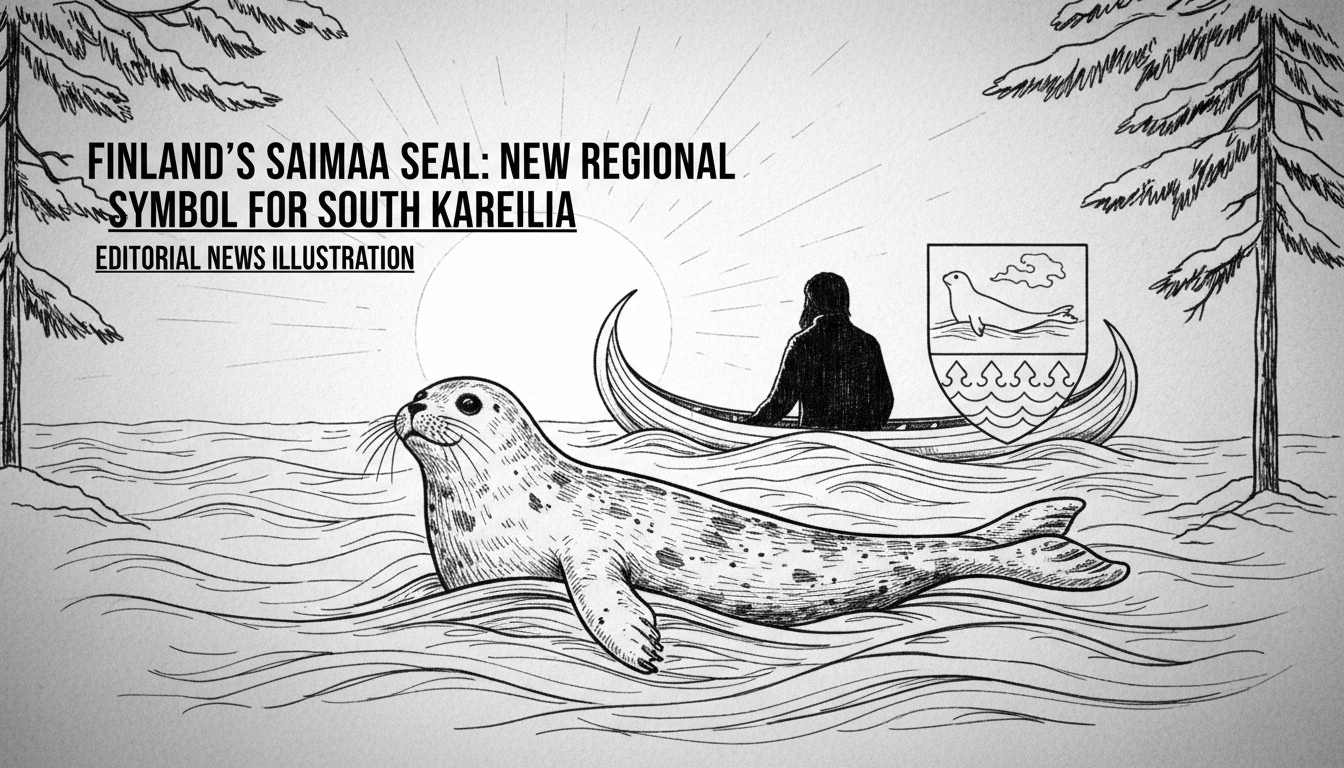
Finland's critically endangered Saimaa ringed seal is poised to become the official regional animal of South Karelia. The regional board of Etelä-Karjala formally proposed the seal as its 'maakuntaeläin' on Monday, a move that intertwines cultural identity with urgent conservation efforts for a species numbering just 530 individuals. This follows neighboring region South Savo's adoption of the seal as its own symbol in September, creating a powerful cross-regional emblem for the Lake Saimaa ecosystem.
A Symbol of Shared Heritage and Survival
The proposal, now before the South Karelia regional council for final approval, is more than a ceremonial gesture. It represents a strategic effort to elevate the Saimaa ringed seal from a scientific concern to a living symbol of regional pride and shared responsibility. The seal, known scientifically as Pusa hispida saimensis, lives only in the labyrinthine waters of Lake Saimaa, Europe's fourth largest lake. Parts of the lake fall within South Karelia's borders, making the animal a genuine native. 'The Saimaa ringed seal is not just an animal; it is a part of our regional soul and a barometer for the health of our entire lake system,' said a South Karelia regional board member involved in the proposal. The seal would join an existing suite of regional symbols including the nightingale, the landlocked salmon, and the lake Saimaa itself.
This initiative aligns with a broader Finnish tradition where regions select official flora, fauna, and minerals to promote local identity and environmental awareness. The process often involves public participation and culminates in official recognition by the regional council. For South Karelia, adopting the seal creates a direct link to its most famous natural feature while assuming a mantle of stewardship. The regional board's action was explicitly encouraged by South Savo's regional director, Heini Utunen, who last autumn expressed hope that other Saimaa-area regions without a regional animal would follow suit.
The Precarious State of the Saimaa Ringed Seal
Behind the symbolic honor lies a stark biological reality. The Saimaa ringed seal is one of the world's most endangered seal species and is classified as critically endangered in Finland. Its population, though slowly recovering from a low of about 100-150 individuals in the 1980s, remains extremely fragile. The latest estimate from the Finnish Association for Nature Conservation puts the total at approximately 530 seals. Each breeding season is a high-stakes event for the species' future.
Conservationists point to several persistent threats. Climate change is a primary concern, as the seals depend on sufficient ice and snow cover in late winter to build the lairs where they give birth and nurse their pups. Milder winters have led to poor ice conditions, increasing pup mortality from exposure and predation. Human disturbance from winter fishing, snowmobiling, and cabin construction near shorelines also poses significant risks, particularly to vulnerable newborn pups in their snow lairs. 'Every single pup is vital for the genetic diversity and long-term survival of this unique population,' explained a senior researcher from the University of Eastern Finland, who has monitored the seals for decades. 'The annual pup mortality rate can fluctuate dramatically with ice conditions, which makes consistent, multi-year growth challenging.'
Conservation in Action: Beyond the Symbol
Designating the seal as a regional symbol is intended to bolster concrete conservation work already underway. For years, protective measures have included seasonal fishing restrictions in seal habitats, the creation of artificial snow banks to help seals build lairs in low-snow winters, and extensive public awareness campaigns urging lake users to avoid seal resting areas. The Finnish government and the EU have funded long-term monitoring and research programs.
The new regional status could strengthen local support for these sometimes-inconvenient measures. When a species becomes an official emblem, its well-being is often viewed as a reflection of the region's own health and values. 'It transforms the seal from being 'their' problem for conservation biologists into 'our' shared responsibility,' noted an environmental policy expert from Helsinki. 'This can be crucial for maintaining political will and public funding for protection efforts that require long-term commitment.'
Furthermore, the seal has significant economic value as a flagship for nature tourism in the Saimaa region. Responsible seal-watching tours generate income and educate visitors. The regional animal designation will likely be incorporated into tourism marketing, potentially creating a virtuous cycle where economic benefit reinforces conservation incentives.
A Unifying Emblem for the Saimaa Region
The coordinated move by South Savo and South Karelia to adopt the same regional animal is noteworthy. It suggests a shift towards a more ecosystem-based regional identity, transcending administrative borders to celebrate a shared natural heritage. Lake Saimaa does not respect regional boundaries, and neither does the seal that calls it home. By both choosing the Saimaa ringed seal, these regions are making a powerful statement about collective custodianship of the lake.
This approach could serve as a model for other cross-border environmental initiatives in Finland. It highlights how cultural symbols can be deployed to foster cooperation on practical ecological management. The next logical step, as suggested by some conservation groups, would be for the regions to formally coordinate their conservation advocacy and funding appeals, presenting a united front to national policymakers in Helsinki and EU institutions in Brussels.
The Path Forward and Remaining Challenges
While the regional council's approval in South Karelia is expected, the real work continues on the ice and waters of Saimaa. The seal's recovery, though positive, is slow. Experts agree that the species will remain vulnerable for decades to come. Long-term threats like climate change require adaptive strategies that go beyond local or even national action.
The seal's story is ultimately a test case for Finland's ability to preserve its unique biodiversity in the 21st century. It pits dedicated, science-based conservation against global environmental pressures. The decision to make this endangered animal a symbol of regional pride is a profound commitment. It says that the identity of South Karelia and South Savo is inextricably linked to the survival of a rare seal—that if the Saimaa ringed seal thrives, so does the region's natural heritage. The world will be watching to see if this symbolic embrace translates into a lasting future for the 530 individuals fighting for survival in the frozen lairs of Lake Saimaa.