
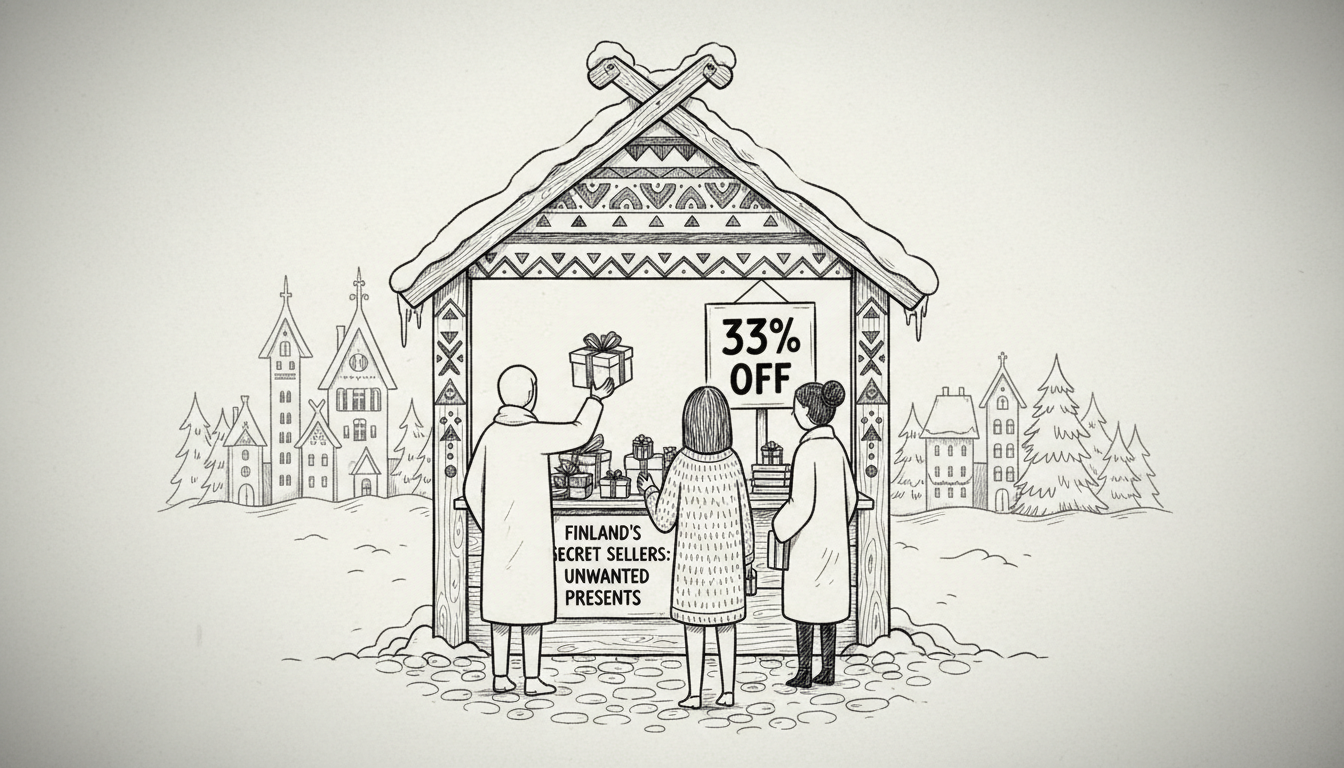
Finland's Christmas gift economy is undergoing a quiet revolution, driven by online marketplaces and shifting social norms. One in three Finnish adults has sold a Christmas gift they received, according to a new survey from the peer-to-peer platform Tori. More strikingly, a third of those who sell do so in secret, telling no one about their post-holiday transactions. This trend highlights a complex clash between Finland's growing embrace of the circular economy and deep-seated social etiquette surrounding gift-giving.
The Rise of the Stealth Seller
The data reveals a nation cautiously navigating new consumption habits. While 33% of adults admit to selling received gifts, an equal proportion confess they would be offended to discover a present they gave was for sale. This tension creates the perfect conditions for clandestine activity. "The reason for keeping the selling secret is clear; selling carries an impolite image and some feel it is tactless," Tori's director, Jenni Tuomisto, said in a statement. "One in three Finns is offended if they see a gift they gave being sold after Christmas." The phenomenon is not isolated to a few individuals but represents a significant, and growing, consumer segment. Experts link this directly to the explosive growth of online marketplaces in Finland, which have normalized the buying and selling of used goods as part of a sustainable lifestyle.
From Social Taboo to Economic Pragmatism
For decades, regifting or selling a present in Finland was considered a serious social faux pas, potentially damaging personal relationships. The gift was seen as a symbolic token of the relationship itself, and discarding it equated to rejecting the giver's sentiment. Today, economic pragmatism and environmental consciousness are challenging that view. With high inflation and economic uncertainty, many Finns view unwanted gifts not as emotional burdens but as untapped financial resources. Selling a gift that would otherwise gather dust can provide welcome extra income or fund more desired purchases. This is particularly true for generic or impractical items, which are common during the holiday season. The act is increasingly framed not as ingratitude, but as sensible resource management within a circular economy model that Finland actively promotes.
The Digital Marketplace: An Enabler of Discretion
The architecture of modern digital platforms like Tori.fi directly facilitates this discreet behavior. Unlike a traditional flea market or charity shop donation, an online sale can be conducted privately from one's smartphone. There is no need to physically transport items in public view or explain actions to acquaintances. The seller controls the narrative completely. This technological discretion lowers the psychological barrier to action, allowing individuals to act on economic or practical impulses without facing immediate social judgment. The platforms themselves have evolved from simple classifieds into sophisticated ecosystems with secure payment and logistics, making the transaction as effortless as any e-commerce purchase. This ease and privacy are critical factors in the trend's acceleration, turning a once-awkward endeavor into a routine digital chore.
Cultural Crossroads: Finnish Values in Conflict
This trend places two core Finnish values on a collision course: sisu (perseverance, practicality) and hiljaisuus (quietness, but also implying respect for social harmony). The practical, resource-oriented side of the national character fully supports finding a good use for an unwanted item and perhaps even turning a profit. However, the deep-seated desire to maintain social harmony and avoid causing offense fuels the secrecy. It is a classic example of Finnish conflict avoidance; rather than risk a difficult conversation or hurt feelings, the path of least resistance is to sell the item quietly and never speak of it. The survey data suggests the country is at a cultural crossroads, with new behaviors outpacing the evolution of old social rules. The 33% who are offended represent the enduring power of traditional etiquette, while the 33% who sell represent the pull of new economic and environmental realities.
The Future of Gift-Giving in a Circular Economy
As sustainability becomes a greater priority for Finnish consumers and policymakers, the stigma around second-hand goods continues to erode. The government's own circular economy strategy encourages extending product lifecycles, which logically includes redistributing unwanted items. This top-down support for sustainable consumption gradually legitimizes practices like gift-selling. The question for the future is whether social norms will catch up to this new reality. Will gift-giving itself evolve, with more people opting for experience vouchers, donations in the recipient's name, or explicit "wish list" systems to reduce waste? Or will the silent resale market simply continue to expand, becoming an open secret of modern Finnish Christmas? The answer likely lies in generational change. Younger Finns, more accustomed to digital resale and more concerned with sustainability, may feel less attached to the old taboos, potentially normalizing the practice without the need for secrecy.
A Silent Shift in Consumer Behavior
The story of Finland's secret gift sellers is more than a quirky holiday statistic. It is a measurable indicator of a profound shift in consumer psychology and social conduct. It shows how digital tools can quietly reshape long-standing traditions, creating new behaviors that exist in a grey area between accepted and taboo. For now, the transaction volumes on platforms like Tori.fi in early January tell the true story, one that many sellers will never voice aloud. The gifts change hands, the sellers gain a bit of extra cash or space, and the social fabric remains ostensibly intact—all through a discreet, digital sleight of hand. This silent post-Christmas ritual has become an unspoken part of the Finnish holiday season, reflecting a nation thoughtfully, and quietly, reconciling its cherished traditions with the demands of a new economic and environmental era.