
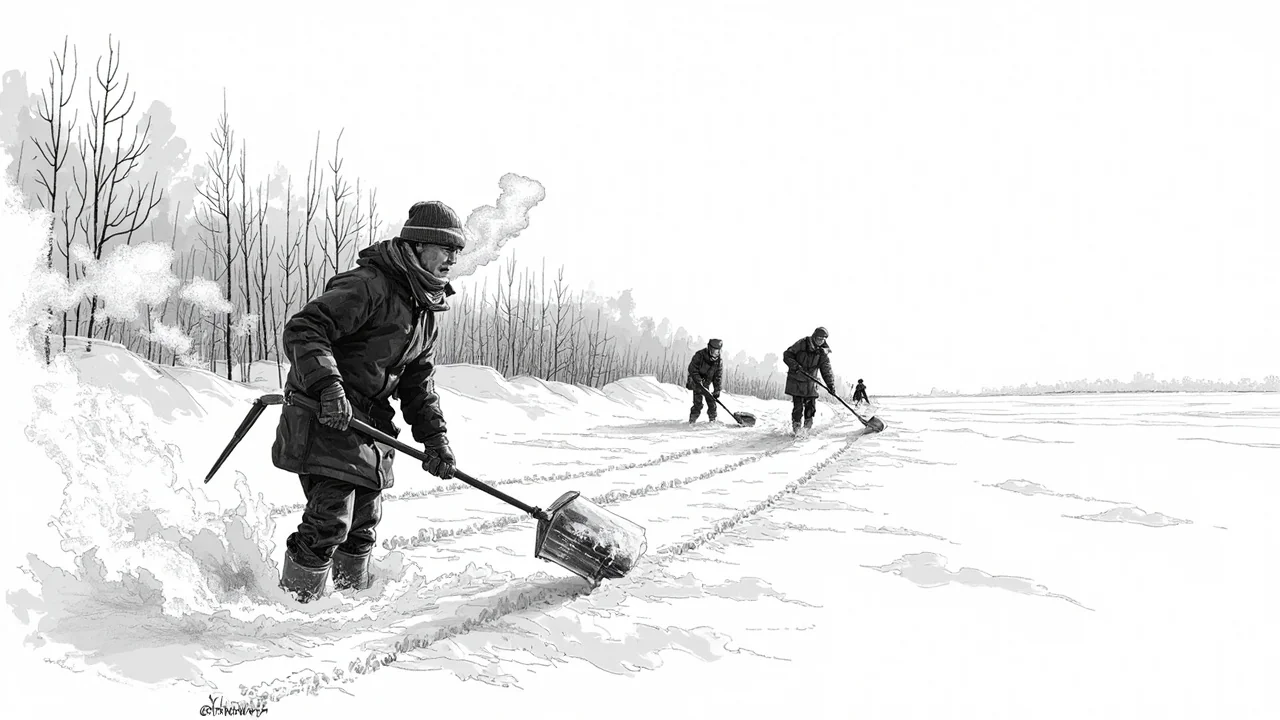
Finland's cross-country ski trails face a precarious start to the season as insufficient snowfall forces communities into action. In the village of Koskenkylä, near Loviiasa, local activist Jochum "Jokke" Bojers has already spent dozens of hours manually preparing trails, a vivid example of the national struggle against increasingly unpredictable winters. While recent weeks have brought some frost and snow, the amount is far from optimal for creating properly groomed tracks, highlighting a growing challenge for a nation where skiing is a cultural cornerstone.
The Volunteer's Burden in Koskenkylä
Jokke Bojers represents a deep-seated Finnish tradition: talkootyö, or communal volunteer work. With a snow groomer, he has begun the painstaking process of leveling and packing the scant snow cover on local trails. His efforts, consuming tens of hours, are not for sport alone but to maintain a vital piece of social infrastructure. For many Finns, access to a well-maintained ski trail in winter is as fundamental as a cleared sidewalk. The work is physically demanding and time-consuming, relying entirely on the goodwill and dedication of individuals like Bojers. This scene is replicated in hundreds of small towns and rural areas across the country, where municipal resources are stretched thin and community spirit fills the gap.
The situation this year is particularly acute. Bojers notes that while the landscape has been transformed by snow over the past two weeks, trails require significantly more accumulation to be brought into proper condition. "The frosty snow we've had recently isn't the most optimal for trail making," he explains, emphasizing the need for more substantial snowfall. This technical detail matters; the right consistency and depth of snow are critical for the grooming machines to create a durable, safe track. Without it, the base is too thin, leading to rapid deterioration and potential hazards from exposed ground or vegetation.
A National Tradition Under Climate Pressure
Cross-country skiing is woven into Finland's national identity. It is a primary form of winter exercise, a social activity, and for many, a mode of transportation. The Parliament, or Eduskunta, even has a long-standing ski trail maintained on its grounds. The ability to ski from one's doorstep into a connected network of trails is a cherished aspect of Finnish life. However, this tradition is now under direct pressure from climate change. Milder winters and irregular precipitation patterns are shortening the ski season and creating unreliable conditions, particularly in southern and coastal regions like Uusimaa, where Koskenkylä is located.
This environmental shift forces a difficult conversation about adaptation and resource allocation. Municipalities historically budgeted for trail maintenance based on predictable winter seasons. Now, they face a dilemma: invest in expensive, artificial snow-making systems for key trails, or increasingly rely on the volunteer sector to service the broader network. The Finnish Ministry of the Environment and the Finnish Meteorological Institute have both published reports indicating a trend toward later snow cover onset and earlier spring melts, directly impacting winter sports and outdoor culture. This is not a future problem; it is the current reality for volunteers like Bojers.
The Economics of Snow and Social Capital
The crisis of thin snow has tangible economic and social dimensions. Local businesses, especially in rural tourism areas, depend on a reliable winter season. Equipment rentals, guide services, and hospitality sectors all suffer when trails are unskiable. Furthermore, public health officials consistently promote outdoor activity to combat sedentary lifestyles and improve mental health, especially during the dark winter months. Ski trails provide a free, accessible avenue for this. When they are not available, a key public health asset disappears.
The reliance on talkootyö, while admirable, also exposes a vulnerability. It depends on a steady supply of willing, able-bodied volunteers. As rural populations age and younger generations move to cities, this pool of volunteers may shrink. The work done by Bojers is a form of immense social capital, but it is not an infinitely scalable or sustainable solution for a national infrastructure need. Some larger cities and popular ski resorts are beginning to invest in technology, but for the vast network of smaller community trails, the future is uncertain.
Policy Responses and Community Resilience
At the national policy level, the issue sits at the intersection of climate policy, sports funding, and cultural preservation. While Finland pursues ambitious carbon neutrality goals on the international stage, the domestic effects of a warming climate are felt in very practical ways, like the snow outside Jokke Bojers's door. There is no simple line item in the state budget for "snow insurance" for ski trails. However, some Members of Parliament from rural districts have begun raising the issue, framing trail maintenance as a matter of cultural continuity and regional equality.
In the absence of a sweeping national solution, local innovation is emerging. Some communities are creating "snow farming" programs, where snow is collected and stored under insulating material during the spring to be redistributed in the autumn. Others are diversifying their winter offerings with lighted walking paths and winter biking trails that require less snow. Yet, for purists and traditionalists, these are poor substitutes for the glide of skis on a freshly groomed track. The resilience of the Finnish community spirit, exemplified by Bojers's hours of labor, is being tested as never before.
Looking Ahead to an Uncertain Winter
The immediate forecast for Bojers and skiers across southern Finland is a waiting game. More snow is needed, and soon. Every hour he spends on the groomer is an investment in hope for a proper winter. His story is a microcosm of a larger national adaptation. Finland is a country engineered for deep winter; its infrastructure, culture, and psyche are built around it. As the climate softens, the very foundation of the winter experience requires re-examination.
Will the tradition of community-led trail maintenance be enough to preserve Finland's skiing culture? Or does the changing climate necessitate a fundamental rethink of how this iconic activity is supported? The answers are not yet clear. For now, in Koskenkylä, the work continues. The machine runs, packing the thin layer of snow, hoping that the next storm will bring the real bounty needed to turn a makeshift path into a proper ski trail. The fate of Finland's winter may well depend on the persistence of volunteers and the whims of an increasingly unpredictable sky.