
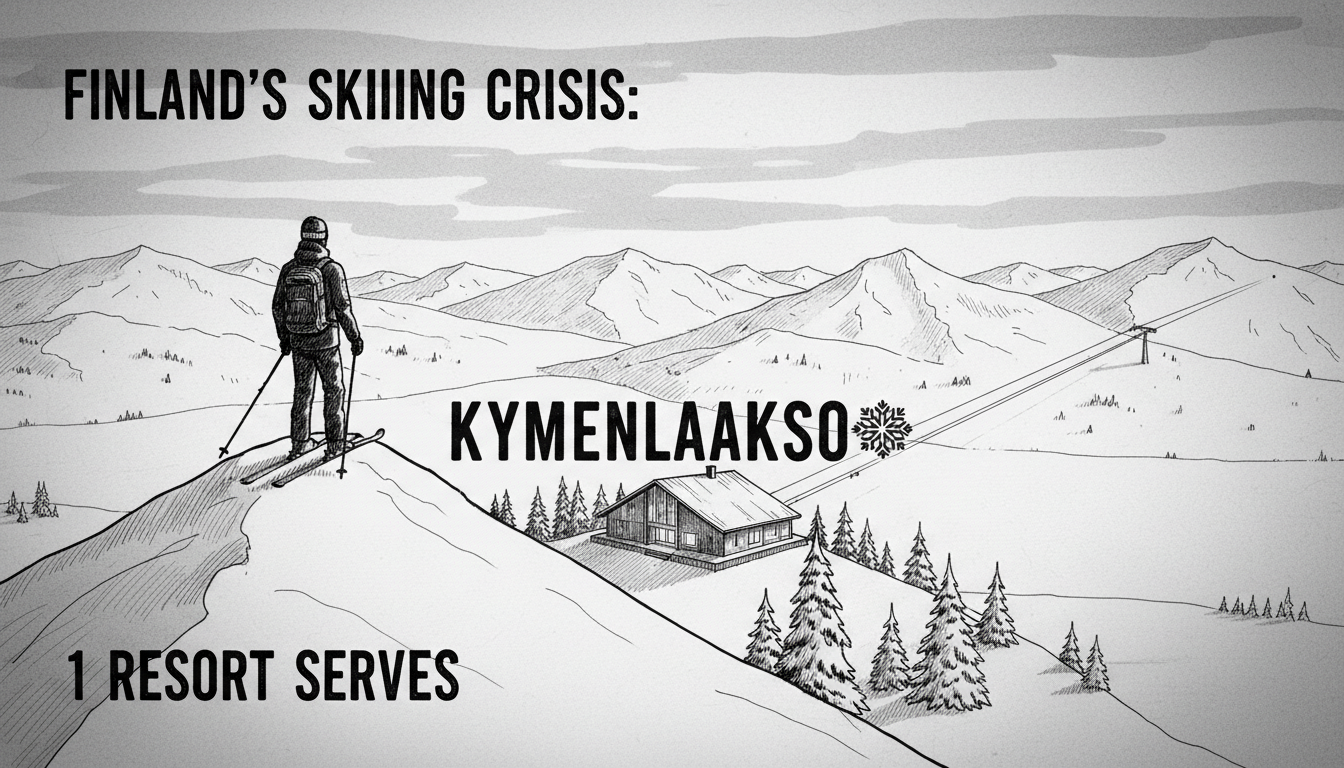
Finland's Kymenlaakso region will have only one operational ski resort this winter, with the Uuperi slopes in Hamina scheduled to open around the New Year. This stark reality highlights a broader challenge for winter sports in southern Finland, where warming winters and economic pressures are reshaping the landscape of local recreation. Uuperi's five slopes, with a maximum vertical drop of 70 meters, stand as the solitary destination for alpine skiing in an area once served by more facilities.
A Region's Winter Hub Prepares to Open
Preparations are underway at the Uuperi ski resort, located in the coastal city of Hamina. The resort's management is targeting a late December or early January opening for its slopes, which range in difficulty to cater to families and recreational skiers. The 70-meter altitude difference, while modest compared to the fells of Lapland, provides essential terrain for local skiing culture. The resort's operation relies heavily on advanced snowmaking systems, a technological necessity that has become a significant financial factor for smaller hills across southern Finland.
"For many families here, Uuperi is not just a ski hill; it's a winter community center," said a representative from the resort's management. "We see grandparents teaching grandchildren here. The decision to open each season is weighed against rising operational costs, but also against our role in the community." The resort functions with a ski school, equipment rentals, and a cafe, creating a handful of seasonal jobs and drawing visitors to the Hamina area.
The Disappearing Slopes of Southern Finland
The situation in Kymenlaakso is not an isolated case. Across southern Finland, smaller, locally-owned ski centers have faced increasing pressure over the past decade. The economic model for these hills is fragile, dependent on a short season with reliable cold weather and snow. Rising energy costs, particularly for snowmaking, and variable winter conditions have made operations unpredictable. Several similar-sized resorts in other regions have closed permanently or now operate only sporadically, often opening for a few weeks if natural snow arrives.
Climate data from the Finnish Meteorological Institute shows a clear trend towards milder and shorter winters in the southern parts of the country. The number of days with good snow cover has decreased, compressing the potential skiing season. For a resort like Uuperi, this means the window to generate revenue is narrower, while the fixed costs of maintenance, insurance, and staffing remain. The resort's survival strategy has involved diversifying its offerings, including summer activities like mountain biking and hiking trails on its slopes.
Expert Analysis: A Symptom of a Warmer Future
Industry analysts point to Uuperi's status as Kymenlaakso's sole ski area as a microcosm of a larger shift. "Small local ski hills are the most vulnerable to climate change," explained Dr. Elina Saarinen, a researcher specializing in sustainable tourism at the University of Eastern Finland. "They lack the scale and financial buffer of large Lapland destinations. Their business is hyper-local, serving towns and cities within an hour's drive. When the weather doesn't cooperate, their customer base cannot justify long trips."
Saarinen emphasizes the importance of snowmaking technology but notes its limits. "Snowmaking is an adaptation tool, but it is energy and water-intensive. It requires specific temperature windows, usually below -2 to -3 degrees Celsius. As winters warm, those windows become shorter and less reliable. It creates a vicious cycle: you need more artificial snow, which costs more, but the season to recoup that investment is shrinking." She argues that the value of these local resorts extends beyond economics, contributing to public health by encouraging outdoor winter activity and fostering a connection to nature.
The Community and Economic Ripple Effects
The reduction to a single ski resort has tangible effects on the Kymenlaakso region. For schools, sports clubs, and families, accessible skiing options are drastically limited. This can impact youth sports development and reduce opportunities for physical activity during the darkest months of the year. From a tourism perspective, while Hamina benefits from being the host, surrounding municipalities lose a winter attraction.
Local businesses that once supplied equipment, provided transportation, or offered accommodation near other now-closed slopes feel the indirect impact. The concentration of activity at Uuperi may boost its immediate vicinity, but it reduces the geographic spread of winter tourism revenue. For the region, it represents a consolidation of a key winter service, raising questions about accessibility for residents without easy transport to Hamina.
Looking Ahead: The Future of Local Winter Sports
The future of skiing in regions like Kymenlaakso likely depends on diversification and a redefinition of winter recreation. Resorts may increasingly function as multi-season outdoor activity centers to ensure year-round revenue. Community ownership models, similar to those used for some swimming halls and sports fields, have been proposed as a way to share the financial burden and secure these facilities as public amenities.
Government support, potentially through municipal or EU regional development funds for sustainable tourism, could play a role in helping smaller resorts invest in energy-efficient snowmaking and other adaptive technologies. The Finnish Ministry of Education and Culture, which oversees sports policy, recognizes the importance of local facilities for promoting national sports participation, though direct subsidies for private ski hills are limited.
As Uuperi gears up for another season, its slopes represent more than just a place to ski. They are a test case for how traditional winter culture adapts to a changing climate. The resort's success or struggle will be closely watched by similar communities across the Nordic region and beyond. The question remains: can the deep-rooted Finnish passion for winter sports sustain the infrastructure needed to practice them, even as the winters themselves become less reliable? The answer in Kymenlaakso, for now, rests on the five slopes of a single hill in Hamina.