
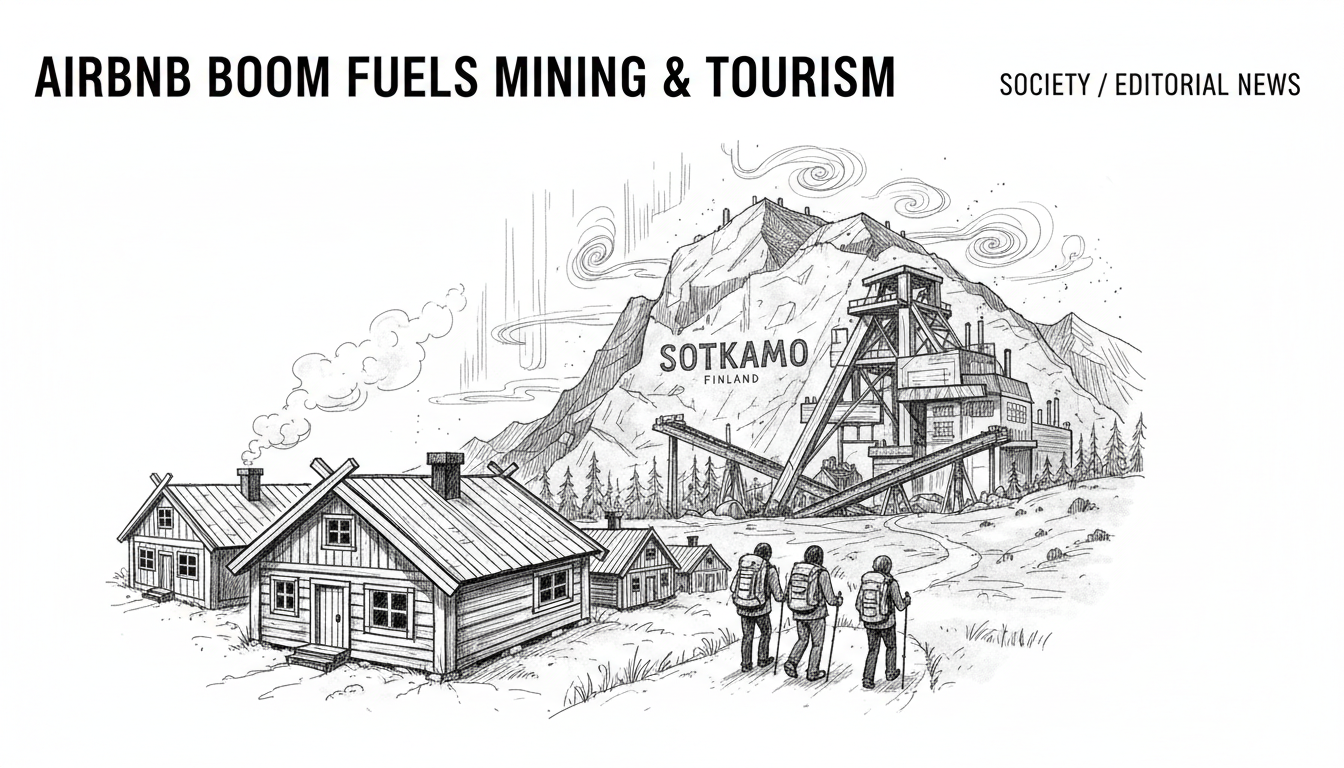
Finland's Sotkamo municipality is experiencing a rapid and lucrative expansion of short-term rental accommodations, driven by an unlikely dual demand from tourists and seasonal mine workers. With over 200 active listings, the average Airbnb here commands around €100 per night, a price comparable to a hotel room. This growth reflects a significant shift in how a traditional Finnish mining and tourism hub accommodates its transient workforce and visitors.
Kunnanjohtaja Mika Kilpeläinen confirms the scale of the change. "The number of short-term rental properties has roughly doubled or tripled annually over the last five years," he said. The model serves a critical need. Three active mines in the area employ over 2,000 people annually, many on short-term contracts. "Sometimes even a month is too long to rent an apartment," Kilpeläinen noted, explaining the appeal of flexible Airbnb stays for these workers.
A Profitable Anomaly in the Finnish Landscape
Sotkamo's Airbnb market is not just growing; it's exceptionally profitable. Data from 2022 ranked it as the second most profitable municipality in Finland for Airbnb hosts. The average Sotkamo listing generated nearly €3,000 per month, starkly higher than the national average of €1,200. This financial success underscores the strong, consistent demand in the region.
Approximately half of this demand stems from tourism centered on the Vuokatti sports and wellness resort. The other half comes directly from the mining sector's mobile workforce. This balanced demand creates a year-round market, insulating hosts from the pure seasonality seen in many tourist destinations. Unlike in Lapland, Kilpeläinen points out, Vuokatti's tourism sector does not rely heavily on seasonal labor, making the mining industry the primary driver of the off-season rental market.
Coexistence in a Small-Town Ecosystem
Despite the rapid growth, local authorities report a notable absence of the friction common in larger cities. Kilpeläinen states the municipality has no current plans to draft specific guidelines or restrictions for short-term rentals. A key reason is the type of visitor. "Party tourism is somewhere else, not here," he said, noting that Airbnb guests in Sotkamo are typically families and wellness tourists, minimizing neighborhood disturbances.
Furthermore, the scale of the traditional housing and hospitality markets puts the Airbnb surge in perspective. The municipal rental housing company alone manages about 700 apartments, with many more in the private rental sector. Hotels and holiday firms offer approximately 9,000 beds. "Percentage-wise, short-term rentals don't yet play a very large role," Kilpeläinen assessed, suggesting the local ecosystem has so far absorbed the growth without major strain.
The National Context and Expert Perspective
This growth in Sotkamo mirrors a broader national and global trend but with distinct local characteristics. Across Finland, municipalities are assessing the impact of platforms like Airbnb on housing availability and community dynamics. In urban centers like Helsinki, debates often focus on housing shortages and neighborhood transformation. Sotkamo's experience presents a different case study: a smaller community where short-term rentals primarily serve essential industries and supplement, rather than displace, the existing accommodation matrix.
Experts observing this trend note the dual-edged nature of such growth. For homeowners, it represents a significant income opportunity, especially in regions with high seasonal demand. The €100-per-night average can provide substantial supplementary revenue. However, the long-term consideration is the potential impact on the permanent rental market. If a critical mass of properties shifts from long-term residential leases to more profitable short-term tourist and worker rentals, it could pressure housing affordability for local residents. Sotkamo's current stability suggests it has not reached that tipping point.
Economic Diversification and Future Resilience
The Airbnb boom in Sotkamo highlights the area's economic diversification. The municipality is not solely dependent on mining or tourism but benefits from their intersection. The short-term rental market facilitates this by providing agile housing that supports both sectors efficiently. It allows the mines to operate with a flexible workforce and gives tourists an alternative to large hotel complexes, often preferring the space and amenities of an entire apartment or cabin.
Most listings are privately owned, indicating the economic benefit is distributed among individual residents rather than concentrated in large corporate entities. This micro-entrepreneurship can strengthen the local economy by keeping tourism and worker spending within the community. The high monthly revenue figures suggest this is a meaningful income stream for many households.
A Model for Balanced Growth?
Sotkamo's situation offers insights for other Finnish regions with similar industrial-tourist profiles. The lack of major conflict suggests that proactive, context-specific regulation may be more effective than blanket restrictions. Kilpeläinen's hope is for a level playing field: "It's a product of its time and has become part of the whole everywhere. Everything has its place, but I certainly hope that on the Airbnb side, they follow the same rules."
This implies a desire for fair competition regarding taxes, safety standards, and business regulations, rather than an outright curb on the practice. The model works in Sotkamo because it solves a clear logistical problem—housing a transient population—without currently degrading the quality of life for permanent residents.
The future challenge will be monitoring the scale. If growth continues at its current blistering pace, the dynamics could change. For now, Sotkamo represents a Finnish example where the rise of the platform economy has integrated relatively smoothly, fueled by the very concrete needs of extractive industries and the enduring appeal of lakeside leisure. The community has managed to harness a global digital trend to service its unique local economy, creating a modern accommodation model for a classic Finnish boomtown.