
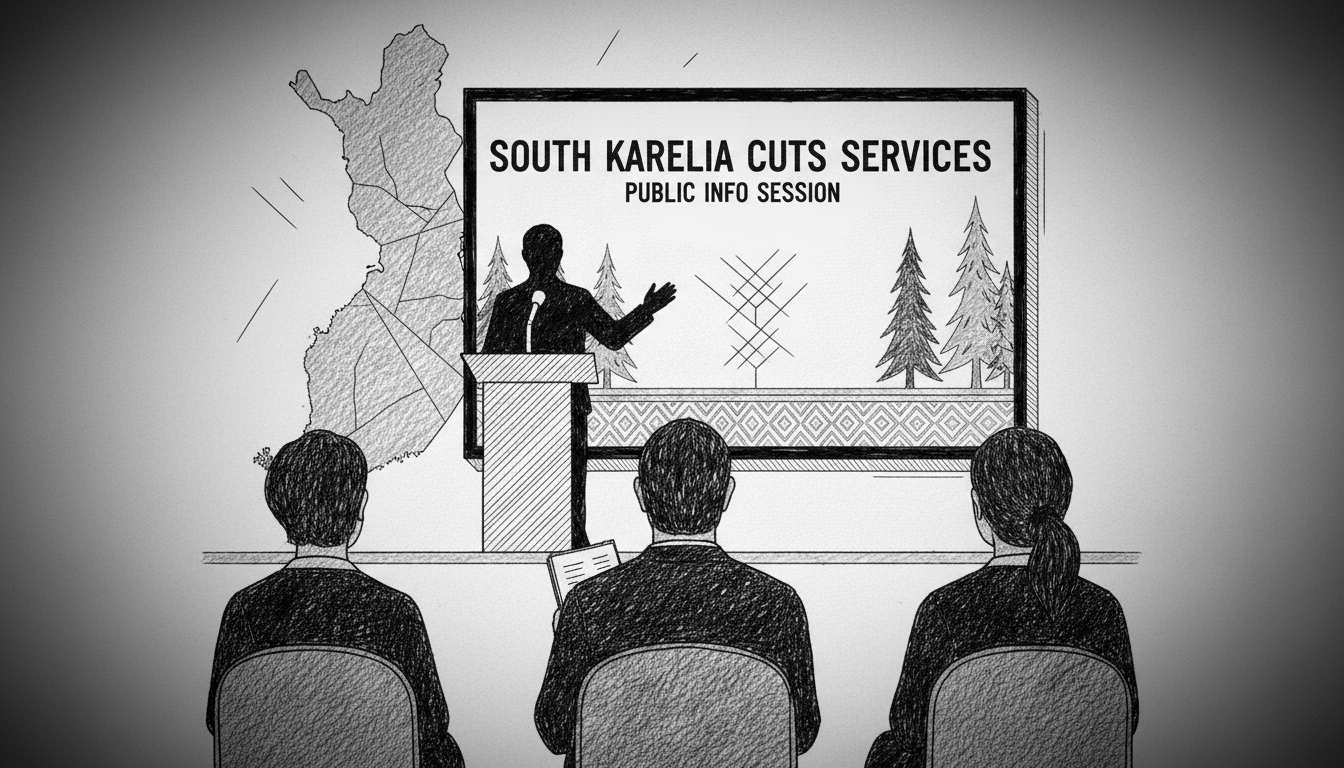
Finland's South Karelia wellbeing services county will hold a critical online public information session this Thursday to discuss its 2025 budget and the significant service adjustments required to meet government funding levels. The Etelä-Karjala Hyvinvointialue (Ekhva) announced the virtual meeting, scheduled for December 11th at 5:00 PM via Microsoft Teams, as a direct response to mounting financial pressures. Residents can submit questions in advance or pose them live during the broadcast, a move highlighting the profound impact these decisions will have on local healthcare and social services.
"Even though Ekhva will continue to secure statutory services in the future, the wellbeing services county must make substantial changes to reach the level of funding granted by the state," said Wellbeing Services County Director Sally Leskinen in a prepared statement. Leskinen directly acknowledged the consequences, stating, "The adjustments related to these will have an impact on future service offerings." This public reckoning underscores the difficult balancing act facing Finland's new regional service providers just two years after their creation.
A System Under Financial Strain
The upcoming information session is not an isolated event but a symptom of systemic challenges within Finland's landmark social and healthcare reform. The wellbeing services counties, established on January 1, 2023, were designed to centralize and standardize the provision of social, health, and rescue services, taking over from individual municipalities. The goal was to ensure equal service access across the country and curb rising costs. However, the transition has been fraught with financial difficulty from the outset. Counties like Ekhva are now grappling with the reality that their operational costs outpace the state funding they receive, forcing them into a cycle of budget reviews and service adjustments.
Experts in Finnish public finance have been warning of this squeeze for months. "The initial funding model for the wellbeing services counties was ambitious but has collided with the hard realities of demographic change and integrated service delivery," said a Helsinki-based municipal policy analyst who requested anonymity due to ongoing government consultations. "An aging population increases demand for healthcare and eldercare simultaneously, while the integration of previously separate municipal departments has revealed hidden costs and complexities. Counties are now in the unenviable position of having to rationalize services almost immediately after launching."
The South Karelia Context
For residents of South Karelia, a region bordering Russia, the implications are concrete. Ekhva is responsible for organizing all public healthcare, social welfare, and emergency services for the region's population. The upcoming budget discussion will likely address potential changes to service points, opening hours, non-urgent care provision, and support services. The county's decision to host a digital public forum indicates both a desire for transparency and an acknowledgment of the widespread concern these cuts will generate. The use of a Webropol form for pre-submitted questions, with a deadline of Wednesday at noon, suggests officials anticipate detailed public scrutiny.
This digital approach also reflects a broader trend in Finnish public administration post-pandemic, where online platforms are routinely used for citizen engagement. However, it raises questions about accessibility for older residents or those less comfortable with technology, precisely the demographics most reliant on the services under discussion. The session's virtual nature allows for broad attendance but may lack the immediacy and accountability of an in-person town hall meeting.
National Implications of a Local Meeting
The financial struggles of Ekhva are a microcosm of a national issue. Nearly all of Finland's 21 wellbeing services counties are reportedly undergoing similar budgetary stress tests. The central government in Helsinki has maintained that the reform will achieve long-term savings and improve quality, but it has so far resisted calls for significant increases to the counties' core funding. This sets the stage for potential conflict between regional service providers, who bear the legal responsibility for service delivery, and the state, which controls the purse strings.
The situation places county directors like Sally Leskinen in a difficult position. They must comply with strict statutory service requirements under Finnish law while operating within a budget they argue is insufficient. The resulting "adjustment measures" become a political and ethical tightrope walk, often involving reductions in so-called 'discretionary' services that are not strictly mandated by law but are valued by communities. These can include mental health support programs, preventive care initiatives, and cultural or recreational services for vulnerable groups.
Looking Beyond the Budget Cycle
Thursday's information session is just the beginning of a painful process. The decisions outlined for the 2025 budget will shape the service landscape in South Karelia for years to come. Analysts suggest that beyond immediate cuts, the counties must pursue more fundamental restructuring. This could involve greater collaboration between counties, increased public-private partnerships, and a stronger focus on digital service channels and preventive care to reduce long-term demand on expensive acute services.
The success of Finland's historic healthcare reform now hinges on navigating this financial valley. The public engagement exemplified by Ekhva's meeting is crucial for maintaining social trust, but it must be followed by meaningful dialogue and, potentially, a political re-evaluation of funding levels. As residents of South Karelia log into Teams on Thursday, they are participating in a critical test case for the entire Finnish welfare model. The question remains: can the system deliver on its promise of high-quality, equitable services while living within its means, or will austerity erode the very social contract it was designed to protect? The answers will resonate far beyond the borders of Etelä-Karjala.