
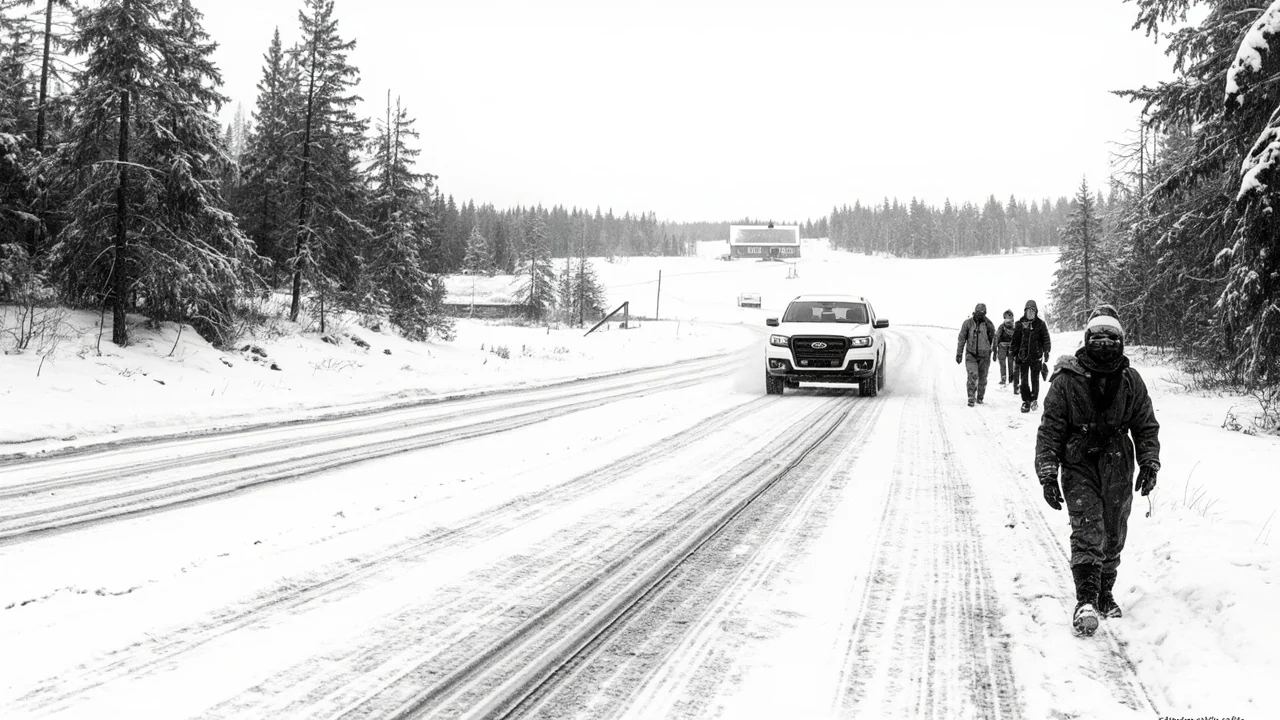
Finland's transport authority Fintraffic has issued a widespread warning for hazardous driving conditions across southern and central regions. The warning, extending from the southern coast to the Kokkola and Iisalmi latitudes, cites heavy snowfall, blowing snow, and thaw-induced slipperiness as major risks for motorists throughout Sunday. This deteriorating situation follows a traffic accident reported early Sunday morning on the Hämeenlinna Highway near Hyvinkää, underscoring the immediate dangers. The poor conditions are expected to persist into the afternoon as a gradual nationwide thaw sees sub-zero temperatures turn to single-digit positives in the south.
A Widespread Winter Hazard
The Fintraffic alert is not localized but covers a vast swath of the country's most populated areas. This includes the entire southern coastal region, the capital district of Helsinki, and the central lake district. The primary culprits are a combination of active snowfall reducing visibility, strong winds creating blowing snow drifts, and a critical temperature shift. As the severe cold spell that gripped Finland begins to loosen, rising temperatures are causing existing compacted snow and ice on roadways to melt and refreeze, creating unpredictable black ice patches. This transition period between deep freeze and thaw is often one of the most treacherous for drivers, as conditions change rapidly and vary from one road section to another.
Transport experts note that such widespread warnings typically trigger coordinated responses from municipal road maintenance crews across multiple regions. However, their effectiveness is hampered during active snowfall, where clearing efforts can be quickly undone. "The forecast of continuing snow into the afternoon means crews are fighting a losing battle in many areas," said a veteran road maintenance manager from the Uusimaa region, who spoke on background. "The priority becomes treating major highways and accident hotspots, but secondary roads may remain in poor condition for hours."
The Human Cost of Poor Conditions
The early morning accident on the Hämeenlinna Highway (Highway 3), a crucial artery connecting Helsinki to northern cities, serves as a stark reminder of the human consequences. While details of the crash were not fully disclosed in the initial report, single-vehicle incidents involving loss of control are common during such weather events. The highway is a major route for both personal and commercial transport, meaning disruptions have a ripple effect on logistics and travel across a wide area.
Finnish driving culture, while accustomed to winter, faces significant tests during these rapid-weather-change events. Motorists who have adjusted their driving to weeks of consistently cold, dry roads must suddenly recalibrate for wetter, slipperier asphalt. The Finnish National Police Board and the Finnish Transport and Communications Agency Traficom routinely emphasize the importance of adjusting speed, increasing following distances, and ensuring vehicles are properly winter-equipped with quality tires. Despite these public campaigns, accident rates invariably spike during the first major thaw of the season, as complacency meets changing realities.
Infrastructure and Policy Under Pressure
This weather event places immediate focus on Finland's winter road maintenance capabilities, a perennial topic in political and municipal budgeting debates. The Finnish government allocates substantial funds for road upkeep, but the vastness of the road network and the intensity of Finnish winters make complete coverage impossible. Municipalities are responsible for their own roads, leading to potential disparities in response times and service quality between wealthier and smaller municipalities.
Furthermore, the event intersects with broader EU and national policy goals regarding transport safety and climate resilience. The European Commission's Road Safety Policy Framework 2021-2030 aims to halve serious injuries and fatalities, a target that requires member states like Finland to address weather-related accidents. Climate change adds a layer of complexity, potentially increasing the frequency of these freeze-thaw cycles and intense snowfall events, challenging existing infrastructure standards. "Our maintenance protocols are based on historical weather patterns," noted a policy advisor from the Ministry of Transport and Communications. "Increasing volatility requires us to re-evaluate our readiness and resource allocation, not just for snow, but for all extreme weather."
Looking Beyond the Immediate Crisis
While the immediate focus is on Sunday's travel disruption, the weather pattern signals a definitive shift in the season. The thaw moving from south to north is a predictable late-winter phenomenon, but its speed and intensity can vary. For farmers, a gradual thaw is preferable to rapid snowmelt, which can cause flooding. For energy providers, decreasing heating demand in the south is balanced against continued high demand in the still-frozen north.
The incident also highlights the critical role of Fintraffic's real-time warning systems. The agency's alerts are disseminated through mobile apps, radio broadcasts, and variable message signs on highways. The effectiveness of these systems in actually modifying driver behavior is a key metric for transport safety officials. Studies in Finland have shown that while awareness of warnings is high, a significant portion of drivers admits to not substantially altering their travel plans unless conditions are visibly extreme at the point of departure.
As Sunday progresses, the situation will be closely monitored by authorities. The expectation is for conditions to slowly improve from the southwest as the snowfall eases and road treatment takes effect. However, the legacy of the event will be the hundreds of potentially dangerous icy patches left behind after the plows have passed. These hidden hazards often cause accidents on Monday morning, catching returning commuters off guard. The true test of Finland's winter resilience is not just managing the storm itself, but navigating the dangerous aftermath it leaves on the roads. Will this late-winter blast serve as a final harsh reminder for cautious driving, or merely a predictable footnote in a long season? The answer may lie in the accident reports that will follow in the coming days.