
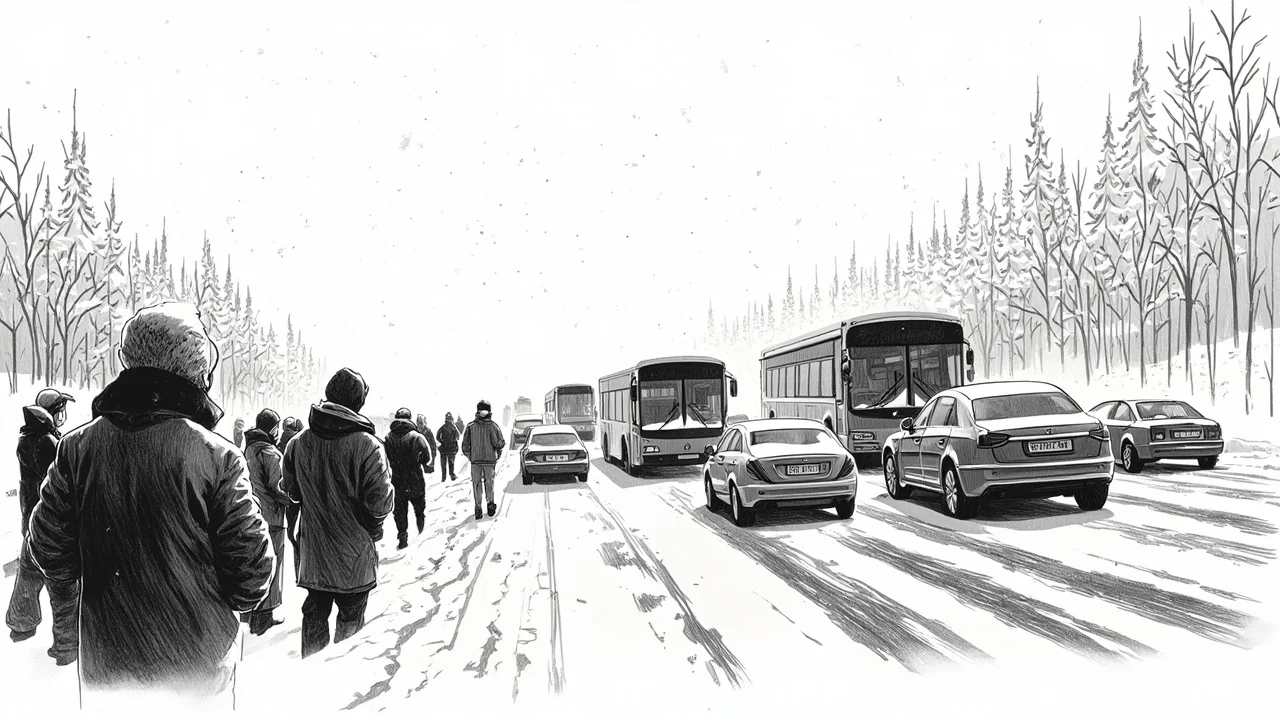
Finland's southern and central highways faced a sharp 24-hour deterioration in driving conditions Thursday morning, forcing transport authorities to issue urgent warnings. A rapid shift from extreme cold to mild temperatures triggered widespread sleet, blowing snow, and black ice across key transport corridors. The sudden change highlights the complex challenges of maintaining mobility in a Nordic nation where winter weather can shift from one dangerous extreme to another within hours.
Fintraffic's Road Traffic Centre confirmed the hazardous situation in a morning bulletin. They cited three primary factors: snowfall, reduced visibility from blowing snow, and pervasive slipperiness caused by thawing and refreezing. This combination is particularly problematic for commuters and freight transport moving between Helsinki, Tampere, and the coastal regions. Meanwhile, Northern Finland's intense cold spell, which had gripped the region for days, began a moderate retreat.
A Meteorological Jekyll and Hyde
The current situation presents a classic Finnish winter paradox. While the north relief from deep freezes reaching -30°C, the south grapples with a messy, wet, and slippery thaw. This split weather pattern is common during transitional periods but always catches some drivers unprepared. The warm air mass moving northward from the Baltic Sea clashes with the entrenched cold over the land, creating unstable precipitation and temperature fluctuations right around the freezing point.
This is the most hazardous temperature range for road safety. It causes snow to melt and then instantly refreeze into a thin, nearly invisible layer of ice on asphalt. Road maintenance crews switch from plowing dry snow to spreading abrasive gravel and salt mixtures. The effectiveness of these measures, however, can be rapidly undone by continued snowfall or freezing rain.
Impact on Major Commuter Routes
The affected area encompasses Finland's most densely populated region and its busiest road network. This includes Highway 1 (the main route from Helsinki to Turku), Highway 3 (the Helsinki-Tampere artery), and Highway 4 running north from the capital. These roads form the backbone of the nation's logistics and daily commuting. Even minor delays or accidents here cause significant economic ripple effects and disrupt hundreds of thousands of daily journeys.
Local police districts typically report a spike in minor collisions and vehicles skidding into ditches during such conditions. Authorities consistently advise drivers to triple their following distances, ensure tires are properly suited for winter, and avoid unnecessary travel. The message is clear: schedule extra time and drive with extreme caution. Public transport, while also delayed, often becomes a safer alternative during peak hazardous periods.
The Infrastructure Response System
Finland's response to these events is coordinated by Fintraffic, a state-owned company under the Ministry of Transport and Communications. Their traffic centre monitors conditions via roadside sensors, weather forecasts, and reports from maintenance contractors and the public. They disseminate warnings through mobile apps, radio broadcasts, and variable message signs on motorways. The system is designed for speed and precision, but its success ultimately depends on driver behavior.
The Finnish Transport Infrastructure Agency (FTIA) manages the physical road network. Their regional contractors are responsible for round-the-clock winter maintenance. During volatile conditions like these, the strategy becomes reactive and resource-intensive. Plows and gritters are deployed continuously, focusing on main roads first. Secondary roads in rural areas may remain difficult for longer periods as crews prioritize high-traffic volumes.
Broader Implications for Winter Preparedness
This weather event, while routine for Finland, sparks annual debate about winter readiness and climate adaptation. Experts note that climate change may increase the frequency of these freeze-thaw cycles, even as overall winter cold moderates. This presents a long-term challenge for infrastructure planning and maintenance budgets. More frequent thaws can lead to increased pothole formation, higher salt usage, and greater strain on drainage systems.
From a policy perspective, it tests the resilience of Finland's much-admired winter logistics model. The country rarely shuts down due to snow, a point of national pride and economic necessity. This resilience is built on substantial public investment, clear regulations like mandatory winter tires, and a cultural familiarity with harsh conditions. Yet, as this morning's warnings prove, nature always poses a formidable test.
Looking Ahead to the Weekend Forecast
The immediate forecast suggests continued challenging conditions in the south, with temperatures hovering near zero. Precipitation may alternate between snow, sleet, and rain. Northern areas will settle into more seasonably cold but stable weather, which is often easier for drivers and maintenance crews to manage. The focus for authorities will remain on the southern third of the country for the next 48 hours.
These sudden shifts serve as an annual reminder of winter's power in the Nordics. They underscore the importance of real-time public information systems and individual preparedness. For Finland, maintaining smooth traffic flow in such conditions is not just a convenience but a critical component of national economic function and social cohesion. The country's ability to adapt to these rapid changes, from its transport agencies to every driver on the road, remains a continuous and vital effort.
Will the increasingly volatile winter weather patterns linked to a changing climate eventually require a fundamental rethink of Finland's winter road management strategies? For now, the system built on timely warnings, public cooperation, and relentless plowing continues to meet the challenge, one slippery kilometer at a time.