
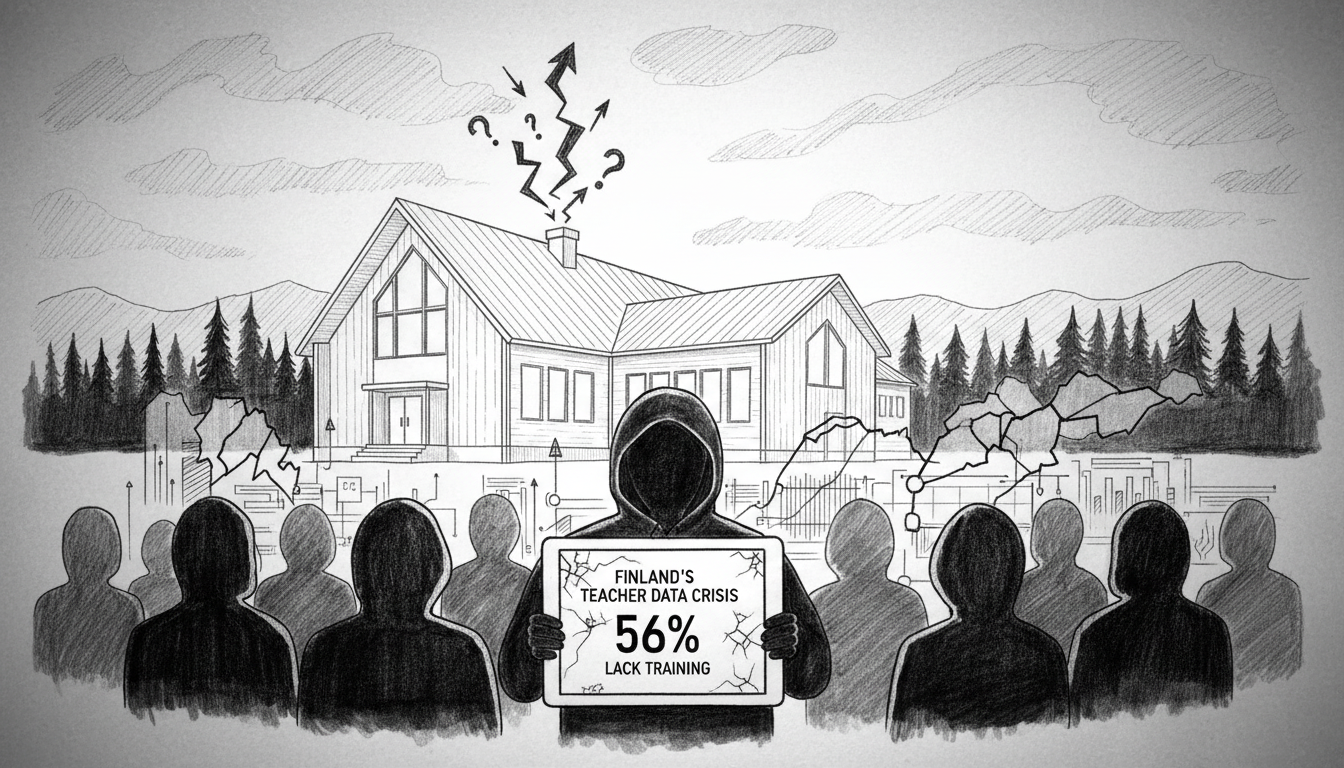
Finland's teachers are missing critical data security training for handling sensitive student information, a new union survey reveals, exposing a systemic vulnerability in the nation's acclaimed education system. The Finnish Trade Union of Education (OAJ) found that 56% of its surveyed members have never received concrete training on the secure use of personal data in the Wilma administration platform or similar systems. With Wilma at the heart of daily school communication, this gap poses significant risks to student privacy and Finland's compliance with strict European Union data protection laws.
The Training Gap Exposed
OAJ's recent member survey paints a stark picture of preparedness. Beyond the majority who report no concrete training, a full one-fifth of respondents stated they had received no instruction whatsoever on the secure handling of personal data. Only 55% of teachers felt very or fairly confident in their ability to use school information systems in a data-secure manner. This confidence metric highlights a concerning disconnect between daily responsibility and formal preparedness. Teachers are routinely required to input, access, and manage grades, behavioral notes, and special needs information within Wilma, a system used by nearly all Finnish municipalities.
The findings arrive amid a 2024 update to the Wilma platform, which has deepened its integration into school operations. Olli Luukkainen, President of OAJ, did not mince words in his assessment. "The employers' time to wise up is long overdue," Luukkainen stated, directly calling on municipalities and local education authorities to fulfill their obligations. "Handling the sensitive personal data of children and adolescents requires continuous, high-quality training. We cannot rely on teachers' personal initiative alone to maintain security."
A Systemic Weakness in a Digital Powerhouse
This training deficit presents a paradox. Finland is a global leader in digital infrastructure and literacy, yet its core public service professionals feel under-equipped. The issue is not a lack of tools but a failure in systematic professional development. Wilma and similar platforms contain detailed student profiles, including home addresses, guardian contact details, medical information, and records of academic performance. A single misstep in data handling—such as sending information to the wrong guardian or leaving a terminal unlocked—could constitute a serious breach under the EU's General Data Protection Regulation (GDPR).
Analysts point to Finland's decentralized education model as a contributing factor. While the national curriculum provides broad guidelines, individual municipalities are responsible for organizing and funding teacher training. This has led to a patchwork of standards, where some regions provide robust, mandatory cybersecurity workshops and others offer nothing more than a basic login tutorial. The OAJ survey suggests the latter scenario is far too common. The union is now urging the Ministry of Education and Culture to issue clearer, binding guidelines on mandatory data security training for all school staff.
Legal Stakes and the Shadow of GDPR
The legal implications are severe and provide the strongest argument for immediate action. Finland's Data Protection Ombudsman has repeatedly emphasized the special duty of care required when processing children's data. Under GDPR, which has been directly applied in Finnish law since 2018, organizations can face administrative fines of up to €20 million or 4% of their global annual turnover for serious infringements. For a municipality, a significant data leak from its school system could trigger devastating financial penalties and a catastrophic loss of public trust.
Data protection experts confirm the gravity of the situation. "Teachers are data controllers in their daily work. Every time they record a grade or write a note about a student's well-being, they are executing a data processing operation," explained Elina Uotila, a Helsinki-based lawyer specializing in data protection law. "The law is clear: the controller must ensure that anyone processing personal data does so under its instruction and has received adequate training. The current situation, as described by OAJ, suggests many municipalities are not meeting this legal requirement." Uotila further notes that the principle of accountability under GDPR means authorities must be able to demonstrate that training has occurred, not merely claim it.
Beyond Wilma: A Call for Digital Competence
The discussion extends beyond a single software platform. The OAJ's findings tap into a broader debate about the digital competence of Finland's public sector workforce. The national goal is for Finland to be a leader in ethically-sound digitalization, but this ambition is undermined if key operators lack foundational skills. The training gap also risks eroding the teacher's professional autonomy, as fear of making a data error could discourage them from using digital tools to their full potential for student support.
Solving the crisis requires investment and coordination. The OAJ proposes a multi-tiered solution: mandatory initial training for all new hires, annual refresher courses updated to reflect new threats and software features, and clear, accessible guidelines published by the Finnish National Agency for Education. Some progressive municipalities, like Espoo, have already implemented rigorous programs, setting a benchmark others must now follow. The cost of such training is minimal compared to the financial and reputational cost of a major data breach.
The Path Forward for Finnish Schools
The OAJ survey acts as a critical alarm bell for Finnish education authorities. It highlights a vulnerability that conflicts with Finland's international reputation for educational excellence and digital trust. The coming months will be a test of the system's responsiveness. Will the Ministry of Education and municipal employers heed the union's call and institute comprehensive, nationwide training standards? Or will Finland risk the integrity of its student data and its compliance with EU law on the altar of decentralized administration and cost-saving?
The security of children's personal information is non-negotiable. As Finland continues to integrate technology into every classroom, ensuring its educators are empowered, confident, and legally compliant is not just an IT issue—it is a fundamental requirement for maintaining the sacred trust between schools, students, and families. The time for ad-hoc solutions is over; the era of systematic, guaranteed data security training must begin.