
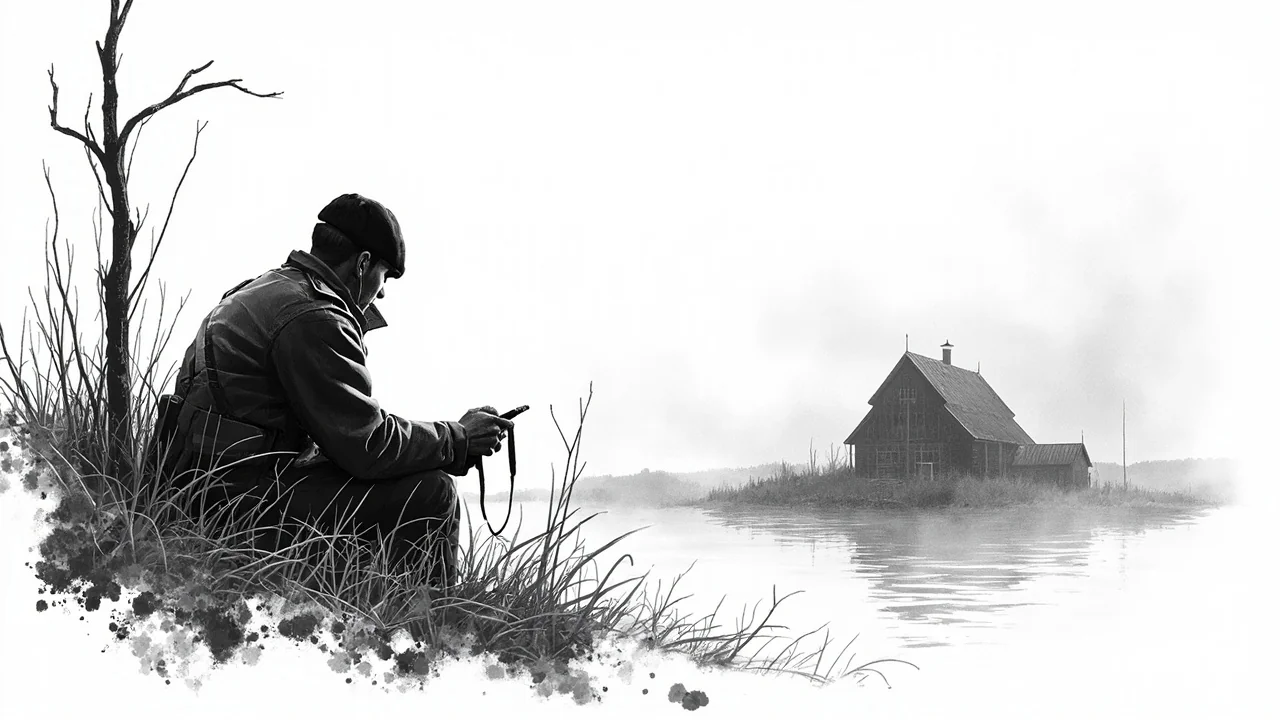
Finland's Continuation War emerges in a new light through the quiet, focused pencil strokes of a 17-year-old soldier. An exhibition in Porvoo's main library showcases wartime handicrafts and a young man's poignant drawings from the front lines in 1941-1942. The display reveals a period after the initial offensive, when defensive positions were built and soldiers battled crushing boredom alongside the enemy. This human perspective offers a raw look into Finland's complex wartime history.
The Exhibit's Quiet Power
Titled 'Sodan ajan puhdetöitä ja piirustuksia' (Wartime Handicrafts and Drawings), the exhibition occupies the main hall and glass display cases of Porvoo City Library. It runs from January 3rd to 29th, presenting artifacts from a specific, static phase of the Continuation War. After the intense offensive actions, a different rhythm set in. The machinery of war shifted to fortification and waiting. In this lull, soldiers turned to hobbies and crafts to fill the endless hours, creating a unique cultural footprint amid the conflict. The collection includes both common trench art and the highly personal drawings of a teenager named Jouko.
Jouko’s work is the emotional core of the display. His detailed pencil sketches were a direct channel for processing the immense psychological weight of his situation. As a boy on the cusp of adulthood, he documented not just scenes of military life but the interior landscape of a generation thrust into violence. The drawings are more than historical records; they are unmediated expressions of fear, resilience, and a stolen youth. They show a personal narrative running parallel to the grand strategy of generals and the movements of armies.
Drawing Under Fire
Art historians note that soldiers’ art from this period serves a dual purpose. Primarily, it was a vital coping mechanism, a way to maintain mental stability and a sense of self in dehumanizing conditions. The act of drawing forced observation and quiet focus, a temporary escape from the chaos of war. Secondly, these works now serve as invaluable primary sources. They offer historians and the public a ground-level view of the war, unfiltered by propaganda or official state narratives.
“A soldier’s sketchbook can tell us things official photographs and reports cannot,” explains Dr. Eeva-Liisa Aalto, a historian specializing in Finnish social history during the war years. “It shows what they chose to focus on, what moments of beauty or normalcy they clung to, and how they visually interpreted trauma. For a 17-year-old, this act of creation was likely a lifeline, a way to assert his humanity.” This analysis underscores the exhibit's significance beyond local interest. It contributes to a broader understanding of the psychological experience of Finnish soldiers, a topic that has gained more academic and public attention in recent decades.
Handicrafts and the Rhythm of War
The accompanying collection of puhdetöitä—handicrafts—paints a picture of the war's strange, interstitial moments. Soldiers carved wooden utensils, woven belts, and crafted jewelry from spare materials and shell casings. This phenomenon was common in many armies, often termed "trench art." In the Finnish context, it highlights the long periods of inactivity that characterized positional warfare. These crafts were more than simple pastimes; they were a means of productivity and a connection to a peacetime identity of making and building, starkly contrasted with their primary role of destruction.
These objects often held deep sentimental value. Many were intended as gifts for loved ones back home—a mother, a sweetheart, a child. They were physical tokens of affection and remembrance, a thread connecting the brutal front to the quiet homes of Finland. The coexistence of these delicate handicrafts with Jouko’s somber drawings in the same exhibit creates a powerful dialogue. It shows the full spectrum of the soldier’s experience: the need for comforting ritual and the urge to document harsh reality.
A Nation's Contested Memory
The exhibition arrives at a time when Finland’s collective memory of the Continuation War remains a nuanced and sometimes contested space. Public discourse continues to examine the period’s complexities, from battlefield heroism and national survival to the alliance with Nazi Germany and the human cost. Personal artifacts like those in Porvoo help depoliticize the narrative, shifting focus to individual lived experience.
“Exhibitions like this perform a crucial memory function,” notes Professor Mikael Forsgren, who studies war and culture. “They don’t necessarily seek to explain the geopolitical causes or justify the outcomes. Instead, they ask us to witness the human impact. When we see the careful pencil lines of a teenager, we are confronted with a universal story of lost innocence. This can foster a more empathetic and reflective form of remembrance, which is essential for any society that has endured a national trauma.” This perspective frames the Porvoo exhibit as part of an ongoing process of national reflection.
From Library Display to Living History
Placing this exhibition in a public library, rather than a dedicated war museum, is a deliberate and effective choice. It brings this chapter of history into a space associated with daily civilian life, learning, and community. Patrons coming to borrow books or study are invited to encounter this poignant piece of their nation’s past. It democratizes access to history, making it a casual yet powerful encounter.
The story of Jouko and his fellow soldiers’ crafts reminds us that history is not monolithic. It is a collection of millions of personal stories, most of which fade without a trace. The survival of these drawings and objects is itself remarkable. They offer a fragile bridge across eight decades, allowing contemporary Finns a direct, unmediated glimpse into the hearts and minds of those who endured the war. They challenge simplistic narratives and honor the complexity of the human spirit in extreme circumstances.
As visitors walk through the library’s main hall, they are asked to look closely. To see past the historical event of the Continuation War and perceive the individual young man who lived through it. The quiet sketches on paper speak louder than many official monuments, posing a silent question about the true cost of conflict and the enduring need to make sense of it through creation. The exhibit closes on January 29th, but the conversation it prompts about memory, trauma, and art continues.