
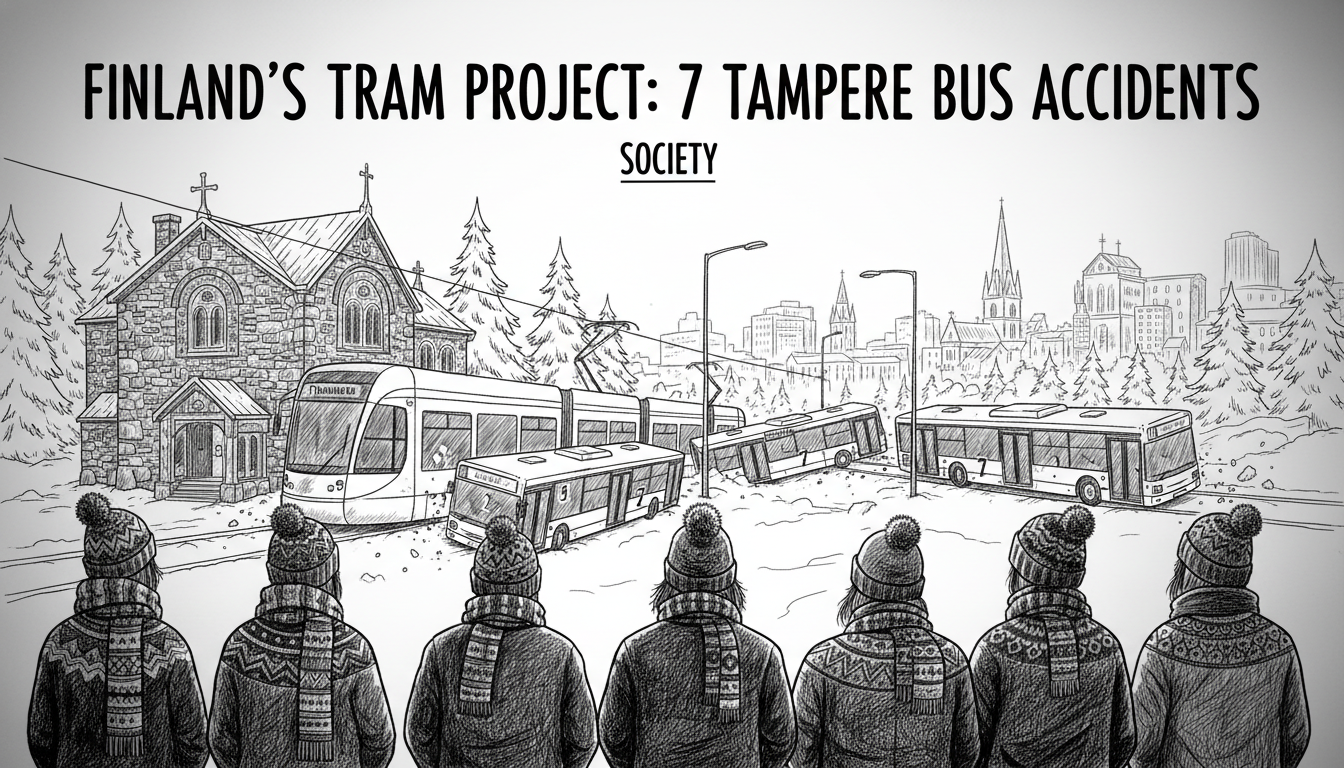
Finland's Tampere tram construction site on Hatanpää Valtatie has recorded at least seven bus damage incidents, with the latest shattering the doors of a public transport bus on Tuesday. Witness Aarne Alanaatu, 17, described a sudden loud bang and breaking glass as he sat with a friend near the front of the bus. The route 12 vehicle was passing through the narrow traffic lane of the major light rail work zone when the impact occurred, forcing the driver to halt the service immediately and evacuate all passengers at the next stop.
A Recurring Hazard on a Major Artery
Tommi Arvonen, Assistant Traffic Manager for Tampere Public Transport, confirmed the incident was not isolated. "Unfortunately, this is not the first or the last time there will be dents on this construction site area," Arvonen stated. He reported that doors, tires, and windows have broken repeatedly in the zone, even affecting highly experienced drivers. The driver involved in Tuesday's event was described as very seasoned. Arvonen suspects a concrete barrier or other construction fencing likely struck the bus's center and rear doors. Hatanpää Valtatie is a critical traffic corridor for Finland's third-largest city, and its ongoing transformation for the Tampere tram has created a persistent bottleneck where public transport and construction physically intersect.
Systemic Pressures and Safety Scrutiny
The repeated incidents point to systemic challenges in managing large-scale urban infrastructure projects within active city environments. Transportation safety experts, when consulted for context on such cases, routinely emphasize the need for dynamic risk assessments and clear traffic management plans around construction zones that impact high-frequency bus routes. "When you have heavy machinery, temporary barriers, and public service vehicles sharing extremely tight spaces, the margin for error diminishes to near zero," said a Helsinki-based urban planning consultant familiar with the project. They stressed that communication between the construction contractor and public transport operators must be continuous and proactive, not reactive after accidents occur. The Tampere tram, while a long-term investment for sustainable mobility, is creating short-term friction and palpable risk.
The Human and Operational Toll
For passengers like Aarne Alanaatu, the event was a frightening disruption. "We were sitting with a friend in the front part of the bus when we heard a terrible bang," he recounted. "The window shattered completely from the rear door of the bus and also from the center door window." Such experiences can erode public confidence in the safety of everyday transit. For the operating company, each incident means vehicle repairs, potential service delays on a busy route, and administrative investigations. These recurring problems also place additional stress on drivers, who must navigate the challenging passage daily. The situation creates a conflict between the imperative to maintain uninterrupted public transport service and the physical realities of a major construction site.
A Broader Challenge for Finnish Urban Development
This incident in Tampere reflects a wider national conversation in Finland about growing urban centers and the execution of complex infrastructure projects. Cities like Helsinki, Espoo, and Turku are also undergoing significant construction related to rail extensions, tunnels, and new districts. The balance between progress and public safety, between future benefits and present inconveniences, is a constant political and logistical tightrope walk. Local council members in Tampere are likely to face questions about oversight and contractor performance regarding the tram project's impact on existing services. The Finnish Transport and Communications Agency, Trafi, sets national safety regulations, but daily site management falls to local authorities and private contractors.
Looking for Solutions and Accountability
The pattern of damage suggests current mitigation measures at the Hatanpää site may be insufficient. Potential solutions could include enhanced physical separation between buses and construction materials, revised temporary traffic lane designs, or even adjusted speed limits specifically for public transport vehicles in the corridor. Some experts advocate for the use of more advanced, impact-absorbing materials for temporary barriers in such high-risk zones. Accountability is shared: the city of Tampere oversees the project, the specific contractor manages the site logistics, and Tampere Public Transport operates the buses. Clear protocols for reporting and addressing every incident, no matter how minor the damage appears, are crucial for preventing more serious outcomes.
The Path Forward for Tampere's Transit
As Tampere continues its shift toward light rail, the city's handling of this construction phase will serve as a case study. The long-term goal is a modern, efficient tram network that reduces carbon emissions and revitalizes urban mobility. However, the short-term execution must safeguard the citizens who rely on the existing bus network today. The shattered bus doors are a visible symptom of the friction inherent in transforming cityscapes. How Tampere's officials, contractors, and transport company respond to this latest incident will demonstrate their commitment to managing that friction safely. Will they implement decisive changes to protect passengers and drivers, or will the next bang and shatter of glass be just a matter of time?