
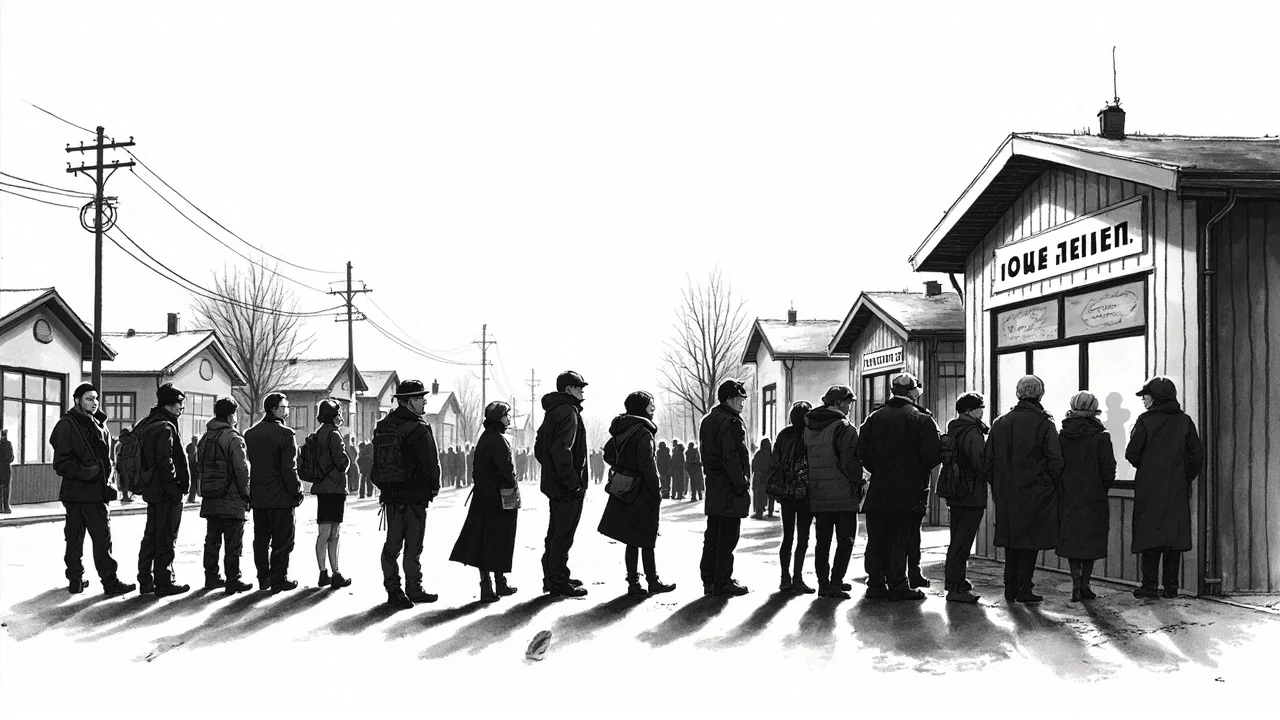
Finland's unemployment rate has surged to 8.5%, officially making it the highest in the entire European Union. This new and unwelcome milestone places the Nordic nation ahead of countries with historically chronic joblessness, including Spain, and triggers urgent political debate in Helsinki. Prime Minister Petteri Orpo conceded the grim reality in a Friday interview, stating, 'No one would have wanted to see numbers like these, and I'm sure no one believed this would happen.' His government now faces immense pressure to deliver on its core promise of creating 100,000 new jobs.
A Nordic Model Under Severe Stress
The latest figures represent a significant setback for Finland's economic self-image. For decades, the country prided itself on a robust labor market and a comprehensive welfare system that acted as a stabilizer. The current crisis, however, exposes deep structural vulnerabilities. Prime Minister Orpo pointed directly to global instability, suggesting that worries and international conflicts hit export-dependent Finland hardest. This argument frames the issue as externally driven, though domestic policy choices are under equal scrutiny. The government's 100,000 new jobs target, a cornerstone of its program, now appears increasingly daunting.
Political analysts note that the high unemployment rate contradicts Finland's traditional reputation for economic resilience. The situation in the Helsinki government district is one of visible concern. Ministers from Orpo's National Coalition Party and their coalition partners, the Finns Party and the Swedish People's Party, must reconcile their austerity-focused platform with the need for tangible economic results. The opposition is already capitalizing on the data, with the Social Democratic Party and the Left Alliance calling for a radical shift in economic policy.
The Government's Defensive Stance
In his comments, Prime Minister Orpo defended his government's course while acknowledging the severity of the situation. He emphasized a commitment to long-term structural reforms designed to improve competitiveness, rather than short-term stimulus measures. These reforms include proposed changes to employment laws and social security, which the government argues will incentivize hiring and job-seeking. Critics, however, contend these measures risk weakening worker protections without guaranteeing new employment.
The political stakes are immense. Failing to curb the unemployment trend could erode public trust in the governing coalition and its flagship policies. It also complicates Finland's position in EU-level discussions on economic governance. As a nation typically advocating for fiscal discipline, arriving at the table with the bloc's worst unemployment rate weakens its negotiating leverage. The data will inevitably influence upcoming debates in the Eduskunta, Finland's parliament, where the government's budget proposals will face intense examination.
A Comparative EU Perspective
Finland's ascent to the top of the EU's unemployment ranking is symbolically powerful. It has surpassed nations in Southern Europe that have contended with high joblessness for years, marking a dramatic shift in the continent's economic landscape. This comparative decline raises questions about the specific Finnish factors at play. While global economic headwinds affect all nations, analysts point to Finland's concentrated industrial structure, slow adaptation in the forestry sector, and challenges in the technology job market as contributing domestic factors.
The European Commission's latest economic forecasts will now view Finland through a different lens. The country may face increased recommendations to address its labor market inefficiencies. This EU context is crucial for understanding the full scope of the problem. Finland's performance is no longer just a national issue but a European one, affecting its standing and influence within the bloc. The government must now craft a response that satisfies both domestic voters and international partners.
Policy Crossroads in Helsinki
The path forward for the Orpo administration is fraught with difficult choices. Doubling down on its current reform agenda carries the risk of further social friction if unemployment remains high. Pivoting toward significant public investment would break with its fiscal promises. The coming months will be a critical test of its economic strategy. All eyes are on the Ministry of Economic Affairs and Employment to present new initiatives that can alter the trajectory.
Furthermore, the role of the Bank of Finland and its interest rate policy, aligned with the European Central Bank, adds another layer of complexity. High borrowing costs intended to curb inflation can also suppress the investment needed for job creation. This tightrope walk between monetary and fiscal policy defines the current challenge. The government must coordinate its actions within this constrained framework, seeking growth levers that do not conflict with broader eurozone stability goals.
What Comes Next for Finnish Workers?
The human impact behind the 8.5% statistic is substantial, representing tens of thousands of individuals and families facing financial uncertainty. The rate is not evenly distributed, with youth unemployment and joblessness in certain regions remaining persistently higher. This threatens to create long-term scars on the economy through skill erosion and discouraged workers leaving the labor force entirely. The social contract that has underpinned Finnish society for generations is under clear strain.
Prime Minister Orpo's admission of 'bad numbers' is a rare moment of political candor. It sets the stage for what will be the defining battle of his premiership. Can his coalition's policy mix of labor market reforms, fiscal consolidation, and pro-business incentives actually generate 100,000 new jobs in this difficult climate? The next set of quarterly employment data will be the most closely watched political indicator in the country. For now, Finland holds a title no nation desires: the EU's unemployment leader. The government's next moves will determine whether this is a temporary setback or a new and troubling reality.