
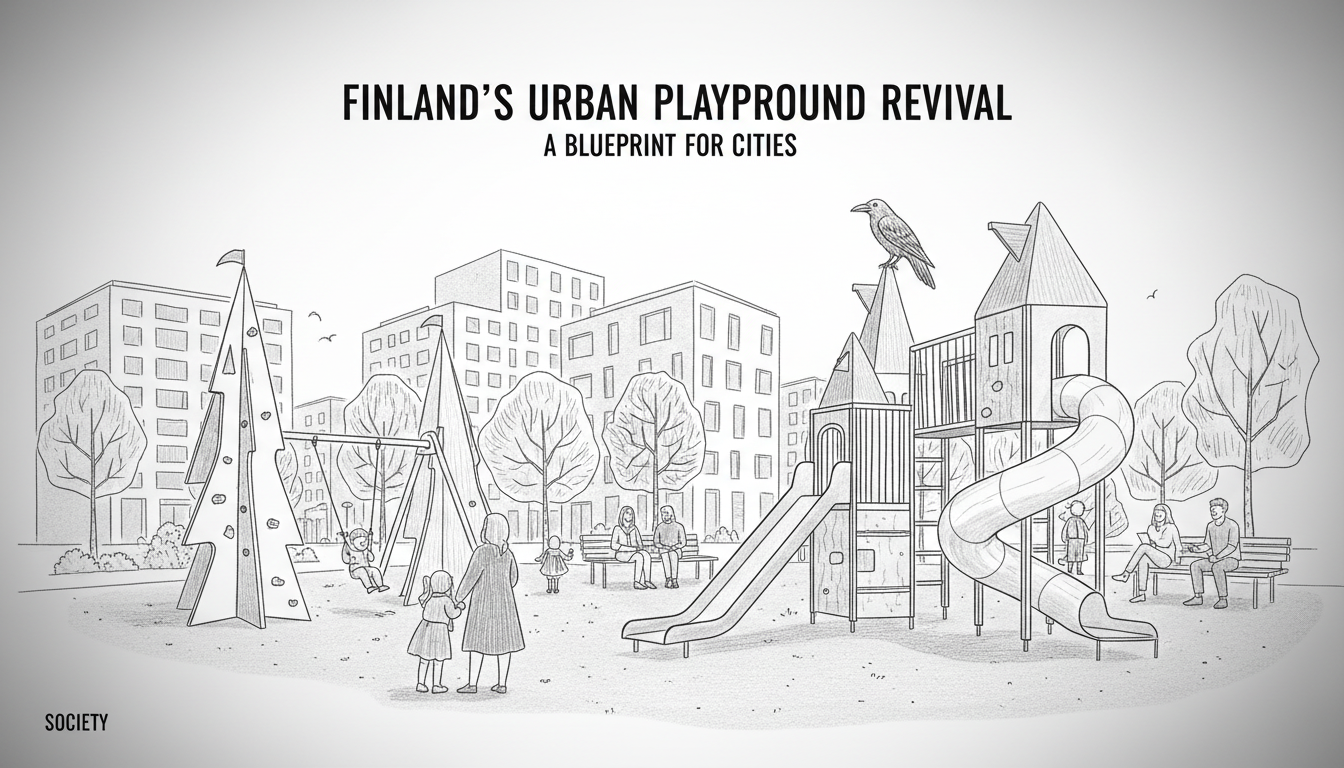
Finland's city of Jyväskylä has unveiled a new central playground, its vibrant blue and green color scheme already a popular fixture in the historic Kirkkopuisto park. On a crisp weekday in January, one-year-old Ella Hakonen giggles in a swing pushed by her mother, Iiristiina Haukkala, their breaths visible in the cold air. They are regulars at the new facility, having visited about five times since the city announced its opening in November. Around them, other equipment—a slide, a climbing net, and spring riders—awaits more visitors beneath a blanket of snow, a testament to the Finnish commitment to year-round outdoor play. This renovation represents more than just new swings; it highlights a conscious national strategy to invest in high-quality, accessible public spaces that strengthen community bonds and support child development.
A Central Park Transformed
Kirkkopuisto, or Church Park, is a foundational green space in Jyväskylä, a university city famed for its Alvar Aalto architecture and lakeside setting. The park has long served as a communal living room for residents, hosting events and daily strolls. The completion of the playground in late 2023 marks the final phase of a broader park renovation project. City officials framed the investment as crucial for enhancing the vitality of the city center and providing an attractive, safe environment for families. The design intentionally integrates the playground into the park's existing landscape, avoiding a fenced-off or isolated feel. This approach encourages spontaneous use by children and facilitates natural social interaction among parents and caregivers, turning a simple play area into a community hub.
The Psychology of Color and Design
The playground’s striking blue and green color palette is no accident. Urban planners and childhood development experts increasingly emphasize the psychological impact of color in public play spaces. In Finland, where long, dark winters dominate, the use of bright, cheerful colors is a deliberate tool to combat seasonal gloom and stimulate engagement. Blue and green are often chosen for their calming, nature-associated qualities, promoting a sense of tranquility while still inviting activity. The equipment itself follows contemporary safety and inclusivity standards, featuring accessible elements that cater to children of varying ages and abilities. The selection includes dynamic pieces like the climbing net, which builds motor skills and confidence, and the spring riders, which encourage imaginative play. This thoughtful design aligns with a Nordic philosophy that views play as essential work for children, fundamental to learning social rules, risk assessment, and physical coordination.
Finnish Urban Policy in Action
This project in Jyväskylä is a microcosm of wider Finnish and Nordic urban policy. Municipalities across Finland consistently allocate significant portions of their budgets to maintaining and upgrading public spaces, viewing them as critical infrastructure for public health and social cohesion. The investment is backed by research showing that well-designed, centrally located playgrounds increase physical activity, reduce childhood obesity, and foster intergenerational community connections. Furthermore, Finland’s approach often blends these local initiatives with broader European Union cohesion policy goals, which can fund regional development projects aimed at improving quality of life and reducing disparities. While this specific playground was funded municipally, its ethos reflects the EU’s focus on sustainable urban development, where green spaces are key to creating livable, attractive cities that retain families and talent.
The Challenge of Winter and Continuous Use
A key test for any Finnish playground is its functionality and appeal during the winter months. The scene in Kirkkopuisto—with equipment peeking through the snow—demonstrates a pragmatic reality. Finnish families are accustomed to bundling up and playing outdoors year-round, a cultural norm supported by the common saying, “There is no bad weather, only unsuitable clothing.” The city’s maintenance plan for the park, including snow clearing on key paths, is therefore as important as the playground’s design. The presence of families like the Hakonens in deep winter validates the playground’s success; it has become a destination, not a fair-weather facility. This all-season usability maximizes the return on public investment and ensures the space contributes daily to the city’s social fabric.
Expert Perspective on Public Space Value
Urban planning academics stress that projects like the Kirkkopuisto playground deliver value far beyond their initial cost. “Accessible, well-designed public spaces are the cornerstone of a healthy urban environment,” explains a professor of urban studies at a Finnish university. “They are democratic spaces where community is built informally. For children, they provide irreplaceable opportunities for unstructured play and social learning. For a city, they enhance attractiveness and can even boost surrounding property values.” In the context of Jyväskylä, the playground also supports the city’s strategic aims of being a family-friendly center for the region. It signals that the city center is not just for commerce but for living and recreation, making urban life a more viable option for young parents.
A Model for Future Development
The enthusiastic reception of the Kirkkopuisto playground by Jyväskylä residents offers a clear model for other municipalities. The project succeeded by focusing on central location, quality materials, thoughtful design for all seasons, and integration into the existing urban green network. As Finnish cities continue to grow and densify, the pressure on public space will increase. Proactive investments in amenities that serve young families become crucial in preventing urban exodus and maintaining vibrant, diverse city cores. The next steps for Jyväskylä may involve monitoring usage patterns and gathering feedback to inform the design of future play spaces in other districts. The ultimate goal is a network of high-quality public spaces that ensure all citizens, regardless of age or neighborhood, have access to environments that promote well-being. In an era of increasing digital isolation, can the humble, colorful playground become one of our most powerful tools for building real-world community? The answer in Jyväskylä appears to be a resounding yes.