
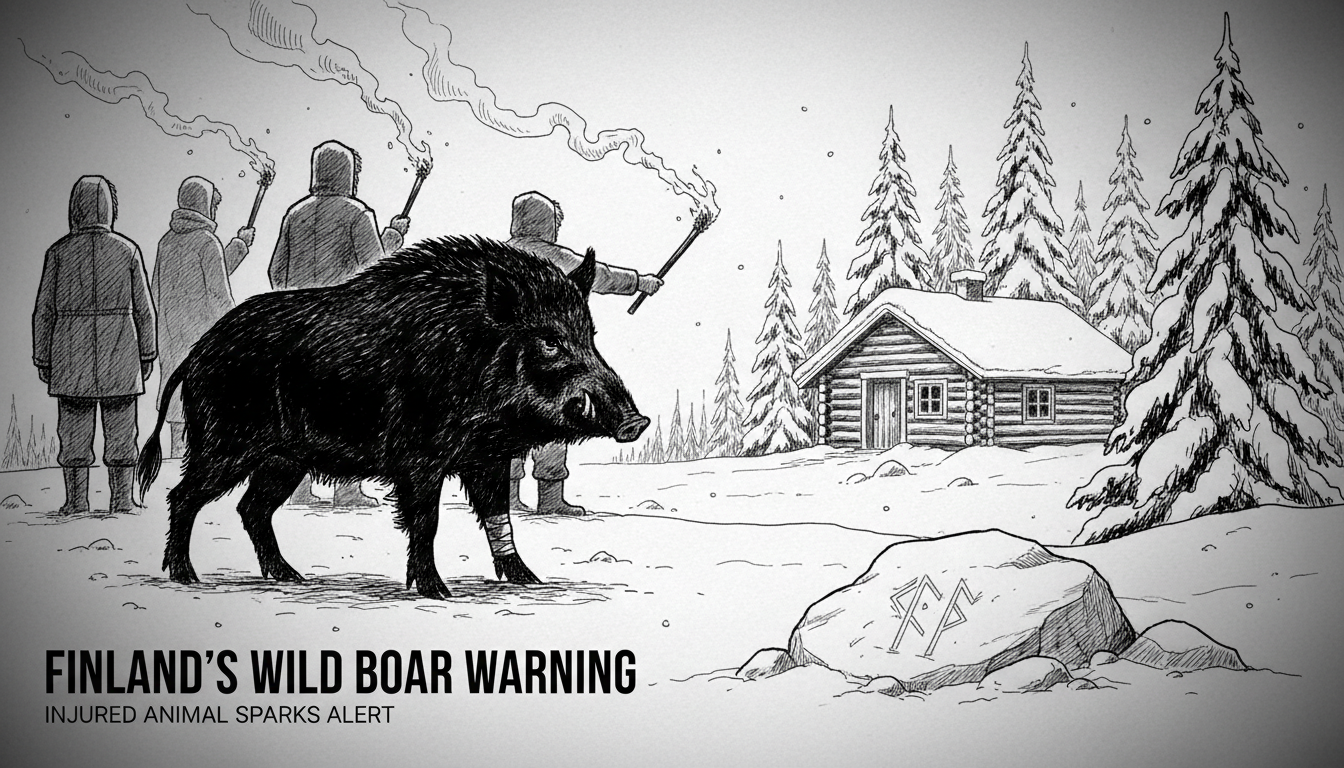
Finland's police issued a stark public warning on Tuesday evening after a car collided with a wild boar in the municipality of Vihti. The injured animal fled into the surrounding forest, prompting authorities to urge residents not to approach it under any circumstances. The incident on Tarvontie road around 7:30 PM highlights the growing reality of human-wildlife conflict in southern Finland, where wild boar populations have rebounded dramatically after being extinct for over a century.
A Dangerous Encounter on a Rural Road
The collision involved a single driver who emerged unharmed, though their vehicle sustained minor damage. According to the Länsi-Uusimaa Police Department, the wild boar was injured in the impact. In a clear directive, police stated, 'An injured animal must not be approached.' They have requested all potential sightings of the animal be reported immediately to the emergency number 112. This standard procedure for collisions with large game is mandated by Finnish law, which requires drivers to report such incidents. The boar's current location and condition remain unknown, creating an element of risk in the local area.
Wildlife experts strongly endorse the police's cautionary stance. An injured wild boar, particularly a sow with young or a cornered animal, can become highly aggressive and dangerous. Their sharp tusks and powerful build make them capable of inflicting serious injury. 'The primary rule with any large, injured wild animal is to maintain a significant distance,' explains a Finnish wildlife management official. 'Do not attempt to help or approach it. Your safety and the animal's welfare are best served by contacting professionals.'
The Booming Return of a Former Native
The presence of wild boars in the Finnish landscape is a relatively recent phenomenon. Hunted to extinction within the country's borders by the early 1900s, they began a natural migration back from southeastern regions in the latter half of the 20th century. Today, they are a firmly established and huntable game species. Their populations are densest in the southern parts of Finland, precisely where human settlement and road networks are most concentrated. This geographic overlap sets the stage for inevitable interactions, like the one in Vihti.
Population management is achieved through regulated hunting seasons and regional quotas. These measures aim to balance the ecosystem, control agricultural damage caused by boars rooting for food, and mitigate risks to traffic. Despite these efforts, encounters are increasing. In 2022 alone, Finnish roads saw over 2,000 reported vehicle collisions involving wild boars. These accidents peak during specific periods, such as the autumn mating season and early winter, when food scarcity prompts increased movement.
Navigating the Shared Landscape
The Vihti incident serves as a microcosm of a broader national challenge: managing coexistence with returning large fauna. For drivers in rural and suburban areas of southern Finland, vigilance is key, especially at dawn, dusk, and during night hours when boars are most active. Authorities advise reducing speed in areas marked with wildlife warning signs and being prepared to brake. If a collision is unavoidable, experts stress it is safer to hit the animal directly than to swerve dangerously and risk losing control of the vehicle.
The response protocol is clear. First, ensure your own safety and alert other traffic. Then, contact the police to report the incident. Even if the animal, like the one in Vihti, runs away, reporting is crucial. It alerts authorities to a potential hazard for other drivers and residents. For hunters and landowners, the situation presents different responsibilities. The Finnish Wildlife Agency tracks population data and injury reports to inform management decisions.
Policy and Prevention in a Changing Environment
Beyond immediate safety warnings, the recurring issue of wildlife collisions enters policy discussions in the Eduskunta, Finland's parliament. Topics include potential adjustments to hunting quotas, investment in wildlife fencing along high-risk roadways, and public education campaigns. The goal is a proactive strategy that protects both citizens and the wildlife that is reclaiming its historical range. The Finnish government must balance conservation successes with practical public safety concerns, a task complicated by the animal's rapid population growth.
From an EU perspective, Finland's situation is part of a wider European trend of large carnivore and ungulate recovery. While boars are not a protected species under the same strict frameworks as wolves or bears, their management falls under broader EU directives on biodiversity and sustainable hunting. Finland's approach, combining regulated hunting with monitoring, is seen as a model, though its effectiveness is constantly tested by rising collision statistics.
A Look Ahead: Coexistence Requires Caution
As of Wednesday morning, the search for the injured boar in Vihti continues. The police warning remains in effect, a reminder that the wilderness is never far away in Finland, even in the developed south. The animal's fate is uncertain; it may succumb to its injuries in the forest or potentially pose a continued threat if cornered. This single event connects to larger questions about land use, conservation, and safety in modern Finland.
The return of the wild boar is an ecological success story, but it is not without cost or risk. Each collision represents a danger to human life, property, and the animal itself. For Finns, adapting to this new reality means updating old instincts—the country has not had to widely coexist with boars for generations. It requires drivers to be more alert, residents to be more informed, and policymakers to be more adaptive. The warning from Vihti is not just about one animal on one road; it is a signal that Finland's natural world is dynamically changing, demanding respect and careful management to ensure safe coexistence for all species involved.