
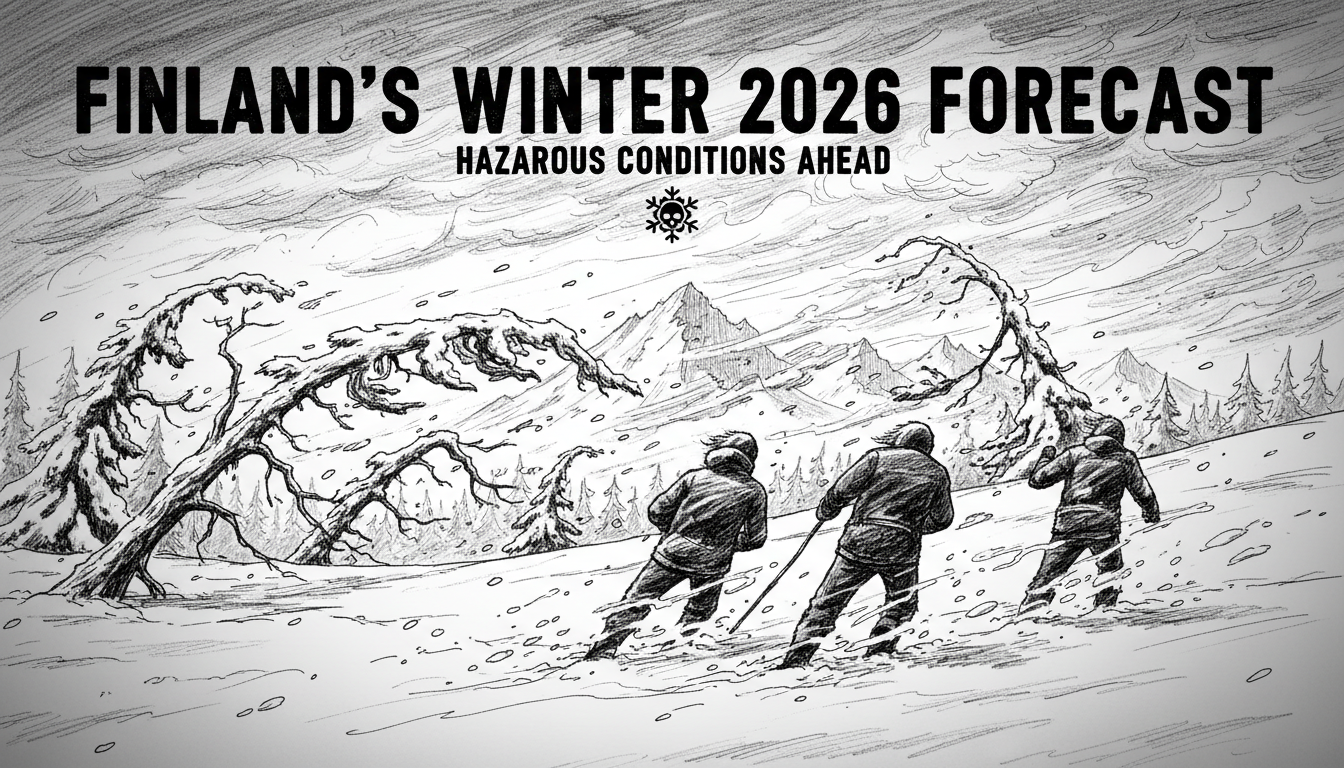
Finland's winter weather forecast for 2026 predicts a season of significant challenges, with meteorologists warning residents and authorities to prepare for hazardous driving conditions and prolonged cold spells. The Finnish Meteorological Institute (FMI) will release its detailed seasonal outlook in the coming weeks, but preliminary models and historical data point to a winter requiring advanced preparation across the Nordic nation.
A Long Winter of Disruption
The forecast is built on complex climate models analyzing ocean currents, atmospheric pressure patterns over the North Atlantic, and snow cover data from Siberia. Early indications suggest Finland can expect temperatures to dip below seasonal averages, particularly in January and February. Southern regions may see averages between -8°C to -12°C, while Lapland could experience prolonged periods below -20°C. Snowfall is predicted to be above average in central and eastern Finland, raising the risk of major snow accumulation events that paralyze transport. "The interplay between moist Atlantic air and cold continental air from the east is a key driver for our winter weather," explained a senior FMI climatologist. "Current patterns suggest we are in for a more active winter, with several intense low-pressure systems bringing heavy snow and strong winds."
This forecast carries substantial weight for public safety and infrastructure. The Finnish Transport Infrastructure Agency (Väylävirasto) notes that winter conditions are a factor in 30-40% of all road accidents in Finland. With the FMI issuing 10-15 formal warnings for hazardous weather each winter, the 2026 prediction signals a need for heightened vigilance. The forecast is not just about temperature and snow depth; it includes critical predictions for freezing rain events—thin, nearly invisible layers of ice that create extremely dangerous driving and walking surfaces. These events often catch people off guard and lead to multi-vehicle collisions and a spike in pedestrian injuries.
Government and Municipal Readiness Plans
In response to the looming forecast, national and local authorities are already reviewing winter preparedness plans. The Ministry of Transport and Communications coordinates with regional road maintenance contractors to ensure snowplow fleets are upgraded and salt and gravel stockpiles are sufficient. Helsinki, Espoo, and Vantaa have joint contingency plans for major snow events, focusing on keeping key arterial roads and public transport lines open. In Lapland, where tourism is a winter economic lifeline, municipalities are ensuring emergency services and roadside assistance networks are prepared for increased demand. The forecast directly influences budget allocations for winter maintenance, a perennial topic in local council meetings across the country.
Finnish law mandates the use of winter tires from December through February, a rule strictly enforced. The forecast for 2026 reinforces the importance of this regulation. Tyre retailers and vehicle inspection stations report increased public inquiry about the best tyres for severe conditions, with studded winter tyres remaining popular despite environmental debates about their use. Beyond roads, the energy sector monitors these forecasts closely. Prolonged extreme cold increases demand for heating electricity, testing the national grid's capacity. Fortum and other energy providers use FMI forecasts to model consumption spikes and plan electricity imports if necessary.
Practical Advice for Residents and Drivers
For Finnish households, the winter forecast is a practical guide for autumn chores. Proper home insulation is paramount, as heating costs can skyrocket during a cold winter. Experts recommend checking insulation in attics and around windows, servicing heating systems, and preparing emergency supplies. A standard Finnish winter emergency kit for the home includes bottled water, non-perishable food, batteries, candles, and a battery-powered radio, in case of prolonged power outages caused by heavy snow or ice on power lines.
The most critical advice centers on road safety. The FMI and Finnish Transport Safety Agency (Trafi) consistently emphasize several key points. First, fitting winter tyres well before the first snow is essential. Second, drivers must dramatically increase following distances on snowy or icy roads—a minimum of triple the normal distance is recommended. Third, maintaining a full windshield washer reservoir with anti-freeze fluid is a simple but often overlooked necessity. Finally, every vehicle should carry a winter emergency kit: a shovel, traction aids like sand or a traction mat, a warm blanket, extra clothing, and high-energy snacks. "The difference between a minor inconvenience and a life-threatening situation is often preparation," stated a Trafi safety advisor.
The Broader Climate Context
While the 2026 forecast points to a harsh winter, meteorologists are careful to distinguish seasonal variability from long-term climate trends. Finland's winters are, on average, becoming milder and shorter due to global climate change. However, this warming trend can paradoxically contribute to more extreme winter weather events. Warmer air holds more moisture, which can lead to heavier snowfall when that air collides with cold Arctic air masses. The increased frequency of freeze-thaw cycles also creates more ice on roads and walkways. The FMI's research indicates that while the number of extremely cold days may decrease, the intensity of individual snowstorms and hazardous mixed-precipitation events could increase, presenting new challenges for forecasting and public safety.
This makes accurate seasonal forecasting more valuable than ever. The FMI employs an ensemble of global climate models, refining them with regional data from its extensive network of observation stations across Finland. Their work is crucial for sectors from agriculture and forestry to energy production and logistics. A reliable winter forecast allows logistics companies to plan routes, the construction industry to schedule outdoor work, and event planners to consider contingencies. For the average citizen, it transforms winter from a period of reactive struggle to one of managed preparedness.
A Call for Proactive Vigilance
As Finland looks toward winter 2026, the message from officials is clear: respect the forecast and prepare accordingly. The Finnish concept of "sisu"—stoic determination—is often associated with enduring winter, but modern safety relies more on proactive planning than passive resilience. Checking the detailed FMI forecast daily, heeding weather warnings immediately, and adjusting travel plans are the most effective tools for navigating the season safely. The winter will test infrastructure and personal readiness, but with the forecast in hand, Finland has the opportunity to mitigate its impacts. Will this proactive approach be enough to counter the predicted hazards, or will the winter of 2026 become a benchmark for future preparedness plans?