
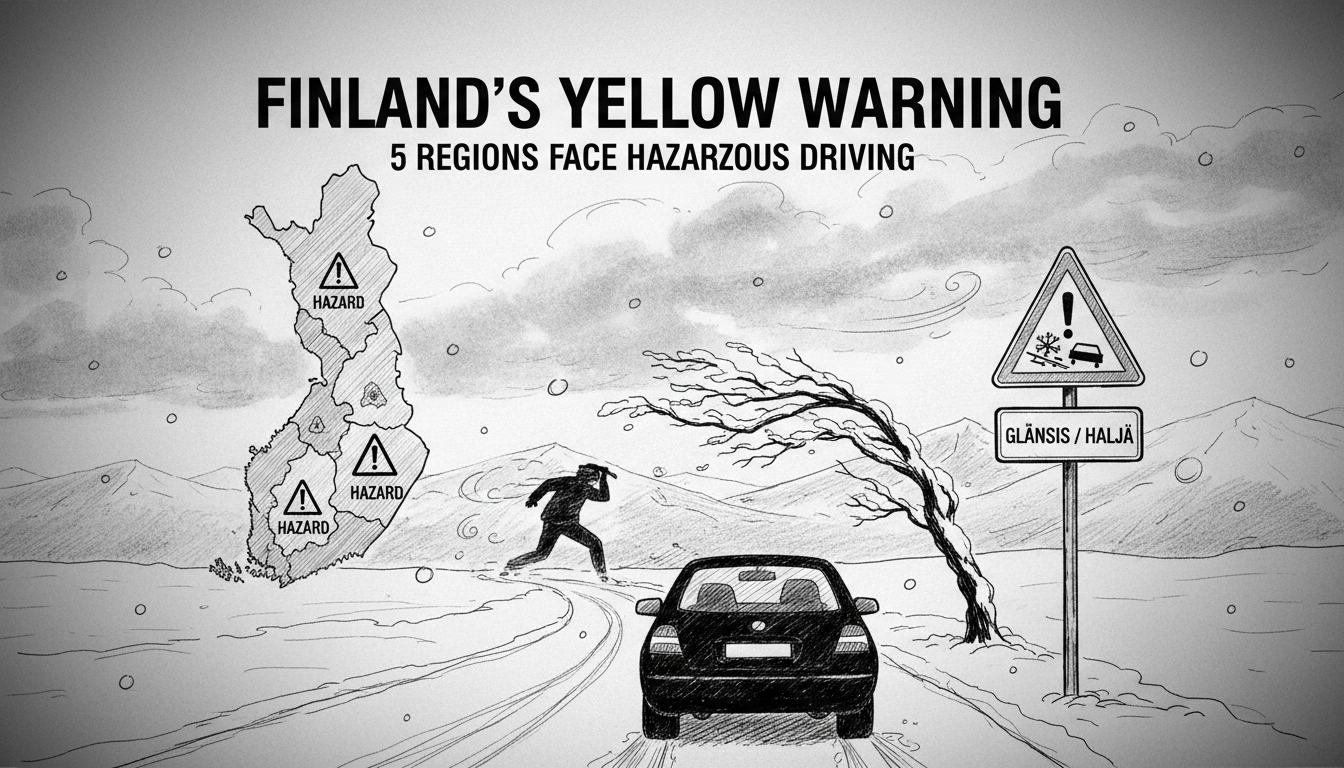
Finland's road conditions are deteriorating as a significant yellow warning for potentially dangerous driving remains in force across five central and northern regions. The Finnish Meteorological Institute's (Ilmatieteen laitos) warning map glows yellow for Central Finland, Central and Northern Ostrobothnia, North Savo, North Karelia, and Kainuu. Police in the Oulu region have already reported multiple accidents this week directly linked to slippery and poor road surfaces, underscoring the immediate risk.
This seasonal hazard arrives as Finland transitions deeper into winter, a period when road safety becomes a paramount public concern. The yellow warning, while less severe than an orange or red alert, signals conditions that require heightened driver awareness and significant adjustments to driving behavior. Authorities emphasize that these warnings are not mere suggestions but critical advisories based on real-time meteorological data.
A Persistent Winter Hazard
The current yellow alert highlights a recurring annual challenge for Finnish transport authorities and drivers. Finland's long winter, characterized by snow, ice, sleet, and rapidly changing temperatures, creates a volatile environment for road safety. While the warning area has decreased since Wednesday, its persistence in these specific regions indicates localized weather patterns producing consistently hazardous conditions. The Finnish Meteorological Institute continuously updates its public warning maps, which serve as an essential tool for trip planning.
“In slippery and otherwise poor conditions, situational speeds and safety distances must be adjusted to the circumstances,” the Oulu police department stated in a public bulletin this week. This official reminder follows a practical need, as the region has already seen several collisions. The police statement reflects a standard, yet crucial, winter driving message that gains urgency with each new weather warning issued.
The Human and Statistical Toll of Winter Roads
Behind every color-coded warning on a map lies the potential for real-world consequences. In 2022, Finland recorded 348 fatal road accidents. While not all occur in winter, statistical trends consistently show an increase in accidents during the colder months due to challenging weather. Each accident represents a personal tragedy and a significant economic cost, making preventive warnings and driver education a key part of national safety policy.
The regions under warning are not random. Central and Northern Ostrobothnia, North Savo, and Kainuu experience some of the country's most severe winter weather, with heavier snowfall and longer periods of sub-zero temperatures compared to the southern coast. These conditions test road maintenance crews and driver preparedness relentlessly. The concentration of the warning in these areas underscores the geographical disparity of winter's impact within Finland itself.
Expert Advice for Navigating the Warning Zones
Traffic safety experts and authorities consistently point to a few non-negotiable rules for driving under a yellow warning. The foremost is speed adjustment; driving significantly below the posted limit is often necessary on icy or snow-covered roads. Maintaining a safe following distance is equally critical, as braking distances can triple or more on ice compared to dry asphalt. These are not just tips but essential adaptations to the physical reality of reduced tire grip.
Vehicle preparation is the other pillar of winter safety. In Finland, the use of winter tires is legally mandated during the winter season, typically from November to March. However, experts stress that having winter tires is only the baseline. Tire tread depth and overall condition are vital for effective performance. Many also recommend carrying emergency supplies in the vehicle during long trips through warned areas, including a blanket, reflective vest, and a shovel, in case of a breakdown or delay in remote locations.
The Role of Public Infrastructure and Information
The Finnish system for managing weather-related road risks relies heavily on transparent public information. The Finnish Meteorological Institute’s warning service is a cornerstone of this effort. By providing clear, color-coded, and geographically specific warnings, it empowers individuals to make informed decisions. This public service model is considered effective, shifting some responsibility for risk management directly to citizens armed with good data.
Local municipalities and the national transport agency are responsible for road maintenance, including plowing and salting. During active warnings, maintenance crews are often on high alert. However, drivers are advised that even treated roads can become slippery again quickly during active snowfall or freezing rain. The public information campaign, therefore, complements but does not replace the need for constant driver vigilance. Checking the warning map before travel is as routine for many Finns as checking the time.
A Cultural Adaptation to Inevitable Winter
For Finns, navigating yellow warnings and poor driving conditions is an ingrained part of seasonal life. It represents a cultural adaptation to a demanding climate. Driver's education in Finland heavily emphasizes winter driving techniques, and many opt for additional courses in vehicle control on ice. This collective experience and training are what the authorities rely upon when they issue their succinct warnings.
The current yellow alert will eventually lift, with forecasts suggesting improved conditions by Friday. Yet, it serves as the first major widespread warning of the season for many, a stark reminder that winter has fully arrived. The cycle of warnings will repeat throughout the coming months. The ultimate goal of the system is not to prevent travel but to facilitate safe travel, minimizing the spike in accidents that historically accompanies the first severe winter weather. The map may glow yellow today, but through preparedness and caution, the roads can remain as safe as possible.
The resilience of Finnish society is tested each winter on its vast network of roads. The yellow warning is more than a meteorological notice; it is a signal for a collective shift in mindset, from the individual driver slowing down on a forest road to the maintenance worker starting another plowing shift. As the days shorten, this shared vigilance becomes the most important safety feature on the road.