
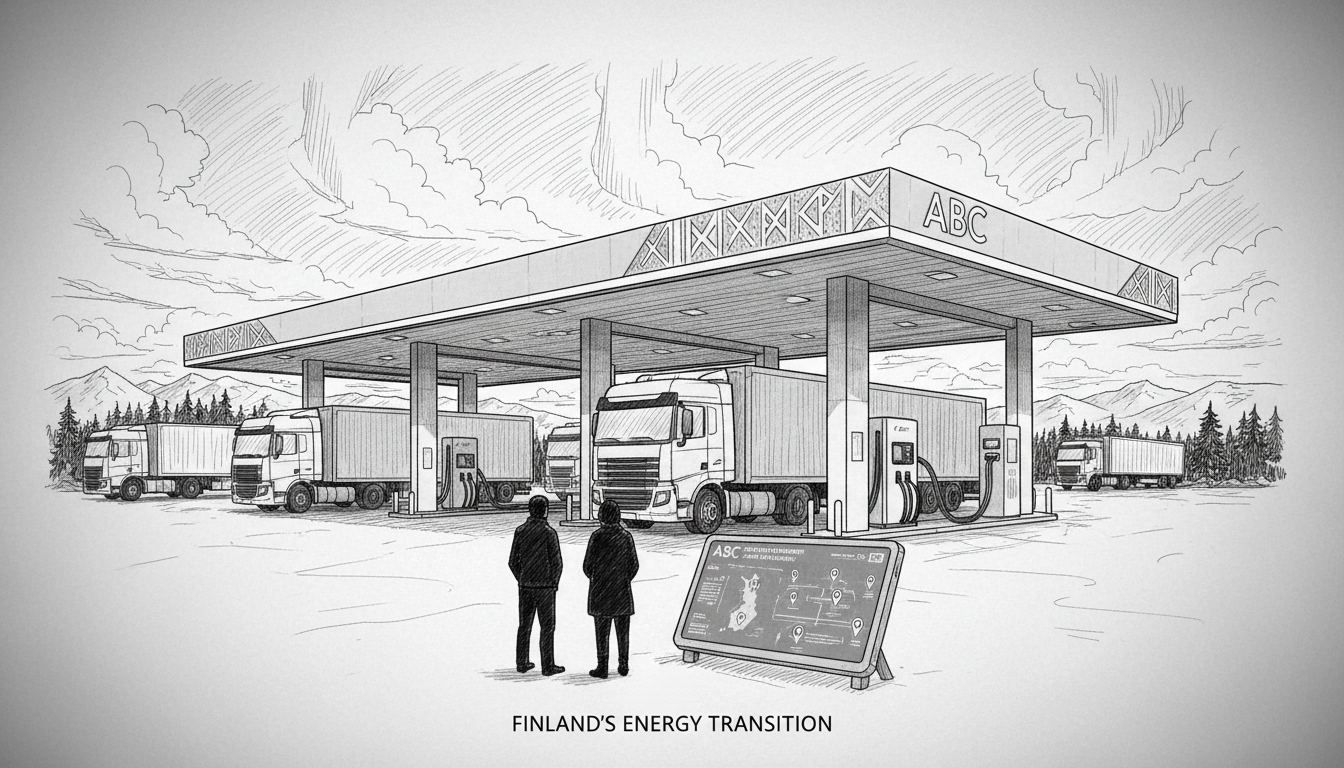
Finland's S-Group cooperative has announced a major strategic expansion of its ABC service station network to address a critical gap in the nation's transport infrastructure. The central cooperative SOK confirmed that its ABC chain will begin opening new fuel and charging points for heavy transport starting next year, with the network to be built out gradually over several years. This move comes directly in response to the market void left by the exit of the Teboil chain, which specialized in heavy vehicle fuel distribution and operated approximately 400 stations, many with AdBlue systems, before ceasing operations due to sanctions policy. The decision underscores the profound and ongoing transformation of Finland's energy and transport sectors, a transition managed within the framework of EU energy directives and national climate policy.
Harri Tuomaala, Director of Traffic Trade at SOK, stated in the announcement that the entire fuel market and propulsion technologies are undergoing fundamental change. He emphasized the cooperative's commitment to ensuring Finnish transport companies continue to have access to sufficient high-quality, responsible, and reliable services nationwide. While acknowledging the market opportunity created by Teboil's departure, Tuomaala clarified the strategy was under long-term review and not solely a reactive measure. The expansion is also driven by the S-Group's own substantial daily procurement of transport services from Finnish logistics firms, creating an internal demand for resilient supply chains. This reflects a broader trend in Nordic economies where large cooperatives and corporations invest in stabilizing critical national infrastructure.
Despite the global push towards electrification, SOK's analysis projects that diesel will remain the primary fuel for heavy professional transport for a considerable time. The new ABC points will therefore offer both traditional fuels and high-power charging for electric trucks, representing a dual-track investment strategy. For private motorists and light commercial vehicle customers, the ABC chain has already built what it claims is Finland's largest high-power charging network in recent years. The new heavy transport points will primarily serve business customers with S-Business cards, linking the service directly to the cooperative's commercial ecosystem. Locations will be concentrated near S-Group's own logistics hubs, regional terminals, and selected existing ABC stations, with specific sites, quantities, and a detailed opening schedule to be communicated in early 2026.
The political and economic context here is crucial. The exit of Teboil was a direct consequence of the EU's unified sanctions policy, creating a strategic vulnerability in Finland's logistics sector, which is the lifeblood of its export-dependent economy. The government in Helsinki has been closely monitoring energy security, particularly for the transport industry that connects Finnish goods to European markets. This private-sector initiative by a Finnish-owned cooperative helps mitigate that risk without immediate state intervention, aligning with the coalition government's preference for market-based solutions. The expansion also supports Finland's ambitious carbon neutrality targets by accelerating the infrastructure needed for heavy transport electrification, a key challenge highlighted in recent parliamentary committee reports. The Eduskunta has debated energy security extensively, and this development can be seen as a direct market response to those political and regulatory pressures.
This is a significant development for Finland's business landscape. The S-Group, as a customer-owned cooperative, is making a long-term capital investment that prioritizes national service continuity over short-term shareholder returns. It fills a gap the state did not have to, demonstrating the cooperative model's role in Finnish economic resilience. The plan acknowledges the messy reality of the energy transition: diesel trucks will dominate highways for years, even as the first electric models roll out. Building charging points now is a bet on a future that is coming but not yet here. For international observers, this case shows how a small Nordic nation manages complex geopolitical and green transitions through a blend of EU policy, corporate responsibility, and pragmatic infrastructure planning.