
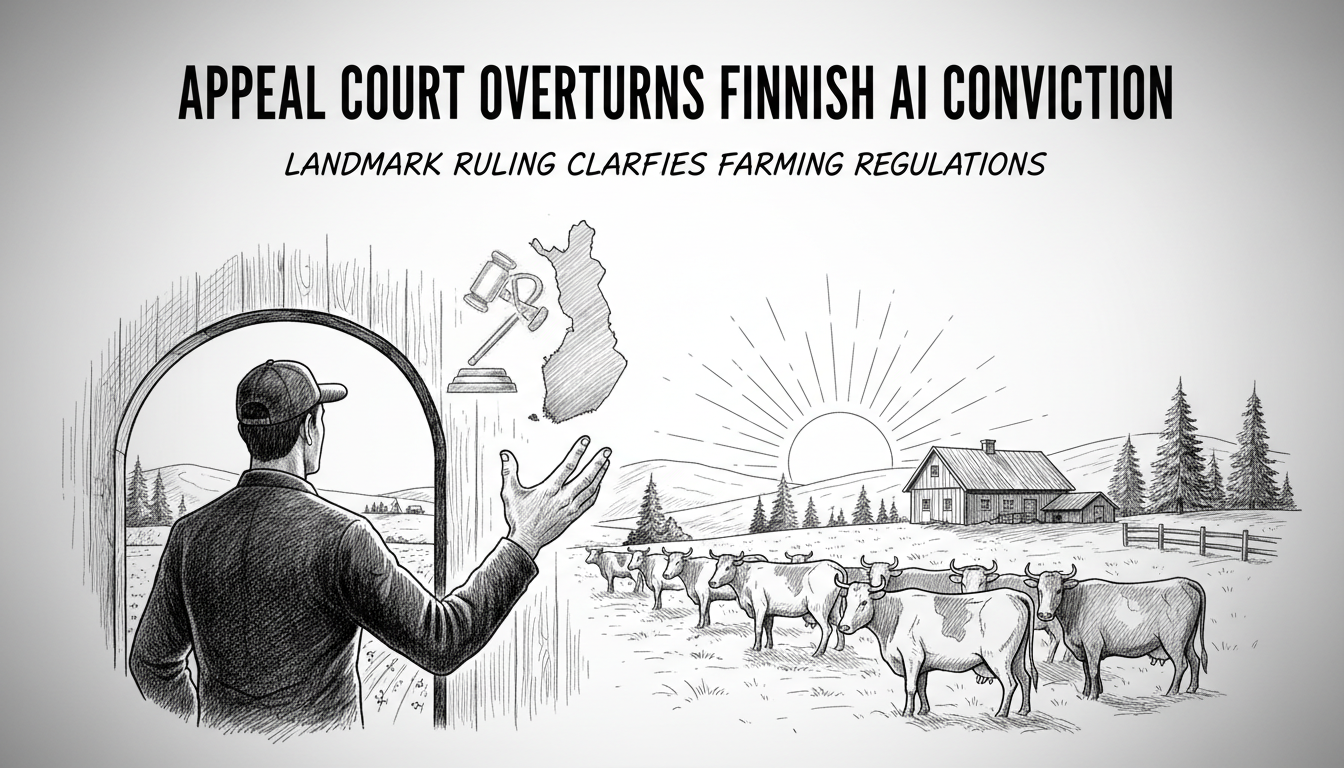
A Finnish appeals court has overturned the conviction of a farmer who performed artificial insemination procedures on his own cattle, delivering a significant legal decision that clarifies agricultural regulations in rural Finland. The Turku Court of Appeal reversed both the conditional prison sentence and compensation order against Hannu Huitti, a farmer from Loppi municipality who faced charges related to his artificial insemination activities. Huitti described the court's decision as a major relief for his family and agricultural operations in the Hunsala village region.
The case originated from local authorities challenging Huitti's right to perform artificial insemination without specific veterinary certification. Finnish agricultural law contains complex provisions about which procedures farmers may conduct themselves versus those requiring licensed professionals. This legal gray area affects numerous small-scale farmers across Finland's rural communities, particularly in regions like Tavastia Proper where Loppi is located. The initial conviction carried substantial financial implications through required compensation payments to relatives.
Huitti and his wife now plan to wind down their farm operations in Hunsala in the coming months, despite the favorable court ruling. Their decision highlights the economic pressures facing Finland's agricultural sector, where small family farms increasingly struggle with regulatory compliance costs and market challenges. The couple's experience demonstrates how legal uncertainties can influence business continuity decisions even when courts ultimately rule in farmers' favor.
This case touches on broader questions about self-sufficiency in Finnish agriculture and the appropriate balance between regulation and practical farming needs. Many Finnish farmers traditionally performed basic veterinary procedures themselves, particularly in remote areas with limited access to professional services. Recent years have seen increased regulatory scrutiny of these practices as food safety standards evolve and EU regulations become more stringent.
The Turku Court of Appeal's decision establishes important precedent for similar cases across Finland. It clarifies the legal boundaries for agricultural practices that many farmers considered routine operations. Legal experts note that such rulings help define where professional certification becomes mandatory versus where farmer knowledge and experience suffice for basic animal husbandry procedures.
Finland's Ministry of Agriculture and Forestry has been gradually updating agricultural regulations to align with European Union standards while considering practical realities on Finnish farms. This case illustrates the tension between regulatory harmonization and traditional farming methods that have sustained rural communities for generations. The outcome suggests courts recognize the need for reasonable interpretations that don't impose impractical burdens on small-scale operations.
The ruling comes as Finland's agricultural sector faces multiple challenges, including climate adaptation requirements, changing subsidy structures, and generational transition issues. Many younger farmers cite regulatory complexity as a barrier to entering or continuing family farming operations. Decisions like this one provide clearer guidelines that can help farmers make informed decisions about their practices and investments.
For international observers, this case offers insight into how Nordic countries balance modern regulatory frameworks with traditional livelihoods. Finland's approach typically emphasizes practical solutions grounded in evidence and proportionality, reflecting the Nordic legal principle of reasonableness. The court's decision appears consistent with this tradition, weighing the actual risks and benefits rather than applying regulations rigidly.
The Huitti family's planned exit from farming despite their legal victory speaks volumes about the sector's current economic climate. Even when courts protect farmers' rights, broader market forces and regulatory environments can make continuation impractical. This reality affects rural communities across Finland, where farm closures impact local economies, employment, and cultural heritage.
Looking forward, this ruling may influence how municipalities and regulatory agencies approach similar cases elsewhere in Finland. It provides judicial guidance on interpreting agricultural regulations in context-specific ways. The decision also reinforces the importance of appellate review in ensuring regulations serve their intended purposes without creating unnecessary burdens on legitimate agricultural activities.