
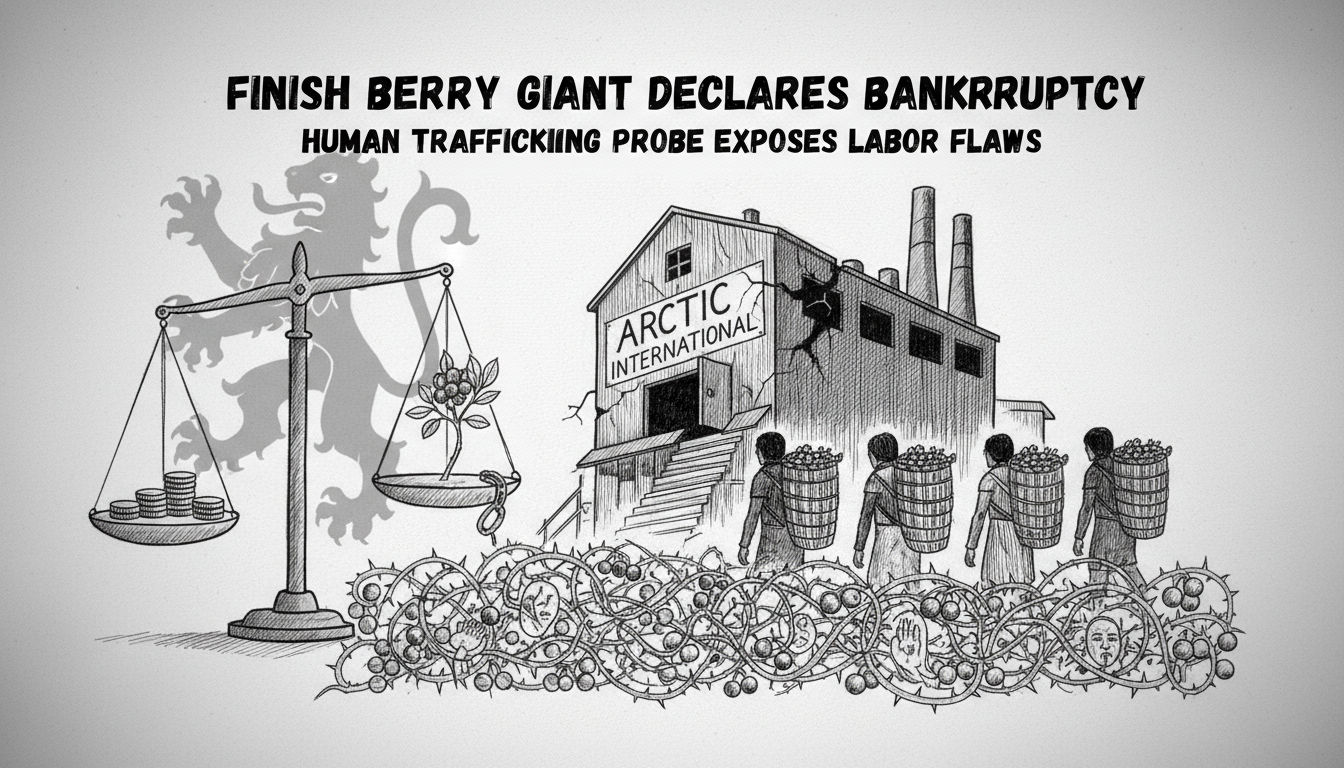
A major Finnish berry company has collapsed into bankruptcy, its restructuring process terminated abruptly by authorities. The Sotkamo-based firm Arctic International, part of the larger Arctic Group, now faces formal insolvency proceedings. This development follows a deepening criminal investigation into alleged human trafficking involving Thai berry pickers. The company's failure to provide reliable accounting and a clear picture of its debts forced the court's hand. This case exposes severe vulnerabilities in Finland's seasonal agricultural labor system and raises urgent questions about oversight.
The bankruptcy was triggered by what officials described as serious deficiencies in the company's bookkeeping. The firm could not reliably demonstrate the total amount of its debts or properly identify its creditors. This lack of financial transparency made any viable restructuring plan impossible. The legal insolvency status is now a matter of public record in the national bankruptcy register. The financial collapse is directly linked to a wider police probe into suspected aggravated facilitation of illegal immigration.
Authorities suspect the company provided false or misleading information to obtain work visas for foreign pickers. Investigators believe the firm signed employment contracts and applied for visas ostensibly for horticultural seasonal work. In reality, the intent was allegedly to place workers in wild berry picking under the contentious 'everyman's right' system. This system allows public foraging but denies workers standard employment benefits and protections. The practice, known locally as 'jokamiehenoikeus' harvesting, has long been criticized for creating a legal gray area ripe for exploitation.
This scandal strikes at the heart of Finland's lucrative wild berry industry, valued in the hundreds of millions of euros annually. The sector relies heavily on seasonal foreign labor, primarily from Thailand. Past reports have highlighted concerns over working conditions, pay disputes, and inadequate housing. The Finnish government and the EU have regulations for seasonal workers, but enforcement in remote forest regions remains a persistent challenge. This case suggests systemic failures, where visa rules for one type of work are allegedly used to cover a completely different, less protected activity.
The implications are significant for Finland's international reputation and its domestic policy. As an EU member state, Finland is bound by strict directives on fair labor mobility and the prevention of human trafficking. A high-profile failure to protect third-country nationals could invite scrutiny from Brussels. Domestically, it pressures the government and the Eduskunta to re-examine the legal framework surrounding 'everyman's right' as it intersects with commercial labor. The Ministry of Economic Affairs and Employment must now balance industry demands with robust worker protections.
What happens next? The bankruptcy proceedings will prioritize creditor claims, but the human trafficking investigation continues separately. Other companies within the Arctic Group are also under suspicion. This case will likely accelerate legislative discussions that have been simmering for years. Policymakers in Helsinki's government district must decide whether to tighten visa controls, redefine commercial berry picking under 'everyman's right,' or create a new, protected category for forest workers. The collapse of Arctic International is not just a business failure. It is a stark warning about the human cost within a key national industry.