
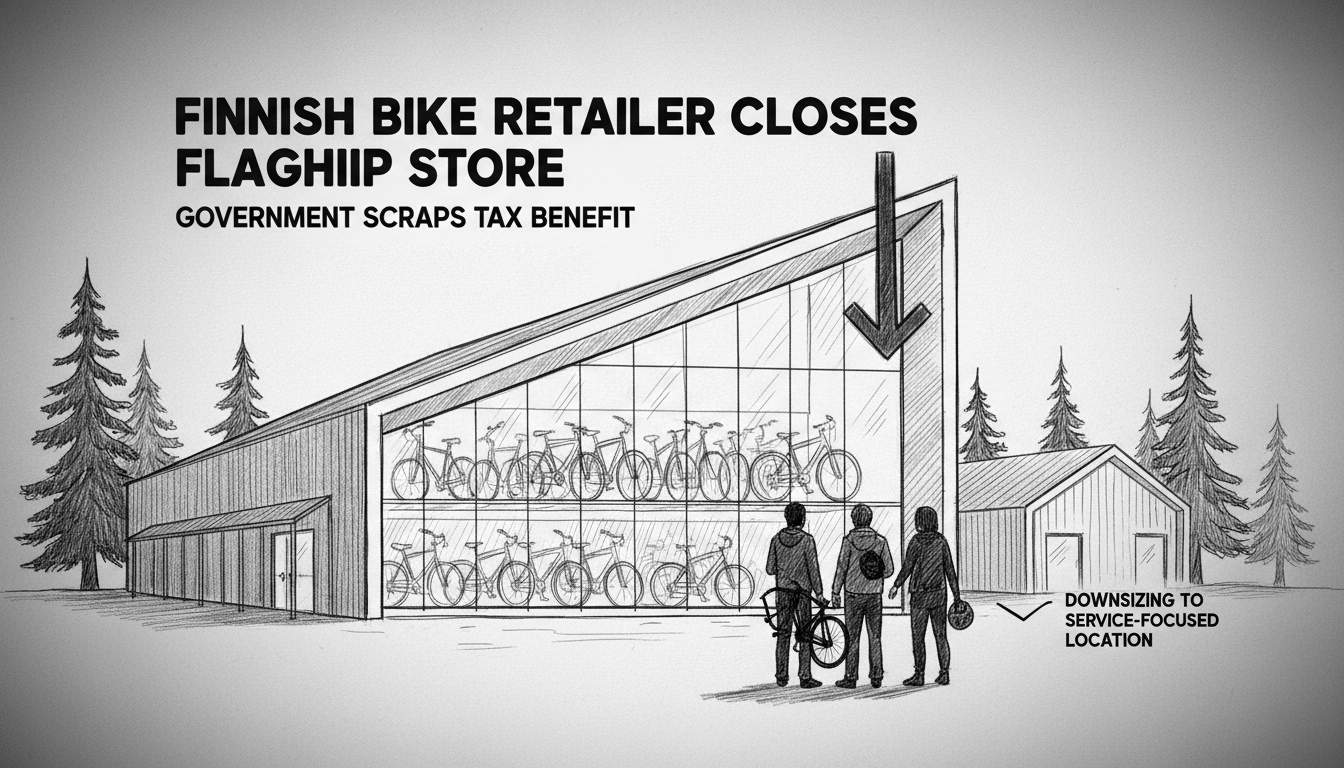
A popular Finnish bicycle and fitness retailer is closing its flagship store in Vantaa before Christmas. The decision follows the government's move to eliminate a tax benefit for employer-provided bicycles. This policy change delivered the final blow to a business already struggling with post-pandemic market corrections and supply chain issues.
Kuntokauppa, operated by NS Brands Oy, will shutter its Tammisto location on Christmas Eve. The company will move to a smaller space on Osumakuja in Vantaa, maintaining a pickup point, service center, and a reduced retail presence. Managing Director Matias Kukkonen stated the tax benefit removal was the decisive factor. Sales of employer-provided bicycles accounted for a quarter of the store's total revenue.
The tax benefit for work bicycles, introduced in 2021, fueled rapid growth in the sector. The average price for a bicycle purchased through this scheme was 3,000 euros. Kukkonen noted the boom was unsustainable. 'The growth was too fast,' he said. When the government announced the benefit's termination starting in 2026, it immediately chilled the market during the peak spring sales season. Industry reports showed a 70% drop in e-bike sales and a 25% drop in regular bicycle sales in May compared to the previous year.
The closure reflects broader challenges in the Finnish retail and tech-adjacent consumer goods sector. While not a pure tech play, the story highlights how regulatory decisions directly impact physical retail businesses that experienced artificial booms. For international observers, it's a case study in the unintended consequences of fiscal policy changes on small and medium enterprises.
NS Brands Oy entered corporate restructuring last year. The program gained approval earlier this year. The company also faced logistical hurdles, with components held at European ports due to grey economy enforcement operations and disruptions in the Red Sea affecting international shipping.
Kukkonen admitted the industry placed too much faith in the tax benefit's permanence. 'Entrepreneurs had strong trust that the benefit would remain,' he said. They failed to prepare for its end, partly because of perceived public health advantages. 'Wellbeing pays itself back to the state. That sort of thing is worth investing in,' he argued.
The retailer is now liquidating inventory with discounts up to 70%. Kukkonen remains cautiously optimistic about the smaller-scale future operation. 'We're trying to be among those who don't go under,' he stated. The situation serves as a stark reminder for Helsinki area startups and Espoo-based innovators about over-reliance on single policy drivers for business models.
This event connects to wider Finnish tech news narratives about sustainable business scaling. Many Helsinki startups in gaming and software face similar 'feast or famine' cycles driven by platform changes or investor sentiment shifts, rather than government policy. The key lesson for the Finnish technology sector is diversification and resilience planning, themes constantly echoed in Espoo's innovation hubs.