
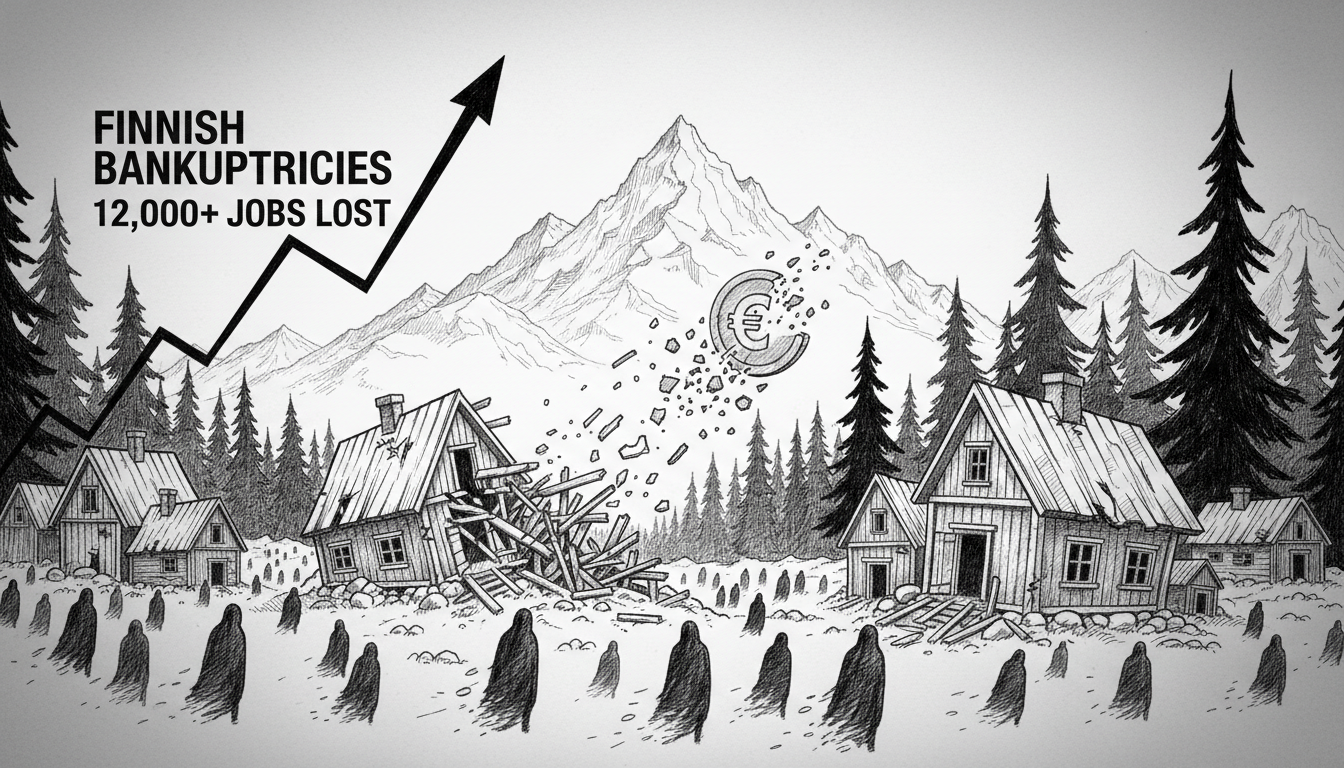
Finland has broken its record for corporate bankruptcies in the third quarter, surpassing a grim milestone set just last year. Official data shows 3,019 companies entered bankruptcy proceedings between January and November, edging out the previous record of 3,006 set during the same period. This surge in business failures has directly resulted in the loss of more than 12,000 jobs across the nation, placing immense strain on regional economies and social safety nets. The Central Finland region experienced a particularly sharp increase, with bankruptcies rising by two percent compared to the previous year, signaling that economic distress is spreading beyond traditional industrial centers.
The data presents a direct challenge to the coalition government in Helsinki, which has prioritized fiscal consolidation and debt reduction. Finance Minister Riikka Purra of the Finns Party has consistently argued that structural reforms and spending discipline are necessary for long-term competitiveness. Critics from the opposition Social Democratic Party counter that the government's austerity measures are exacerbating the downturn by reducing consumer demand and public investment at a critical time. The rising bankruptcy numbers will likely fuel this debate in the Eduskunta, Finland's parliament, as lawmakers assess the human and economic cost of current policies.
This trend connects to broader European Union economic challenges, including high energy costs and tightened monetary policy from the European Central Bank. Finnish exporters, particularly in the metal and forestry sectors, face stiff competition within the single market while grappling with high domestic production costs. The EU's Green Deal and associated regulations also present both compliance costs and potential opportunities for Finnish industry, a duality the government must navigate. Historical context is crucial here. Finland's economy has weathered severe recessions before, notably in the early 1990s and after the 2008 financial crisis, but the current wave of bankruptcies suggests a structural shift rather than a simple cyclical downturn.
For international observers and expats in Finland, this news signals a tightening labor market and potential volatility in the business environment. The job losses are not confined to small enterprises. Several mid-sized industrial firms have also faltered, impacting specialized supply chains. The government's response will be closely watched. Will it double down on its existing reform path, or introduce targeted support for struggling sectors? The answer will define Finland's economic trajectory for the coming years. The situation in Central Finland, a traditional industrial heartland, acts as a bellwether for the national economy's health. Its two percent rise in bankruptcies, while seemingly modest, reflects deep-seated challenges in manufacturing and logistics that policy must address.
Ultimately, the record bankruptcy rate is more than a statistic. It represents shuttered businesses, lost livelihoods, and communities under pressure. The political response from Helsinki's government district in the coming months will determine whether this record is a temporary peak or the start of a prolonged period of economic contraction. The government must balance its fiscal goals with the immediate need to stabilize the business landscape and protect employment.