
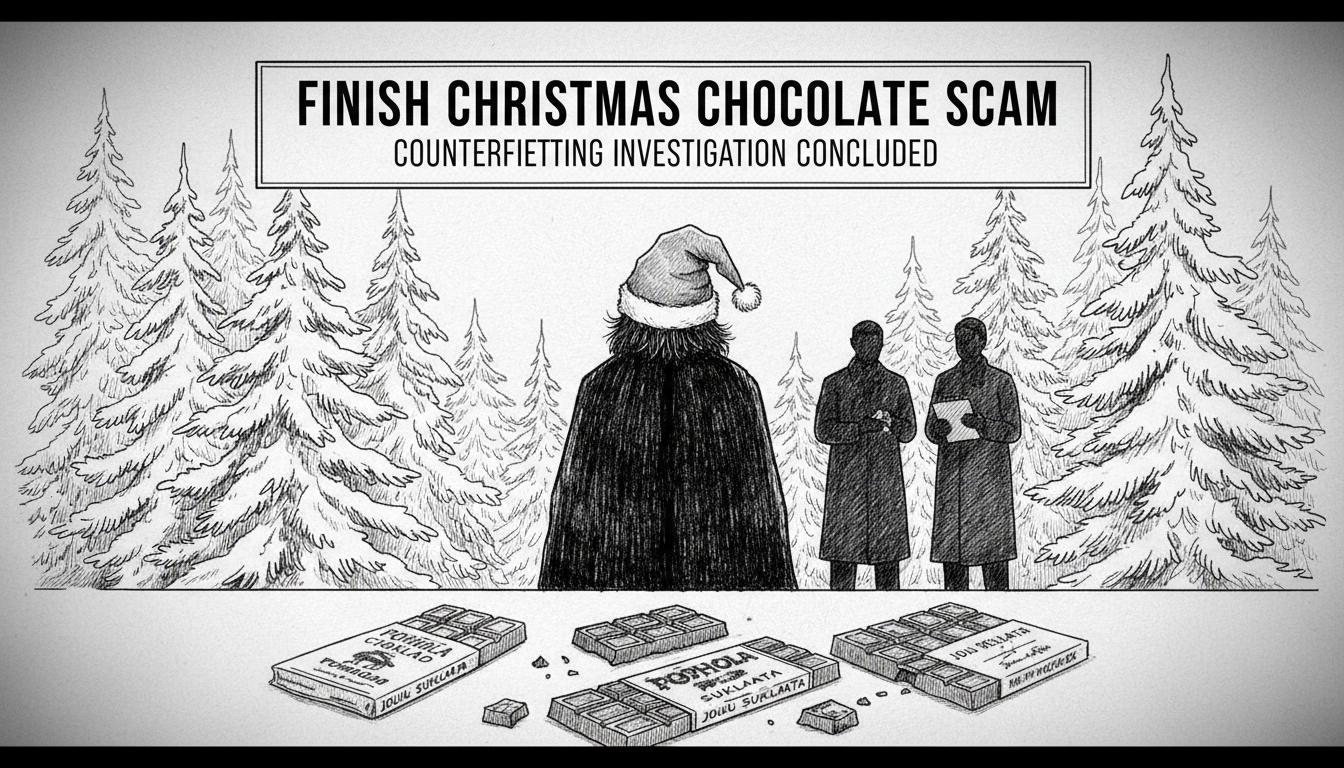
Finnish police have completed a preliminary investigation into a serious food fraud case involving counterfeit chocolate products. The case centers on an Ostrobothnian confectionery entrepreneur suspected of distributing and selling fraudulent chocolate items during the recent holiday season. Authorities believe the entrepreneur illegally used another company's trademark in chocolate production and marketing operations. The suspected activities occurred during the final quarter of the year, targeting consumers seeking traditional Christmas treats.
Police also suspect misleading product information appeared on chocolate bar labels, potentially violating consumer protection laws. The legitimate brand Santa's Break reported on December 17 that it had become a plagiarism victim. Brand officials discovered products being marketed to retailers under the Santa's Break name and imagery that had no connection to their authentic products. Company director Miika Aalto confirmed unauthorized products were circulating in the market bearing their branding.
Investigative materials have now been forwarded to prosecutors for charging consideration. The case involves multiple criminal allegations including aggravated embezzlement, fraud, industrial rights violations, health offenses, and marketing crimes. If prosecutors pursue industrial rights violation charges, the matter will proceed to Helsinki District Court under standard judicial procedures. This represents one of Finland's more substantial food counterfeit cases in recent memory, testing the nation's consumer protection frameworks.
Additional suspicions involve the same entrepreneur in 16 separate cases of aggravated fraud or standard fraud. These allegations relate to repeatedly selling the same business operations to different companies and private individuals throughout the past year. These separate criminal suspicions remain under active police investigation as authorities continue unraveling the complete scheme. During the preliminary investigation, district court granted police requests to secure approximately 150,000 euros of the entrepreneur's assets through precautionary seizure.
Food safety authorities monitor such cases closely given potential public health implications. The Finnish food industry maintains generally high standards, making this case particularly notable for its scale and brazenness. Consumer protection laws in Finland typically deliver strong penalties for intentional food misrepresentation. International readers should note Finland's rigorous food safety systems generally prevent such incidents, with this case representing an exception rather than the norm. The coming weeks will determine whether prosecutors proceed with formal charges, potentially setting important precedents for intellectual property protection in Finland's food sector.